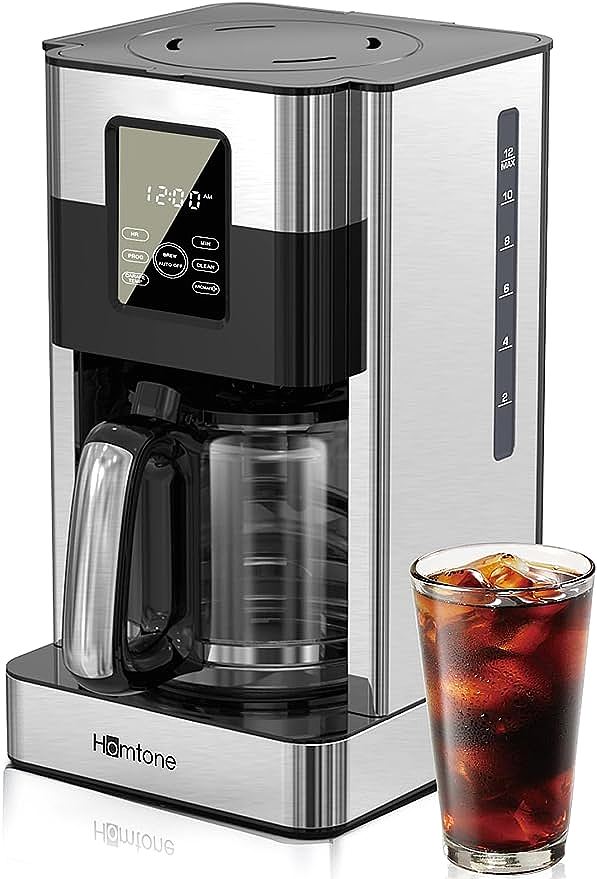
How to Pick a Drip Coffee Maker

NUPANT RB-386-BD2 12-Cup Coffee Maker
What a Drip Coffee Maker Does Differently
A drip coffee maker heats water in a reservoir, raises it to a spray head, and lets it fall through a bed of ground coffee into a carafe below. The route is short, and that short route explains why the format holds its ground in kitchens and breakrooms where a more elaborate machine would sit unused. The spray head spreads hot water across the grounds, gravity draws the brew through a paper or mesh filter, and the carafe collects what drips through. No part of the cycle needs a trained hand, so the same unit can serve one person at a desk or a line of guests at a buffet.
Match the Machine to the Size of the Crowd
Capacity is the first number that separates one drip machine from another, and it is easy to misread. A drip coffee maker buying guide comes down to a few numbers on the label, and those numbers predict how a machine behaves on your counter better than any slogan. A 12 cup pot is not 12 mugs, because most makers count a cup as about 5 ounces, so a full 12 cup carafe lands near 60 ounces of liquid. Buy for the largest group you serve on a normal day, then check whether the machine can brew a smaller batch without watering it down. A machine that only fills a full carafe forces you to make more coffee than you will drink, and the extra sits on a warming plate until it turns stale.
Cup Capacity and Carafe Count
Count the carafes before you count the cups. A single carafe machine suits a household, while a two or three carafe design keeps one pot pouring while another brews, which matters when a group arrives at once. The NUPANT RB-386-BD2 12-Cup Coffee Maker ships with two glass carafes, and each one holds 12 cups of brewed coffee, so a fresh pot can stay warm while the second finishes.
Refill and Reservoir Habits
Refill habits depend on the reservoir. A machine that needs a hand pour before every cycle keeps you at the counter, while a plumbed or large reservoir unit runs for hours without attention. For home use, a hand pour is fine and costs nothing to install. For a breakroom that serves a steady stream of people, an auto-fill model removes the refill step, though its 1.04 inch water hose needs a supply line nearby.
Heating Power and Brew Time
Wattage sets how fast the element can raise the water temperature, and it drives the brew time you see on the box. A higher rating heats the same volume of water faster, which shortens the wait between pressing a switch and pouring a cup. The difference is small for one pot and obvious when you brew several in a row, because a lower powered element loses ground with every cycle.
What Wattage Changes
Look at the rating in watts and compare it with the brew time claim. A commercial machine rated at 1450 W can brew a 1.8 liter pot in about 7 minutes, while a home brewer near 900 watt takes longer for a smaller carafe. A higher number does not guarantee better coffee, since flavor depends on the grounds and the water, but it does shorten the wait when demand is high. The NUPANT RB-386-BD2 sits at 1450 W and a 7 minute full pot, and two machines in this category, the VONCI 12-cup machine and an auto-fill model, both list 1610 W for the same 7 minute result.
Reading a Brew Time Claim
Brew time claims usually describe a full pot rather than a single mug, and the carafe size behind the claim changes the meaning. A 6 minute claim for 12 cups is quicker per cup than a 10 minute claim for the same volume. A machine that fills a 50 ounce carafe in 4 minutes while a 20 ounce travel mug takes 2 minutes is quoting the same element at two loads, so read the volume next to the time or the number tells you nothing.
Warming Plates and Carafe Material
Coffee holds its flavor best when it stays near serving temperature, and the hardware that keeps it warm shapes how the second cup tastes. Two approaches dominate the category: a heated plate under a glass carafe, or an insulated carafe that traps heat without power. Each one trades convenience against flavor life, and the right pick depends on how fast your group drinks.

Warming Plates vs Thermal Carafes
A warming plate keeps coffee hot by heating the glass from below, and it can hold a pot for hours. Sustained heat keeps cooking the coffee, so the last cup can taste flatter than the first. A thermal carafe uses a vacuum wall instead, and the BUNN Speed Brew keeps its brew warm for 2 hours without a plate. Glass carafes on a plate suit a crowd that drinks quickly, while thermal carafes suit a slow sipper.
Why Separate Warmers Help
Independent warmers let you switch off one plate while the other keeps working, which saves power and protects an empty carafe from scorching. Each warming plate carries its own switch, so you can brew on one side and hold a finished pot on the other. Machines with three or four warmers extend the same idea, and a model with 4 warming plates can keep four carafes ready during a rush.
Controls, Timers, and the Water Path
Controls range from a single switch to a programmable panel, and the water path under the lid decides how evenly the grounds get wet. Both shape the daily routine more than the price tag suggests, and both are worth a look before you buy.
Programmable Brewing
A programmable machine lets you set the brew for a later time, which suits a household that wants coffee waiting at a fixed hour. A 24-hour timer covers the same slot every morning, and an auto shutoff of 2 hours or 0-4 hours stops the plate from running all day. Commercial machines usually skip the timer and rely on a switch, since staff start each pot by hand.
Spray Heads and Filter Baskets
The spray head spreads water over the grounds, and its hole pattern decides how evenly the bed saturates. Pair a flat bottom basket with a multi-hole spray head and the whole bed gets wet at once, while a single stream can channel through one spot and leave the rest dry. A nine hole circular head over a flat basket, the layout on the VONCI machine, aims for an even soak across the full dose.
Filter Choice and Coffee Dose
The filter changes the body and clarity of the cup, and the dose decides how strong the brew lands. Getting both right costs nothing and lifts the result more than a bigger machine will.

Paper, Mesh, and Basket Filters
Paper filters trap fine particles and most oils, so the cup comes out clean and bright. A reusable mesh filter lets those oils through for a heavier body, though it needs a rinse after every pot. Basket style paper filters fit most commercial brewers, and the machine includes a starter pack of paper filters along with its SS304 stainless steel funnel.
How Much Ground Coffee per Pot
Dose by weight when you can, because a scoop varies with the grind and the bean. Follow the ratio printed in the manual for the first pot, then nudge it up or down to suit your taste. Weigh the first few pots on a kitchen scale, note the number that suits you, and keep the same scoop as your everyday measure.
Keeping It Clean, Without a Chore List
Mineral scale builds up on the heating element and slows every later pot, so a little attention keeps both the brew and the machine in shape. Most of it is instinct rather than a schedule: grounds left in the basket turn sour overnight, and that stale oil flavors the next brew, so the carafe, the funnel, and the basket get a rinse after the last pot of the day while the warming plate gets a wipe once it cools. A paper filter makes that part quick, since the grounds lift out in one piece, and a short weekly rinsing of the carafe and funnel keeps the daily wipe from turning into a deep clean. Descaling stays off that weekly list, reserved for the scale signal instead of the calendar.
Descale by signal instead of on a hunch. NUPANT's listing recommends a descale after about 2800 uses, an interval a busy breakroom reaches long before a home kitchen would. When the scale finally shows itself, the brew time stretches past the 7 minutes the machine does when the element is clean, and a vinegar or citric acid cycle pulls that number back to its first day value.
Where the NUPANT RB-386-BD2 Fits
The NUPANT RB-386-BD2 12-Cup Coffee Maker sits in the commercial tier at $249.99, and its spec sheet lines up with that position. It pairs a 1450 W element with two glass carafes, two warming plates that each have a separate switch, an SS304 housing and funnel, and a 7 minute full pot. The listed capacity is 12 cups per 1.8 liter carafe, the housing and funnel are SS304, and the machine runs without a plumbing connection. Stock status was unconfirmed at the time of writing, so verify availability before ordering.


How Four Commercial Machines Compare
The commercial tier spreads from about $149.90 to $399.99, and each step buys a different mix of output and hardware. The VEVOR 12-cup machine at $149.90 brews a full pot in 6 minutes with dual warming plates and a 304 stainless steel funnel, which puts it at the value end. The VONCI 12-cup at $189.99 lists 1610 W, a 7 minute pot, and a nine hole spray head over a flat basket. The BUNN Speed Brew at $176.99 takes a different route with a 70 ounce hot water tank and a thermal carafe that holds heat for 2 hours, so it trades a second warmer for insulation. At the top, the three-warmer model at $351.99 brews 12 cups in 6 minutes and holds 36 cups across three plates.

Getting a New Machine Going
A new machine asks for one thing before it earns its place on the counter, which is an empty run. A full reservoir of water with no grounds flushes dust out of the tank and the funnel, and pouring that water out at the end also warms the carafe so the first real cup holds its temperature. After that it wants a level surface with room above the lid, because the top lifts to fill the tank and load the basket, and the first pot from then on is the one to judge the grind and the dose against.
Why Pots Come Out Flat
Most of the complaints people pin on the machine are habits showing through it. A pot that sits on the warming plate for hours keeps cooking, and by the second cup it tastes burnt. Grounds that get a second use make a weak, bitter brew, and a coarse grind in a paper filter drains too fast to pull much flavor through. A build of scale that was never attended to stretches the brew time until a full pot takes far longer than the 6 or 7 minutes on the box, and a tank filled past the marked line sends water over the basket while a carafe left off the plate floods the counter as the pot fills. Each one undoes itself easily once the cause is named.
NUPANT RB-386-BD2 12-Cup Coffee Maker
Related Essays

The Surprising Science in Your Coffee Maker

How to Choose a Three-Burner Commercial Coffee Maker

Wake Up to Perfect Coffee: The Café Specialty Drip Coffee Maker with SmartHQ
Hamilton Beach 49980A: The Versatile 2-Way Coffee Maker for Every Need
The Mr. Coffee 12-Cup Brewer: Why Its Simple, No-Frills Design Makes Better Coffee
Gevi A409 4-Cup Coffee Maker: Simple Brewing Science for Small Spaces
The Unseen Science of a Simple Coffee Maker: A Deep Dive
Hamilton Beach 12 Cup Programmable Coffee Maker: Your Smart Start to Every Morning

The End of the Carafe: A Guide to the Hamilton Beach BrewStation Coffee Maker