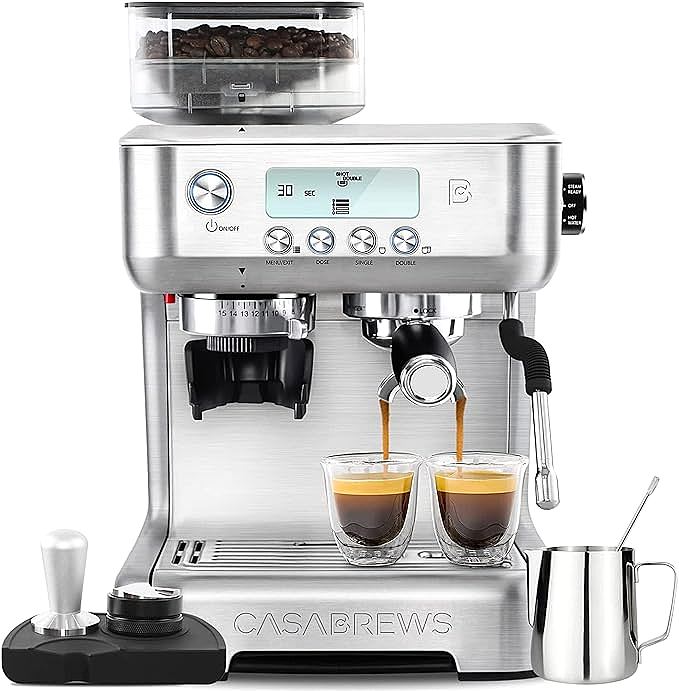
Your First Espresso Machine, Beginner Guide

Your First Espresso Machine
The machine, and the few figures that define it
A beginner espresso machine earns its place on the counter with four working parts: a reservoir for the water, a heating element, a pump, and a portafilter. This guide takes Your First Espresso Machine as the example and works from the five figures that decide a first year of mornings: a 38 oz reservoir, a 1200 w element, a 15 bar pump, an 18 g dose, and a body that stands 14 inches tall against ten wide. No other specification is load-bearing for a beginner, and what follows turns each figure into something you can test in the kitchen rather than read off a spec sheet.
What the 38 ounce tank buys the morning
The reservoir holds 38 oz of water, and the element that heats the brew path is the 1200 w one. The two figures belong together, because a household morning is only a few drinks' worth of work: at the 12 oz size, 38 oz covers just over three cups before the tank runs dry. A 38 oz tank is sized for exactly that: more drinks than one sitting should take. A beginner who pulls the first shot, tastes it, re-doses and pulls again spends water, not waiting time, and the element heats the supply fast enough that breaking the routine to refill the tank would cost more than the first attempts already do. Sizing the tank is therefore a decision about how many drinks one sitting holds, not about how hard the machine works.
Fifteen bar of pump, nine bar of work
The pump is rated at 15 bar, and that is not the pressure the shot feels. A semi-automatic machine brews at about 9 bar, the working point where extraction quality forms; the higher rating is headroom, so the pressure holds even when the dose and the grind offer resistance. The practical split that follows is the one a beginner should keep: the machine owns the pressure end of the brew, and the person owns everything else. Grind fineness, the dose, and the pull time decide how the cup tastes, while the pump keeps water moving through the grounds steadily. That same pump also serves every drink size the machine makes, from the smallest cup to the longest lungo, without changing between them.
Eighteen grams, and the cup they build
The portafilter holds an 18 g dose of ground coffee, and that single figure sets the strength of everything downstream. At the classic 1:2 ratio the dose pulls a 36 ml double shot, the base that most latte and cappuccino recipes build around. Dose is also the one number the machine cannot correct for you, which is why the habit to build first is weighing it on a small kitchen scale set to grams rather than scooping; the grind and timing adjustments covered below only work from a dose you can repeat.
From a 10 ounce cup to a 14 ounce lungo
The drinks the machine covers span three sizes: the 10 oz cup, the 12 oz shot, and the 14 oz lungo. All three share the same pump and the same 36 ml double-shot base, so changing sizes changes how the espresso is dressed, not what the machine does. A beginner buys that range without a second machine, and the longest drink sets the limit on the tank: the 38 oz reservoir holds about two of them before a refill.
Fourteen inches up, ten inches deep
The body stands 14 inches tall and ten inches wide, and those two figures decide where it lives. The height is what the counter gives up for the machine, and the width is the footprint to keep clear: leave it away from the counter edge and from any outlet you might need to unplug mid-brew. A growing setup adds a grinder and a scale beside the machine, so measure the ten inch width first against what is already on the counter; the height mostly needs to clear whatever hangs above it.

Making the First Batch of Shots
Start with the 18 g dose, the amount the portafilter is set up to hold, and grind the beans to a fine but not powdery texture so the 15 bar pump can push water through evenly. Pull the first shot for about 25 to 35 seconds: if it runs out faster, the grind is too coarse and the cup will taste thin, and if it crawls or overflows, the grind is too fine and the cup turns bitter. At the classic 1:2 ratio, that 18 g dose yields a double shot of roughly 36 ml of espresso, the size most latte and cappuccino recipes build around. A small kitchen scale set to grams, rather than a heaped scoop, is the one tool that keeps a beginner consistent, because dose is the number the machine cannot correct for you.
The 38 oz reservoir is the water math behind a small household's morning. The 1200 w heating element brings the water up on a short startup, so the machine is ready when you pour the first dose rather than waiting for a slow cold start, and the 38 oz holds enough for several double shots before a refill is due. For a beginner espresso machine, that combination matters because it forgives the slow first attempts: you can dial a shot, taste it, re-dose and pull again, and still have water left for the next cup without breaking the routine to refill the tank.
Before you place the machine on the counter, check the space it will own. The 14 inch height and the 10 inch width are the two numbers that decide where it lives, and they leave room for a grinder and a scale beside it, which is where a serious beginner's setup grows over time. Keep the 10 inch footprint clear of the counter edge and away from an outlet you might need to unplug mid-brew, and the whole routine stays comfortable instead of cramped.

What to remember at the counter
At the counter, the machine keeps six figures, and that is the whole spec a beginner works from: a 38 oz tank, a 1200 w element, a 15 bar pump, an 18 g dose, and a body that stands 14 inches tall and ten inches wide. Water you can count out in drinks, heat that keeps the routine moving, a pressure the machine owns, and a dose that owns the taste. Your First Espresso Machine will be judged by how its first 36 ml double shot tastes, not by how long its specification list is.
Your First Espresso Machine
Related Essays

The Science of Microfoam: Mastering Milk Chemistry at Home
Yabano cm6851 15 Bar Espresso Machine with Milk Frother

BIZEWO F1 Milk Frother: Your Guide to Perfect Cafe-Style Drinks at Home

ODIFORGO Milk Frother: Craft Perfect Cafe-Style Drinks at Home

Zulay Executive Series Milk Frother: Create Cafe-Quality Foam at Home

Modena MF-BLK Handheld Milk Frother: Your Secret to Perfect Lattes at Home

CAVDLE CMEP02 Espresso Machine: Brewing Barista-Quality Coffee at Home

The Perfect Swirl: Unveiling the Science, Culture, and Craft Behind Your Morning Cappuccino

Wirsh Home Barista Plus: Achieve Cafe-Quality Espresso at Home