How to Choose and Use a Home Espresso Machine

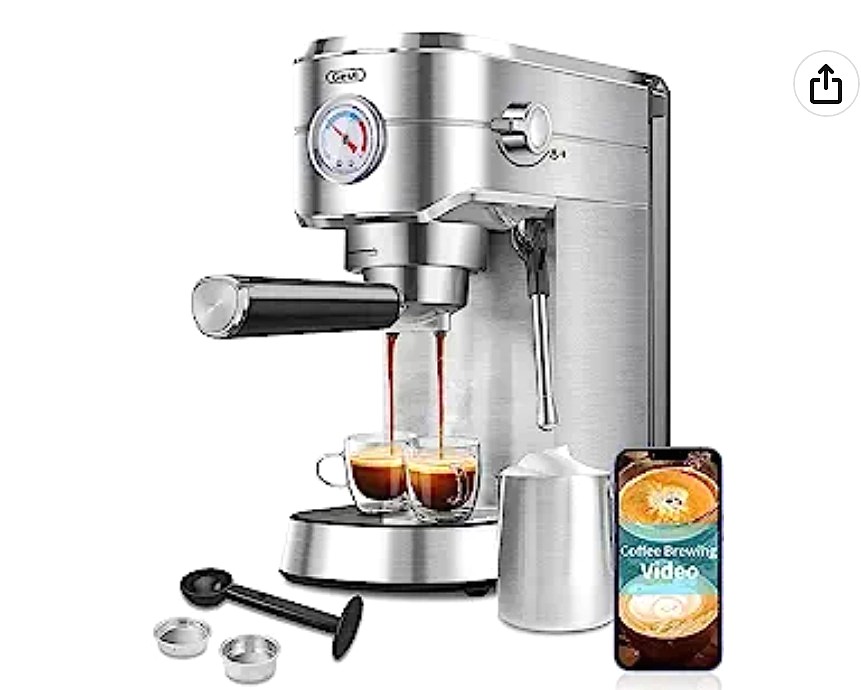
Gevi 20 Bar Compact Espresso Machine
What sets an espresso machine apart
A drip brewer lets hot water fall through a bed of coffee under normal pressure, and the result is a light filtered drink. An espresso machine works the other way. It pushes a small amount of water through a tightly packed puck of fine grounds, and that pressure produces a concentrated shot with a layer of crema on top. Three jobs sit at the center of every machine in this class: heating water to a narrow temperature band, driving that water through the puck at a steady pressure, and steaming milk with a wand. A compact model performs those same jobs in a smaller footprint. That is the territory this home espresso machine buying guide covers, and it walks through the parts that decide the cup, from the pump to the cleaning routine that keeps the machine steady over months of use. One example that brings those pieces together is a compact 20 bar machine with a front pressure gauge and a steam wand.
Pump pressure and the gauge on the front
The number printed on a box, such as 15 bar or 20 bar, describes the pump rather than the pressure at the coffee. What reaches the puck sits closer to 9 bar, and a machine that holds near that figure can pull a proper shot. A pump rated above 9 bar leaves headroom, so the flow stays steady as the puck resists the water. That is why 20 bar pumps turn up across this price band. Pressure at the puck is not a fixed figure either. It climbs as the bed of grounds builds resistance, and a pump with spare capacity holds a steady line through that climb. A gauge on the front panel removes some of the guesswork. This model carries a round gauge, and the needle moves as the shot runs, so you can watch for a flow that drifts. A gauge also lets you spot a worn pump or a clogged basket, because the needle tells you when the flow no longer matches the setting. The AERCANA (B0GY74JMX3) pairs a 20 bar pump with a visible pressure gauge, and the Rounexes (B0HCJ79MCL) sets a 51mm portafilter behind its own gauge.

Temperature control and the brew water
Heat matters as much as pressure. Water that runs too cool leaves the shot sour, and water that runs too hot pulls out bitter compounds. Machines in this class hold the brew water inside a narrow range, and several name the control they use; the SECPOEDR (B0HDB4RN4W) runs on PID control, and the HAILASRE (B0G34QWDZM) runs on NTC temperature control. A control that drifts a few degrees between shots changes the taste from one cup to the next, which is why the named control matters more than the raw heater size. Wattage sets how fast the boiler reaches temperature. The HBN (B0FP1CYWZP) and the AERCANA (B0GY74JMX3) both list a 1450 W heater, while the Neretva (B0CCBM487N) lists a 1350 W boiler. A stronger heater recovers faster when you pull two shots in a row, and some machines add a short preheat cycle so the group head warms with the boiler before the first shot of the day.
The steam wand and milk texture
The steam wand turns cold milk into microfoam for a latte or a cappuccino. A wand with a rotating joint lets you swing it over the drip tray or into a pitcher at an angle, so the cup stays on the tray while the pitcher moves. Technique matters more than the wand itself. Start with cold milk, keep the tip just under the surface to pull in air, then sink it to heat the milk and spin it into a smooth texture. Milk proteins need heat and air to hold a stable foam, and the wand supplies both at once. One habit trips up new owners. On many machines you cannot brew right after steaming, because the boiler runs hot and the group needs to cool first. The CASABREWS CM5418 (B09X3WGJ3R) notes that the machine must cool down before the next shot. Rinse the tip with a short blast of steam after each pitcher, because dried milk clogs the holes and weakens the next froth.
Pre-infusion and an even extraction
Pre-infusion wets the puck with a short, low-pressure burst before the full flow starts. The wetting step lets the grounds expand and settle, which reduces channeling, the path of least resistance where water shoots through one spot and leaves the rest of the puck dry. A machine without pre-infusion can still pull a decent shot, but the first seconds of full pressure hit a fresh puck harder and push the water toward the loose edges. Several listings name the feature. The AYCHIRO (B0HJBP8DV7), the Neretva (B0CCBM487N), and the HAILASRE (B0G34QWDZM) each pair a 20 bar pump with pre-infusion, and the SECPOEDR (B0HDB4RN4W) describes a low-pressure version of the same idea.

Pulling a shot over time
Getting a shot to come out the same way twice is less about following a rigid list and more about paying attention to a few moving parts on a semi-automatic model with a single boiler. Grind size sets the pace: too coarse and the water rushes through, leaving a thin shot; too fine and it slows to a crawl until the pump strains. Keeping the dose consistent and leveling the bed gives a starting point to adjust from one variable at a time.
A level, firm tamp helps the water meet even resistance, while a sloppy one tends to send it down the path of least resistance. After wiping the basket rim and locking in the portafilter, watching the first drops tells the story. A well-set shot usually starts as a slow, dark ribbon before settling into a steady stream with a caramel color, finishing around 25 to 30 seconds. If it races through in a few seconds, the grind is likely too coarse; if it drips and stalls, it's likely too fine. Between shots, knocking out the puck and flushing the group with a short burst of water, along with wiping the wand right after steaming, keeps the flow even from one pull to the next. Give that sequence a few weeks and it settles into a repeatable routine that removes most of the guesswork from pulling at home.
Keeping things clean over the long haul
Coffee oils and mineral scale creep in slowly, and both take a toll on taste. Regular cleaning and descaling keep the machine in steady shape over months of use, so a quick rinse at the end of the day and a more thorough clean once a week keep the group head and basket clear. If the maker allows it, backflushing with water and a cleaning powder once a month helps keep the shower screen holes open and the flow even. Scale builds more quietly: as water heats, calcium stays behind, and a boiler coated in scale takes longer to reach temperature or drifts a few degrees off. The XIXUBX (B0HH8ZXD9X) lists a descaling function, and when the flow starts to slow, running a descaling solution is often the fix. After following the maker's dilution and rinse steps, pulling two shots of plain water clears any residue before brewing coffee again.

The Gevi 20 Bar Compact Espresso Machine: a compact example
Gevi in a small kitchen
For a countertop that fits one machine and not much more, the Gevi is the listing to read closely. The full stainless steel housing is compact enough for small kitchens, and the hot water function covers Americanos, tea, and warming cups before the first shot. Every Gevi bought through an official or authorized channel carries a 12-month warranty plus lifetime tech support.
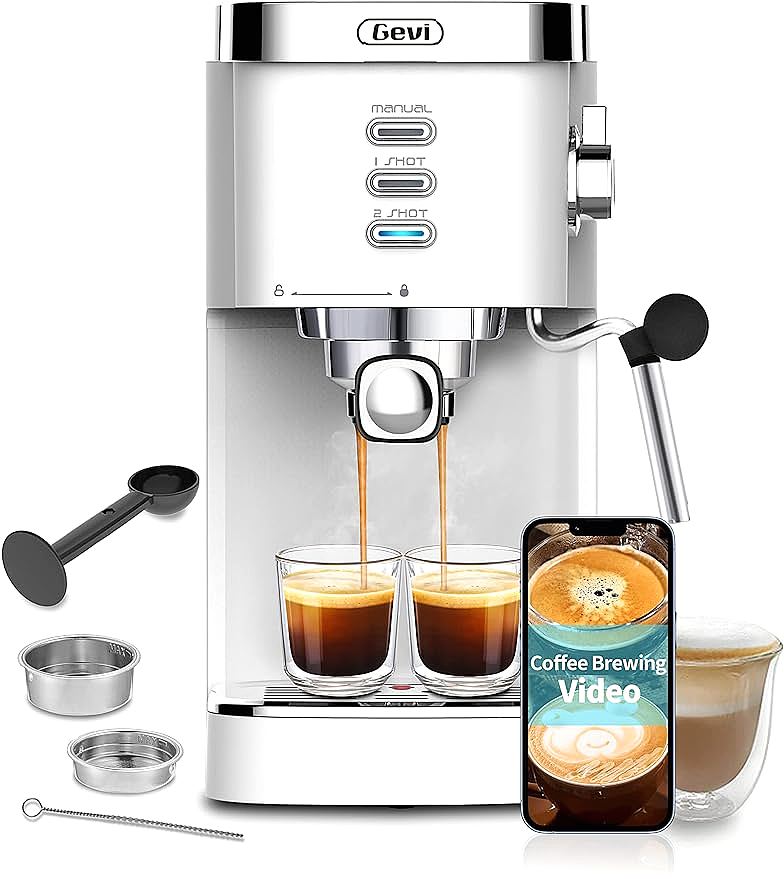
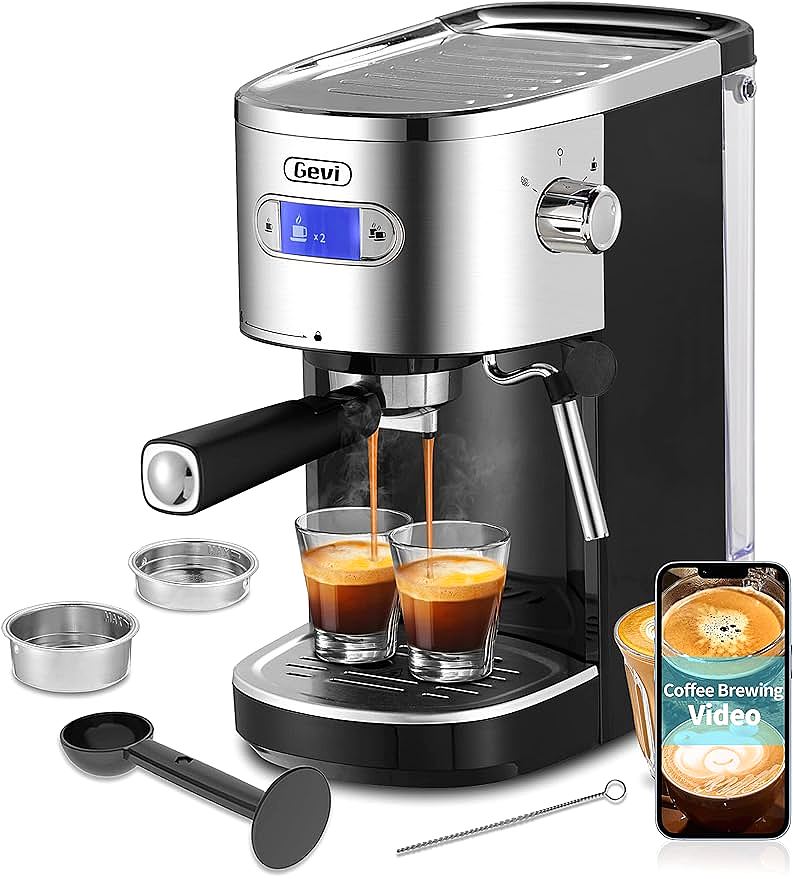
The Gevi 20 Bar Compact Espresso Machine brings those elements together in one small body: a 20 bar pump, NTC temperature control, pre-infusion, a pressure gauge, and a steam wand with a removable froth nozzle. A full stainless steel housing, a hot water function for Americanos and tea, and a 12-month warranty round out the package at about $119.98.
How compact machines compare
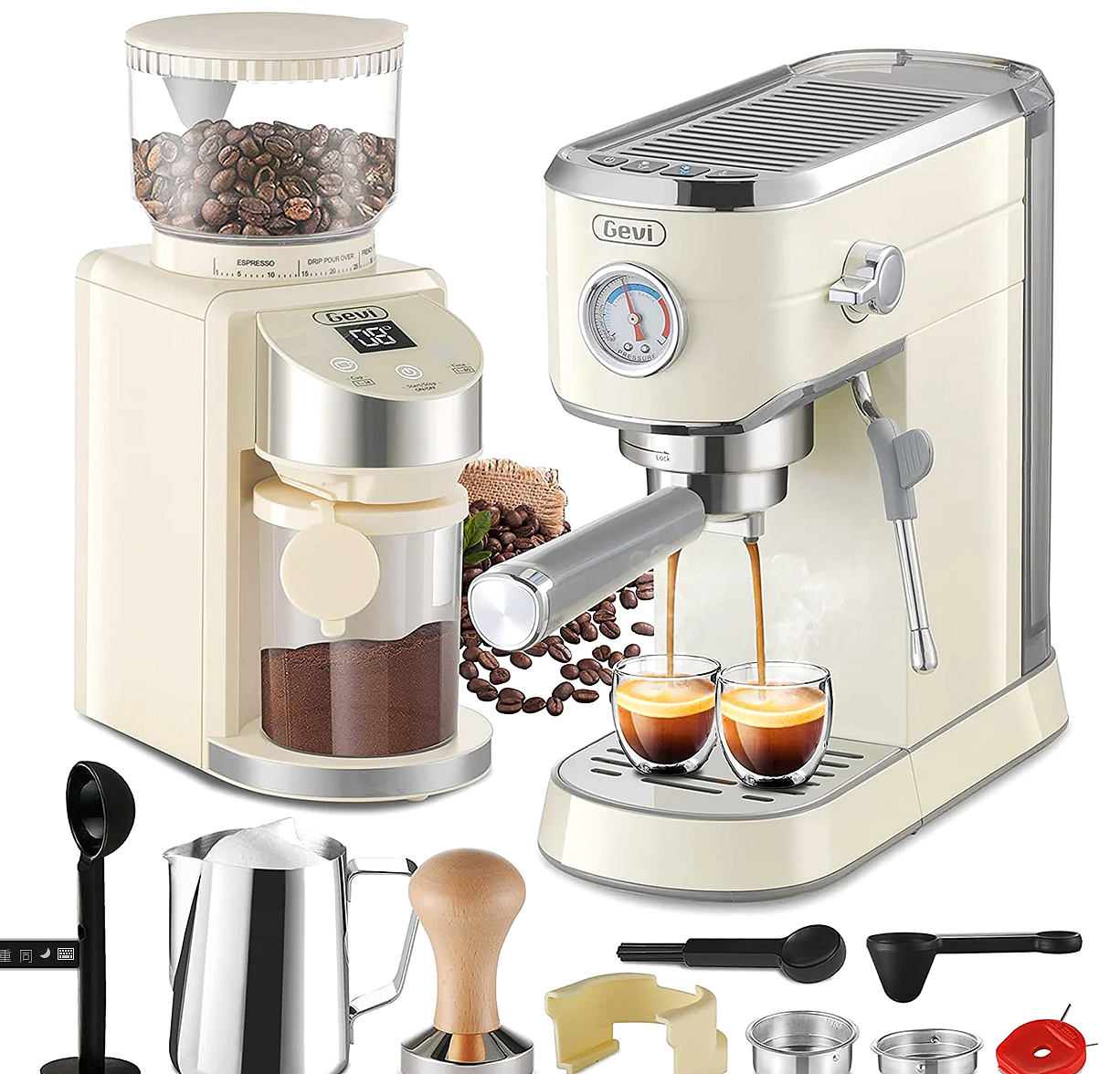
Prices in this class cluster between about $64.99 and $179.99, and the differences show up in the extras rather than the pump. The NEWBULIG (B0HHHLF5M9) sits near the low end and pairs a 20 bar pump with a 1350 W boiler and a 34 oz tank. The AYCHIRO (B0HJBP8DV7) adds pre-infusion and a touch panel for a few dollars more. The HBN (B0FP1CYWZP) lists a 1450 W heater with a 34 oz removable tank. At the top of the range, the Spacekey (B0H1C4WCXX) adds a built-in grinder with 30 grind settings and a body that measures 11.6 x 9 x 14 inches. A taller budget buys convenience, not a better shot, because every machine here runs the same 20 bar pump. The CASABREWS 3700 (B0BRSP8YT6) takes a different route and trades the gauge for a 43.9 oz tank, which suits a kitchen that brews for several people in a row.
Reading a listing before you order
A listing packs the useful facts into a short block. Start with the pump rating and the boiler wattage, because those two set the ceiling on what the machine can do. Then look for the features that match your routine: a pressure gauge if you want feedback, a larger tank if you brew for guests, and a wand with a removable tip if you clean it often. Check the tank size in ounces and the portafilter size in millimeters, since those decide how many cups you can pull between refills and which baskets fit. Skip the promises that carry no number. A listing that names a pump rating, a wattage, and a tank size tells you more than one that repeats a slogan.
Gevi 20 Bar Compact Espresso Machine
Related Essays

The 20-Bar Espresso Machine Myth: What Really Makes the Perfect Home Brew


How to Choose and Use a Compact Espresso Machine

Gevi 20 Bar Espresso Machine: Brewing Barista-Quality Coffee at Home
Gevi E418E 20 Bar Espresso Machine: Barista-Quality Coffee at Home
Gevi 20 Bar Espresso Machine: Unlock Cafe-Quality Espresso at Home

Gevi Portable Manual Espresso Machine: Brewing Science in Every Cup
Gevi GECME022-U Espresso Machine: The Science of Home Espresso & Cappuccino | Fast Heating, 20 Bar
Gevi GECME400BA-U 20 Bar Espresso Machine: Unlocking Espresso Science at Home
