The 20-Bar Espresso Machine Myth: What Really Makes the Perfect Home Brew

CASABREWS CM5418 Compact Espresso Machine
The bar number on the box is not the number in the cup
Walk the appliance aisle and every box shouts the same figure. Fifteen bar. Twenty bar. The implication reads as obvious: a larger number means a better machine, so the 20 bar espresso machine must beat the 15 bar one beside it. That reading falls apart once you trace where the pressure is measured and where it ends up.
A pump rating describes what the pump can push when it meets resistance. What reaches the coffee sits far lower. A shot pulls best near nine bar, and every pump in this class holds that figure with room to spare. The headroom above nine bar does not add flavor to the cup. It keeps the flow steady while the puck fights back, which matters, but the taste does not scale with the digits on the label.
So what separates a thin, sour shot from a rich one? Grind, dose, water temperature, an even bed of coffee, and fresh beans. The pump sets a ceiling. The rest of the setup decides whether you ever reach it.

What the puck really sees
Espresso is a pressure drop across a bed of fine grounds. Water enters the group, spreads over the top of the puck, then forces its way through thousands of small gaps between particles. The resistance of that bed, not the pump label, sets the pressure at the coffee.
A pump rated at 20 bar leaves roughly 11 bar of unused capacity during a typical nine bar extraction. That gap absorbs the small surges that build as the puck compacts, and it also hides a worn pump, because the flow still looks fine long after the pump has lost its edge. A rating well above nine bar is a sound design choice. Treating it as a quality score is where the myth begins.
The figure that shapes flavor is the one at the puck, and it moves through the shot. Pressure climbs as the bed tightens, then settles as the pour runs. Nine bar at the start and a slow decline toward the end is normal. A pump that cannot keep pace lets the pressure sag, and the final 20% of the pour turns watery.
Pre-infusion adds one more variable. A short, low pressure burst wets the puck before the full flow starts, which lets the grounds expand and settle into an even bed. The wetting step cuts down on channeling, and a machine without it can still pull a clean shot if the puck is built well. The SECPOEDR (B0HDB4RN4W) names a low pressure pre-infusion, and several listings in this class pair a 20 bar pump with the same idea.
Grind and dose carry more weight than the pump
Two settings change a shot more than any pump rating, and both sit on your side of the machine.
Grind size
Grind size sets how fast water moves through the bed. Too coarse, and the water races past the grounds before it can dissolve much, so the shot runs thin and sour. Too fine, and the flow slows to a drip while the pump strains. The sweet spot sits where the first drops arrive after a few seconds and a double finishes in roughly 25 to 30 seconds.
Dose and tamp
Dose means the weight of coffee in the basket, measured in grams. A double basket takes about 18 g, and a single sits near 9 g. Keep the dose fixed from shot to shot so you change one variable at a time. A level tamp with a flat tamper keeps the bed even. An uneven bed sends the water toward the loose side, and that side runs fast while the rest of the puck sits untouched. Baristas call this path of least resistance channeling, and it is the most common cause of a bitter, uneven shot.
A machine with a 20 bar pump and a careless grind loses to a 15 bar machine with a dialed-in setup every time. The pump cannot repair a puck that was not built right.
Temperature stability separates good shots from great ones
Water temperature does as much work as pressure. Below about 90 degrees Celsius the shot tastes sharp and sour, and above roughly 96 degrees it turns bitter and ashy. The window is narrow, and holding it steady across several shots is harder than holding pressure steady.
One control type turns up on the listings in this class: PID. It reads the water and adjusts the heater in small steps, so the brew temperature drifts less between shots. A PID machine tends to cost more, and for a single daily cup the difference is small. Pull three shots back to back for guests and a stable controller starts to earn its price.
Heater wattage sets how fast the boiler recovers. Several machines in this class list a 1350 W boiler, and a stronger heater returns to the target sooner after a shot or a steam cycle. Let the machine warm for a few minutes before the first shot so the group head reaches the same range as the boiler. Wattage does not raise the ceiling on flavor. It shortens the wait.

Fresh beans change the target
The grind that worked last week may not work today, and the beans are often the reason. Coffee releases carbon dioxide for days after roasting, and that gas pushes back against the water. A bag roasted four days ago and a bag roasted four weeks ago behave like different coffees on the same setting. Fresh beans need a slightly coarser grind, because the escaping gas adds resistance of its own. As the bag ages and the gas fades, the same grind runs faster, and the shot turns thin.
Roast level shifts the window too. A dark roast is more soluble and gives up its flavor with less heat, while a light roast needs a finer grind and a little more temperature to open up. Neither is better. They ask for different settings, and the pump rating says nothing about either.
Buy in small amounts and keep the bag sealed. A bag that sits open on the counter loses its aroma within a week, and no pump, gauge, or PID controller can bring that back.
The gauge that shows the real number
A pressure gauge is the one feature that lets you watch the myth fall apart. The needle reads the pressure at the group, not the pump, so it shows the figure that reaches the coffee. Watch it during a shot and the gap between the box rating and the extraction becomes visible.
The CASABREWS CM5418 Compact Espresso Machine carries a built-in pressure gauge on a 20 bar Italian pump and a 1350 W boiler, with a 34 oz removable tank and a steam wand for milk drinks. The gauge turns each shot into feedback. If the needle sits low while the flow runs fast, the grind is too coarse. If it climbs while the flow stalls, the grind is too fine. Without a gauge you still taste the result, but you are guessing at the cause.
A gauge also warns you about a pump on its way out. A pump that can no longer hold pressure shows a needle that sags early and never recovers. That reading is worth more than any number printed on the carton. The listing behind it is B09X3WGJ3R.

Steam, milk, and the shot you cannot pull next
A steam wand textures milk for a latte or a cappuccino, and the technique matters more than the wand. Start with cold milk, keep the tip just under the surface to pull in air, then sink it to heat and spin the milk into a smooth microfoam. Milk proteins need heat and air at the same time to hold a stable foam.
One habit catches new owners. On many single boiler machines you cannot pull a shot right after steaming. The boiler runs hot for steam, and the group head needs to cool before the brew water returns to its range. The CASABREWS CM5418 listing warns that the machine must cool down after frothing, or the protection circuit trips and the cup lights flash. Pull your shots first, then steam the milk.
Rinse the wand with a short blast of steam after each pitcher. Dried milk clogs the holes, and a clogged wand weakens every foam after it. A wand with a rotating joint makes the job easier, because you can swing it clear of the drip tray without moving the pitcher.
What a listing tells you, and what it hides
A listing packs the useful facts into a short block, and the bar rating is the least informative line in it. Read the pump rating to confirm headroom, then move to the details that change your routine. Boiler wattage, in watts, sets recovery speed. Portafilter size, in millimeters, decides which baskets fit, and most listings in this class leave it unstated; the Rounexes names it at 51mm. Tank size, in ounces, sets how many cups you pour between refills. The control type a listing names, where it names one, sets how steady the brew temperature stays. A pressure gauge gives you a way to diagnose a bad shot.
Compare two machines that share a 20 bar pump and the differences appear in those lines, not in the bar figure. The Rounexes (B0HCJ79MCL) pairs a 20 bar pump with a 51mm portafilter and a touch panel. The SECPOEDR (B0HDB4RN4W) uses PID control, a low pressure pre-infusion, and a 45 oz tank. The CASABREWS 3700 (B0BRSP8YT6) trades the gauge for a 43.9 oz tank, which suits a kitchen that brews for several people in a row. The AMZCHEF (B0GRFMFCNR) adds a built-in grinder with 20 settings, and the Mooye (B0HLD7JPPQ) pairs a 20 bar pump with its own grinder. The AIRMSEN (B0HK4VP8T7) sits near the top of the band, the BYESHOP (B0GXXXBZXG) lands near the value end of it, and the Electactic (B0GNGTN7TV) asks the highest price of the group even though its spec sheet rates the pump at 15 bar. Every machine here still has to reach the same nine bar at the puck. What changes is how much help you get reaching it.

A routine that repeats
The myth survives because a number is easy to sell and a routine is not. Build the routine and the pump rating fades into the background.
Weigh the dose on a scale. Grind fine enough that the first drops arrive after a few seconds. Tamp level and lock the portafilter into the group. Watch the gauge and the flow together, and move the grind by one small step at a time. Aim for a double in 25 to 30 seconds. Taste the shot, then change a single variable before the next one.
Keep the machine clean. Flush the group after each shot, rinse the wand before the milk dries, and descale on a schedule so mineral buildup does not throw off the temperature. Scale coats the boiler and slows the heater, and a scaled machine runs a few degrees off without any warning light.
A 20 bar espresso machine can pull a fine shot, and so can one rated at 15 bar. The bar number tells you the pump has room to work. Grind, dose, temperature, and a repeatable routine decide what lands in the cup.
CASABREWS CM5418 Compact Espresso Machine
Related Essays

How to Choose and Use a Home Espresso Machine

How to Choose and Use a Compact Espresso Machine
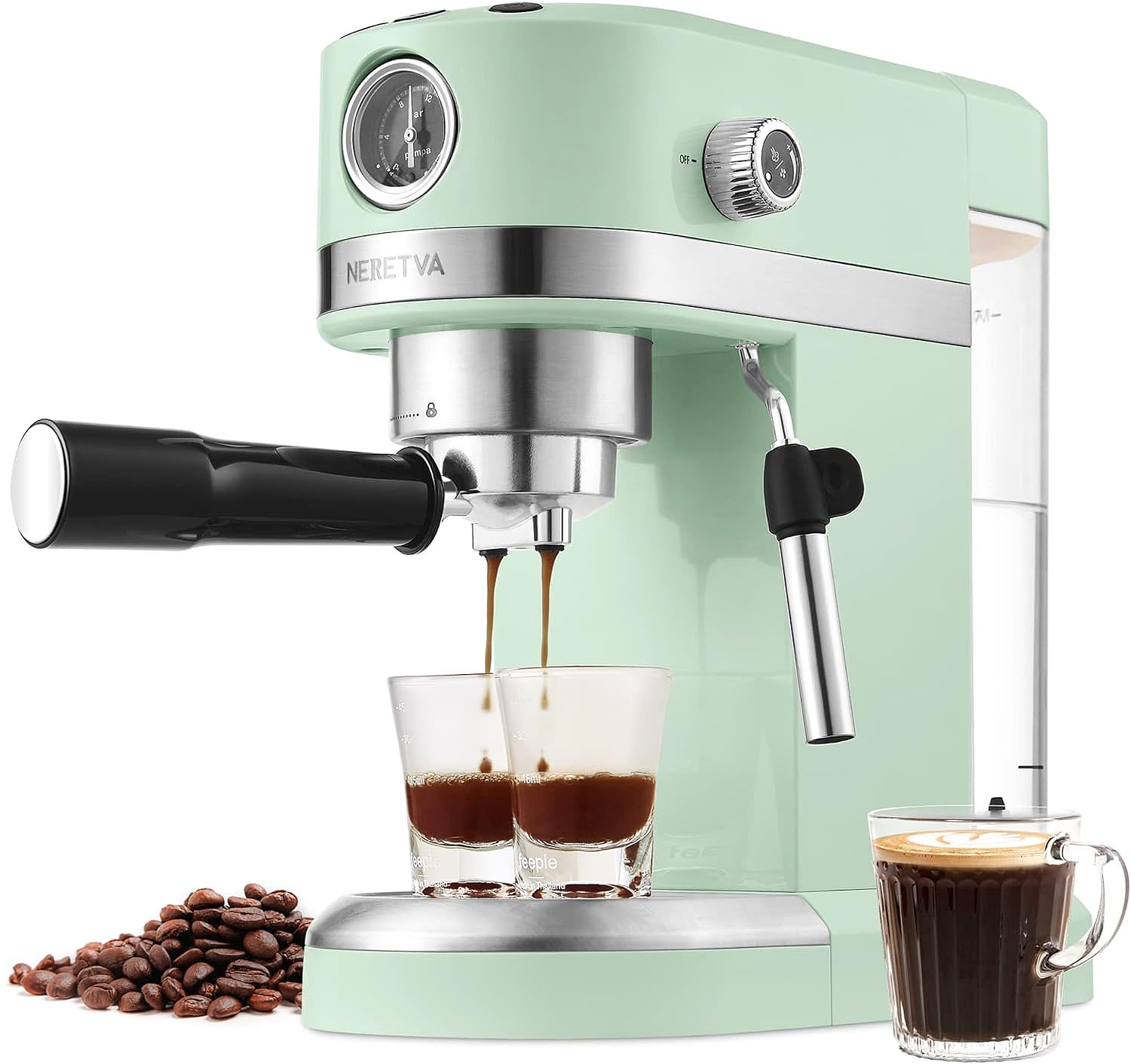
Neretva PE3680U 20 Bar Espresso
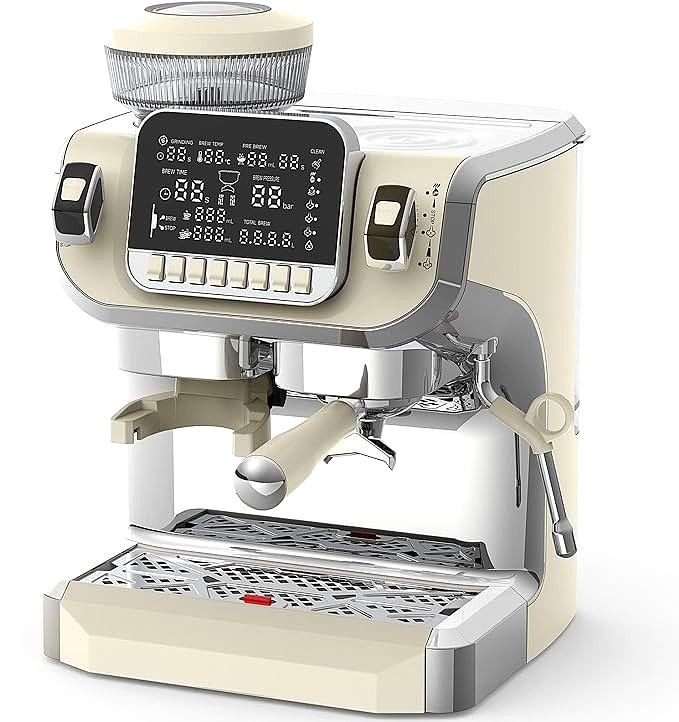
Espresso Extraction, Thermodynamics at 15 Bars
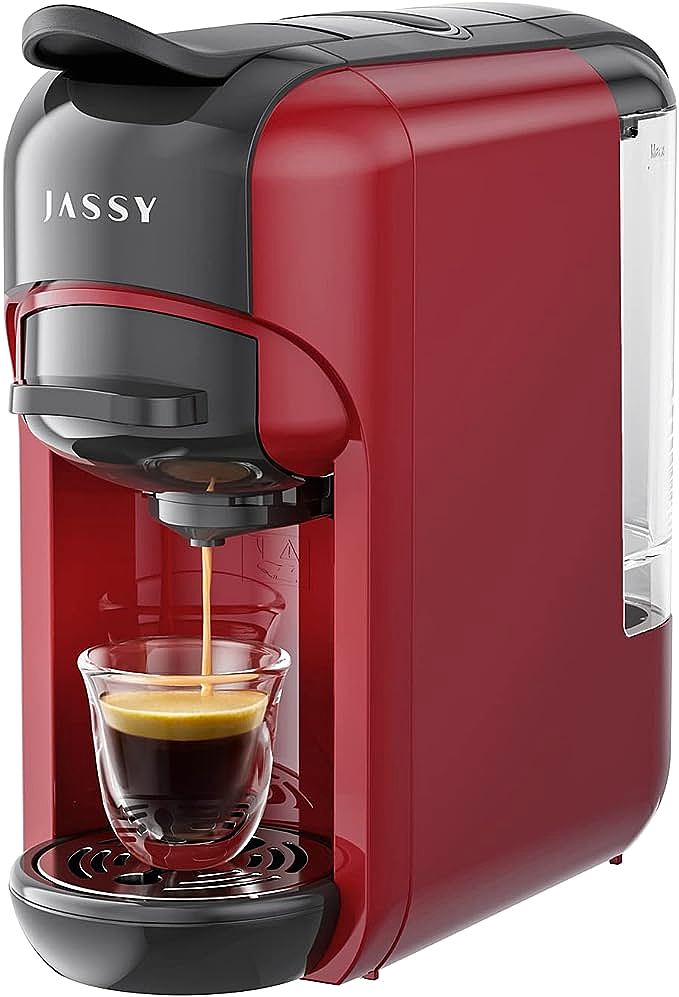
JASSY 20-Bar Budget Espresso
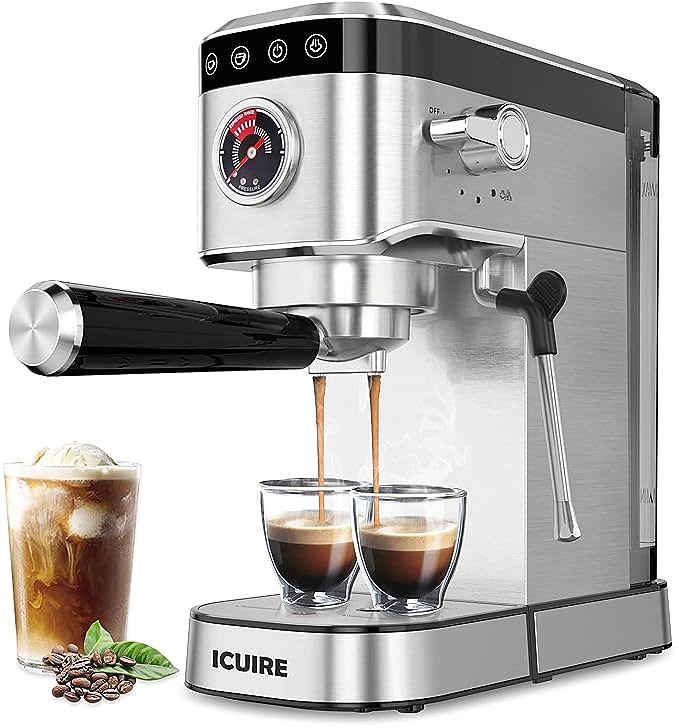
ICUIRE CM5100 20 Bar Espresso

Mr. Coffee 4-Shot Steam Espresso Maker for Cuban Coffee at Home

MEROL ME-720 Super Automatic

Emulsifying Lipids at 20 Bars, Semi-Automatic Espresso
