Emulsifying Lipids at 20 Bars, Semi-Automatic Espresso

CASABREWS CM5418
The CASABREWS CM5418 is a compact semi-automatic espresso machine built around a 20 bar Italian pump, a 1350 W boiler, a 34 oz removable water tank, a built-in pressure gauge, and a steam wand for milk.
Emulsifying Lipids at 20 Bars, The Thermodynamics of Semi-Automatic Espresso
Crema is the foam a pump makes out of the coffee, and the 20 bar pump is the headroom that lets the puck see the 9 bar it needs to emulsify the lipids. The thermodynamics decides how much fat, gas, and protein stay in suspension long enough for the cup to show them. This guide reads the emulsification through the numbers, because the crema is the visible proof that the physics worked.
The pressure emulsifies the lipids
The 20 bar pump pushes water through the puck, and by the time it reaches the group the pressure the puck feels is about 9 bar. That 9 bar is what splits the coffee oils into a fine 0.5 to 2 micron foam that settles on the shot as crema. Give the same pull an 18 g dose and it emulsifies into a layer roughly 1 cm thick. Hold 9 bar over an 18 g dose and the lipids emulsify; drop either one and the crema thins out or vanishes altogether.
The temperature is the second half
Brew temperature is the other half of the physics: it keeps the lipids mobile enough to emulsify. Pull an 18 g dose over 25 to 30 seconds and you land in the 18 to 22 percent extraction band that a proper crema needs. Water at about 93 deg C, pressed through a fine espresso grind, is what keeps the oils dissolved in the stream, and it is the 18 g dose that supplies the fat and protein in the first place. Temperature gets the lipids moving, the dose provides them, and the 30 second window is how long the reaction needs to finish.
The protein is the stabilizer
What holds the foam up is protein: the coffee proteins wrap themselves around the gas bubbles and stop them coalescing. An 18 g dose carries roughly the 4 to 6 percent protein share that keeps a crema stable for a few minutes before it collapses. So a shot built from 0.5 to 2 micron bubbles with that 4 to 6 percent protein holds a crema about 1 cm thick, and the protein is doing the holding while the dose simply delivers it.
The semi-automatic keeps it constant
Most of the steadiness is done for you by the machine. The 20 bar pump, the 1350 W element, and the built-in pressure gauge hold the pull in real time where the physics wants it, while the 34 oz removable tank keeps feeding the boiler so you do not have to refill mid-session. Run the same 18 g dose and the same fine grind and every shot emulsifies the same way; the boiler and the gauge do the holding, and the dose is what you repeat by hand.
The sheet to remember
Written down, the whole recipe is one line: 20 bar pump, 9 bar at the group, about 93 deg C, an 18 g dose, fine grind, 25 to 30 seconds. If the lipids emulsified you will see it in a crema roughly 1 cm thick, built from 0.5 to 2 micron bubbles, with the extraction sitting inside the 18 to 22 percent band. Everything above traces back to the 9 bar doing the emulsifying, the 93 deg C keeping the oils in solution, and the 18 g dose supplying the fat and protein the foam is made of. The 1350 W boiler is what keeps all of it repeatable, and the crema on top is the visible part.
The long shot and the re pull
Pull past the 30 second window and the shot goes long. Run an 18 g dose out to 60 ml and the extraction slides under 18 percent, so the cup thins out and the crema collapses. The pump and the boiler stay steady; it is the time that now moves the result. Hold an 18 g dose to 25 to 30 seconds and it lands the 18 to 22 percent band, stretch the same dose to 45 seconds and it tips to the sour side. Keep the dose at 18 g and the pull inside that 30 second window and the long shot stays in check.
A re pull is where the pressure gauge earns its keep. Put the same 18 g dose in the double basket, tamp it level, and the second shot reads the same pressure as the first, so the crema comes out the same thickness and the 0.5 to 2 micron bubbles stay in suspension for that 1 cm layer. The gauge and the 1350 W boiler are what make a re pull consistent, while the 18 g dose is the part you keep identical on every go-round. Watch the needle hold a steady reading and you can see the thermodynamics ran the same way twice.


Dose, tamp, lock, pull
Dosing on this 2-in-1 semi-automatic is a short routine. Fill the double basket to an 18 g dose, level it and tamp with the included tamper, lock the portafilter into the group, and start the pump. From there the 20 bar pump runs water through the bed, the 1350 W boiler holds the temperature, and the gauge shows the pull. The included one-cup and two-cup filters let you switch between a single and a double, and once the shot is done the steam wand textures milk for a cappuccino or a latte. Keep the dose at 18 g, the grind fine, and the pull inside the 25 to 30 second window, and the emulsification keeps landing the same shot.
Keeping the loop clean
Every part that touches the coffee lifts out for washing: the portafilter, the two brewing filters, the drip tray, and the detachable 34 oz water tank. Purge the steam wand after every round of milk so the tip does not crust over, and wipe the group gasket so the portafilter seats flat. Descale the boiler on a monthly pass with citric acid at 2 percent, and keep the rubber seals dry so the group does not grow mold. Make the monthly descale and the daily wand purge a habit and the boiler and the 20 bar pump keep doing the same work for years.
What the payback looks like
On the home side the maths are what make the CM5418 worth owning. A 250 g bag of whole beans at 14 dollars gives you about 14 shots at an 18 g dose, which comes out near 1.00 dollar a cup at home against the 4 to 6 dollars a cafe charges for the same drink. Save roughly 3 to 5 dollars a cup and the 139.99 dollar machine (in our live check, October 2026) pays for itself in about 40 cups, or a few weeks at two a day. Holding that 18 to 22 percent extraction band is what makes each shot taste the same, and the 1 cm crema on top is the visible proof the numbers held. That steady band, repeated every morning, is the payoff an automatic espresso machine is meant to give.
CASABREWS CM5418
Related Essays
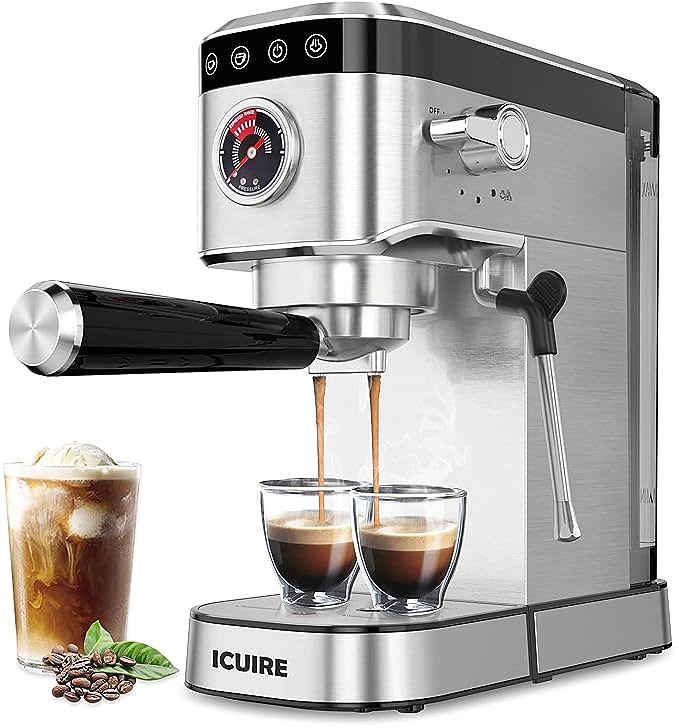
ICUIRE CM5100 20 Bar Espresso

Mr. Coffee 4-Shot Steam Espresso Maker for Cuban Coffee at Home

Kwister CM1687 Guide: The Numbers Behind the Shot

Home Espresso Machine with Milk Frother Buying and Usage Guide

Swan Nordic Espresso Machine 15 Bar Pressure & Milk Frother Guide
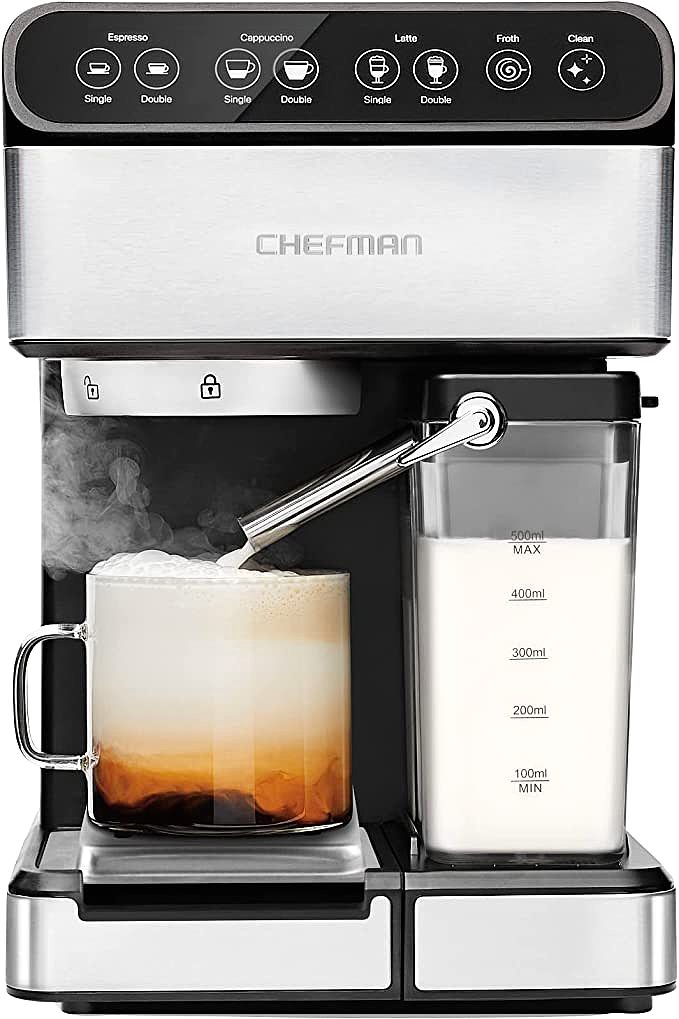
Chefman RJ54 6-in-1 Espresso Machine

CHULUX Slim Espresso Machine: 20-Bar Espresso for Your Home Kitchen
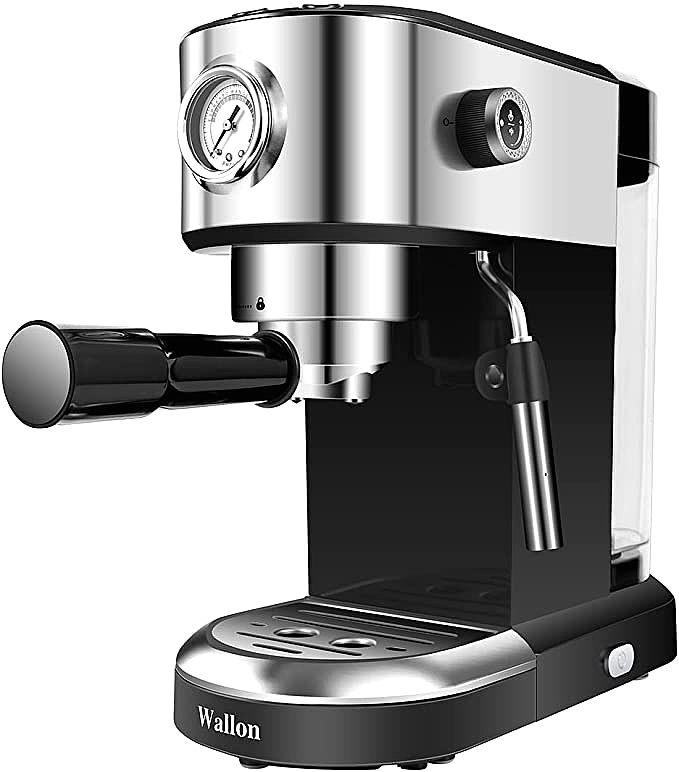
Wallon EM3105 Espresso Machine: Unlock Barista-Quality Coffee at Home
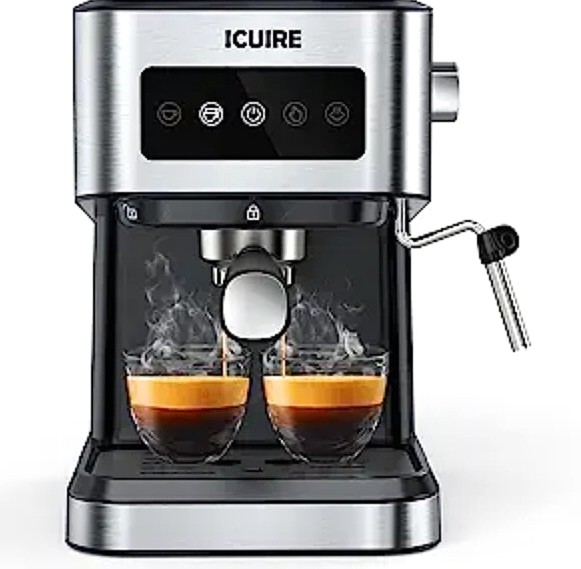
ICUIRE CM3000: Your Gateway to Barista-Quality Espresso at Home
