Cuisinart CBC-200SA Stainless Steel Manual Espresso Maker: The Science of Home Espresso

Cuisinart CBC-200SA Stainless Steel Manual Espresso Maker
Home espresso looks simple from the outside. You lock a portafilter, press a button, and dark coffee drips into a cup. Inside that cup is a small storm of physics and chemistry: pressurized hot water forced through a compacted bed of ground beans, dissolving sugars, oils, and gases in half a minute. The Cuisinart CBC-200SA Stainless Steel Manual Espresso Maker is built to make that storm repeatable on a home counter. This guide walks through how the machine works, why each part matters, and what separates a thin, sour pull from a balanced, syrupy shot.
What the Machine Is
The machine is a pump-driven manual espresso maker. It runs a 15 bar pump and brews one or two cups from loose ground espresso or a pod, with a removable 53-ounce reservoir. The stainless steel steam nozzle handles milk for cappuccino and latte. Alongside it come a tamping tool with a measuring spoon and a stainless steel frothing cup, all ready for a home setup. The footprint is about 13.5 inches long by 5.75 inches wide (roughly 34 cm by 15 cm), so it sits beside a toaster without swallowing the counter.

Manual here means you control the variables. A fully automatic grinds, doses, and times for you. With this machine you choose the grind, weigh the dose, decide how hard to tamp, and stop the shot yourself. That is the appeal and the burden: the machine supplies pressure and heat, you supply the judgment.
The Physics of 15 Bar
Pressure drives espresso extraction. The pump pushes water through the coffee bed at about 15 bar, roughly 217 pounds per square inch. For context, a car tire sits near 30-35 psi, so an espresso puck sees about six times that force. The classic Italian standard settled near 9 bar decades ago, and many modern machines, including this one, push harder.
Higher pressure does not automatically mean better coffee. Pressure mainly changes how fast water moves through the grind and how much gas it drags into the liquid. Too little pressure under-extracts: the water slides past the grounds, leaving behind sugars and acids that never dissolve, and the cup tastes sour and watery. Too much pressure or too fine a grind over-extracts, pulling bitter tannins and harsh compounds out of the cell walls. The sweet spot lives somewhere in the middle, and the 15 bar pump gives you headroom to reach it across a range of grind sizes.
A useful way to picture it: espresso is a controlled flood. The pump is the river, the coffee bed is the dam, and the grind size sets the size of the cracks in that dam. Your job is to keep the flood fast enough to carry flavor but slow enough to leave the bitter sediment behind.
Water Temperature and the Stainless Boiler
Espresso brews best between 90-96 degrees Celsius, just below a full boil. Below that range the water cannot dissolve the caramelized sugars formed during roasting, and the shot turns flat and acidic. Above it, the water scorches the grounds and pushes the extraction into bitter territory.
This machine heats water in a stainless steel boiler. Stainless steel conducts heat slower than aluminum or copper, which means the boiler takes a little longer to reach temperature and also drifts more slowly once it gets there. The trade-off is durability: stainless resists corrosion and scaling far better than aluminum, so the heating element and the boiler walls survive years of hard water. In practice you want to let the machine warm up fully before pulling a shot, and you want to brew immediately after the ready light rather than letting the boiler idle at temperature for many minutes.
Heat also leaves the system every time you brew. The first shot after a long idle can run cooler than the second, which is why many home baristas pull a blank shot to stabilize the group before loading real coffee. With a 15 bar pump and a stainless boiler, temperature stability is a habit you build, not a feature you get for free.
The Grind and Extraction Chemistry
Espresso is the fastest coffee extraction in common use. A pour-over takes 3-4 minutes. A French press takes about 4 minutes. Espresso finishes in 25-30 seconds. Speed is possible because the grind is so fine that each particle is mostly surface area. Water touching a fine particle can reach the soluble interior almost instantly.
Extraction is not a single event. It is a sequence. First the water dissolves the most accessible compounds: bright acids and fruity aromatics. Then it pulls the caramelized sugars that give body and sweetness. Last it dissolves the heavier, more bitter molecules locked deep in the cell structure. A balanced shot stops right after the sugars peak, before the bitter tail takes over.
This is where grind size becomes your main tool. A coarse grind leaves large gaps, water rushes through, and the cup runs sour and thin. A fine grind packs the bed tight, water stalls, and the cup turns bitter and harsh. Most home espresso aims for a dose near 18-20 g and a yield around 36-40 g, a ratio close to 1:2. If your shot runs faster than 25 seconds, grind finer. If it crawls past 30 seconds, grind coarser. The machine accepts both loose grounds and pods, so you can dial in with fresh coffee or grab a pod when speed matters more than nuance.
Tamping and the Puck
The coffee puck is a compressed disc of grounds sitting in the portafilter basket. Tamping presses it flat and even before the water arrives. An uneven tamp creates channels: paths of least resistance where water jets through instead of spreading out. Channels cause the same over-extraction and under-extraction at once in one cup, and no grind adjustment can fix a channeled puck.
Good tamping is boring. Reach for the tamper that comes with the setup, press straight down with firm, even pressure, and stop. You are not trying to crush the puck into brick; you are trying to remove air pockets and level the surface. A consistent tamp matters more than a heroic one. That same tamping tool doubles as a measuring spoon, which helps you keep the dose the same shot after shot, and consistency is what lets you taste the effect of a grind change instead of chasing noise.

The 53 Ounce Reservoir on the CBC-200SA
The reservoir holds 53 ounces, about 1.57 liters. A single shot uses roughly 1-2 ounces of water through the puck, and a double uses more, plus you pull blank shots to stabilize temperature and you run water through the steam nozzle. In practical terms the reservoir supports somewhere around 20-30 shots before a refill, enough for a family morning or a small gathering without a trip to the sink.
A removable reservoir is also a maintenance win. Fixed tanks trap scale and stale water in hard-to-reach corners. A tank you can lift out, rinse, and refill keeps the water path cleaner, which matters because mineral scale inside the boiler and pump is one of the slow killers of an espresso machine. Filtered water is not a luxury here; it is the difference between a boiler that lasts five years and one that chokes on calcium in two.
Milk, Steam, and Frothing
The stainless steel steam nozzle turns the machine into a milk steamer as well. Steam from the boiler is well above 100 degrees Celsius, and the goal is to fold air into milk while warming it to about 60-65 degrees, the range where lactose tastes sweetest and the proteins still hold a stable foam.
Milk is an emulsion of water, fat, and protein. Protein molecules wrap around tiny air bubbles and hold them in suspension, which is what foam is. Too cold and the bubbles collapse before they set. Too hot, above roughly 70 degrees, the proteins denature and the foam breaks into a thin, bubbly skin. Sweet spot, again, is a window, not a point.
The frothing cup that comes with the setup is stainless steel, which gives you a readable surface and good heat conduction. Submerge the nozzle tip just below the surface to add air for the first few seconds, then tilt and sink it to fold the foam into the milk and break the big bubbles. You are aiming for a glossy, paint-like microfoam, not the stiff scoop of bubbles a soda fountain makes.
How It Compares to Alternatives
This machine sits in a crowded field of home espresso. The Cuisinart EM-100NAS, for example, runs the same 15 bar pressure with a similar 53-ounce reservoir and adds a cup-warming plate on top, usually priced around 209.99 dollars and in stock. The step-up EM-200NP1 is programmable for single and double shots and uses a larger 69-ounce reservoir, close to 395.99 dollars. If you want manual control in a smaller footprint, the De'Longhi Stilosa is a compact manual espresso option in the same category.
For stovetop simplicity, a moka pot makes a strong, concentrated coffee but cannot reach true espresso pressure; the Easyworkz Diego, for instance, makes a strong stovetop coffee at a much lower price. It is a different drink, useful for travel and camping, not a substitute for a pumped shot. Its niche is the middle: pump pressure, manual control, and a steam wand in one box, sized for a home counter.
Maintenance and Material Science
Stainless steel earns its price in an espresso machine. It is the surface you touch, the boiler that boils, the steam nozzle that scalds, and the reservoir you refill. Unlike aluminum, stainless does not pit or corrode when water sits in it, and it tolerates the repeated heating and cooling cycles that crack cheaper metals.
The routine is simple: rinse the reservoir weekly, wipe the steam nozzle after every use so milk does not bake onto it, and backflush or run clear water through the group regularly. Hard water is the enemy; a descaling cycle every 2-3 months, or filtered water from day one, keeps the boiler efficient. A neglected pump loses pressure, and a pressure loss shows up as sour, thin shots long before the machine quits outright.
Getting a Balanced Shot at Home
Manual espresso rewards routine. Weigh the dose, keep the grind consistent, tamp level, note the time, and change one variable at a time. The machine supplies the pressure, the boiler, the water, and the steam. What it cannot give you is a good shot on the first try. That is what the science of home espresso looks like in practice: small adjustments, observed carefully, until the cup turns sweet, balanced, and worth the effort.
Start with the recommended dose and ratio, pull a shot, taste it, and adjust. Sour and fast means finer or more pressure. Bitter and slow means coarser or less. Keep a small log if you have to. The machine does the heavy lifting, but the judgment, and the reward, belong to you.
Morning Espresso on the Cuisinart CBC-200SA Stainless Steel Manual Espresso Maker
The 53-ounce reservoir is the reason the morning routine works at all. Pull two consecutive shots after a blank shot, then refill once and you have a week of solo mornings in the tank. The stainless boiler cools slowly, so the second and third shots of the morning stay on temperature the way the first one was. The 15 bar pump gives each cup the same pressure story, and the tamper's measuring spoon is what keeps the 18 g dose steady from one day to the next.
A Weeknight Latte on the Cuisinart CBC-200SA Stainless Steel Manual Espresso Maker
On nights when the espresso runs too bold, the steam nozzle turns the setup into a latte machine. The 53-ounce tank easily covers the extra water for two milk drinks, and the stainless frothing cup keeps the microfoam readable so the drink lands glossy instead of bubbly. The 5.75-inch footprint means the machine, the cup, and a mug all fit in the strip of counter next to the toaster without crowding the kitchen.
Cuisinart CBC-200SA Stainless Steel Manual Espresso Maker
Related Essays
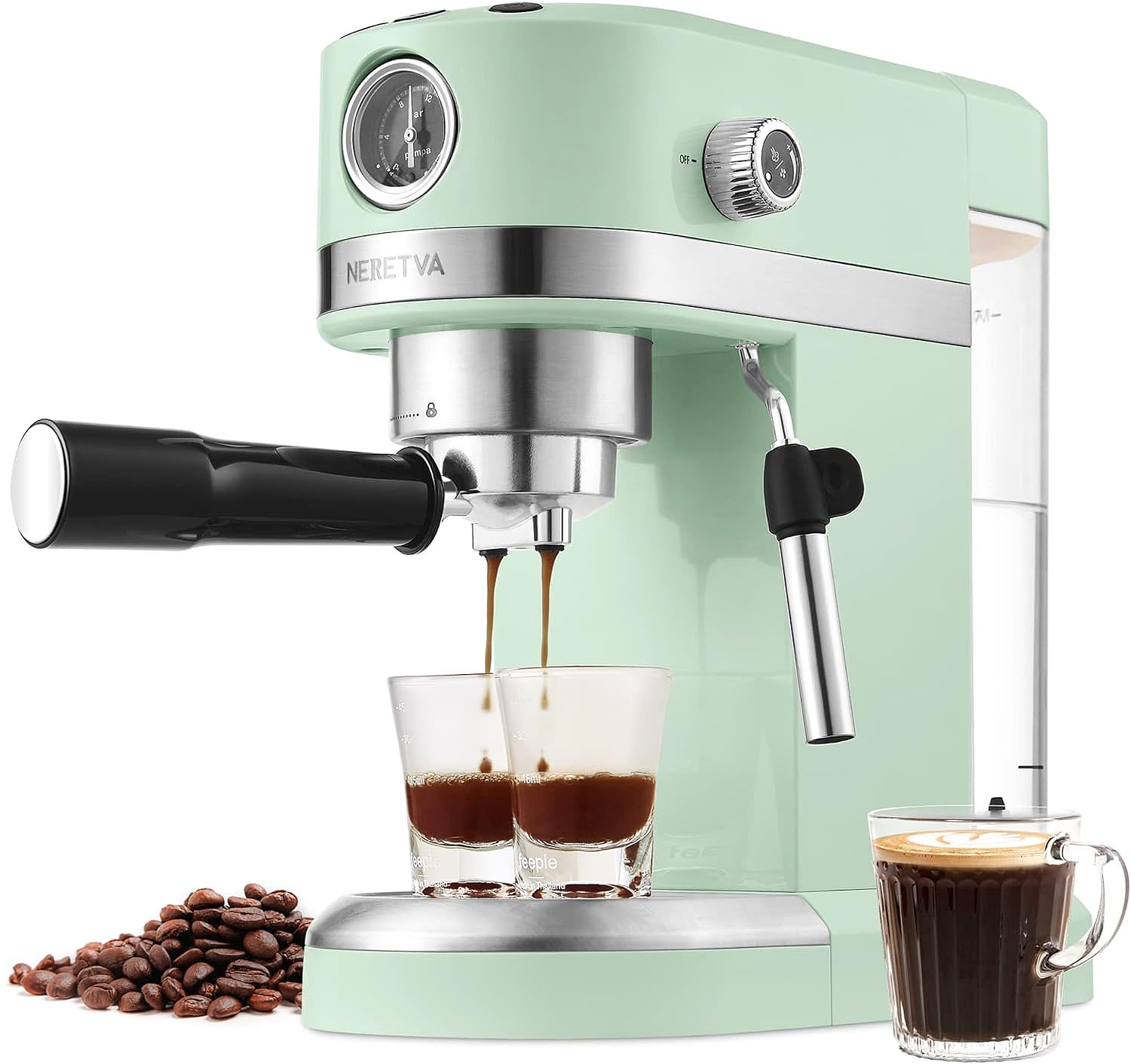
Neretva PE3680U 20 Bar Espresso

MEROL ME-720 Super Automatic

MIROX AC-517E 15 Bar Espresso Machine

CASABREWS 3700 Essential Stainless Espresso Machine

AMZCHEF CM1626 Espresso Machine With Grinder

KOIOS EM621 20 Bar Semi-Automatic Espresso Machine: Brewing Excellence at Your Fingertips

SHARDOR CM1661 Home Espresso Machine
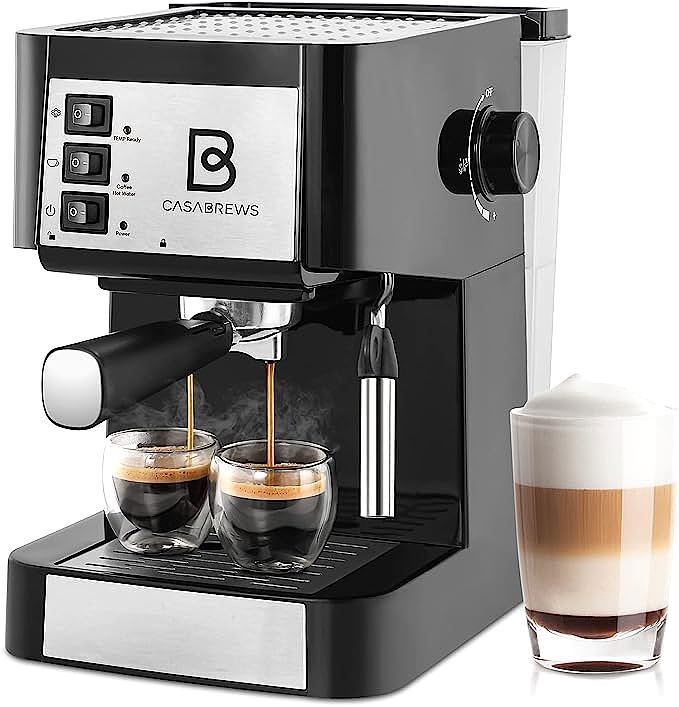
CASABREWS CM1699 20 Bar Espresso Machine: Barista-Quality Coffee at Home

Café Affetto Automatic Espresso Machine: Your Key to Barista-Quality Coffee at Home
