Kwister CM1687 Guide: The Numbers Behind the Shot

Kwister CM1687
The Numbers Behind a Home Espresso Shot, and What the Kwister CM1687 Does With Them
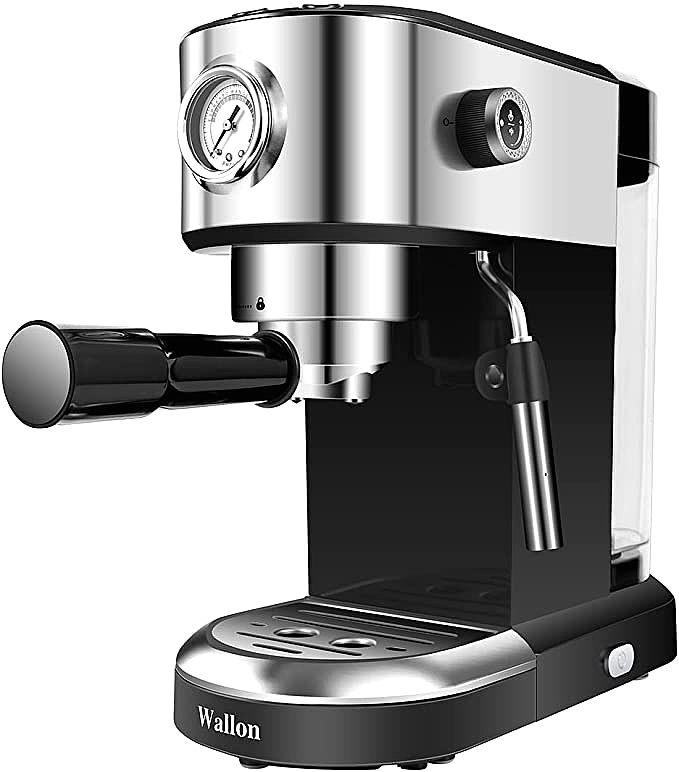
The Kwister CM1687 espresso machine is a semi-automatic that stands on a handful of published figures: a 20 bar pump, an NTC temperature system, a 360 degree rotating steam wand, and a 50 oz removable tank. At 425.50 dollars on the listing in October 2026 the model sits high for a home machine, so the question is whether the numbers earn it.
Working pressure is the number that matters
The pump carries 20 bar of headroom but brews near 9 bar, the pressure where a clean shot comes from. The extra headroom exists so the machine can hold 9 bar even when the portafilter is clogged or the grind is fine. Below 9 bar the water under-extracts and the cup is sour and thin; above it the extraction stretches out and turns bitter. The listing rates 20 bar as the ceiling and the machine lands near 9 bar as the working pressure, so the shot pulls clean every time the portafilter seats.
Repeatable temperature is the second number
A temperature that cannot be held gives you a different cup every shot, and the NTC sensor trims the element so the water stays in the 92 to 96 deg C window, where the oils emulsify into a stable crema. A drift past 100 deg C at the contact point scorches the fines and adds bitterness; a dip below 90 deg C leaves the extraction flat. The NTC control is the reason the machine is repeatable, and it is the feature that justifies the price against a unit with only a thermostat that swings wide between shots.
The rotating wand handles the milk drinks
The 360 degree rotating stainless steel frothing wand is the practical piece. The rotation lets you swirl a pitcher without the wand fighting the counter, and the wand detaches for a rinse.
The wand vaporizes a cup of milk to about 60 to 65 deg C in 30 to 45 seconds, hot but not scalding, with a microfoam you can draw a line through with a finger. A 250 ml pitcher matches the 18 g shot dose, and the milk adds about 0.20 dollars to a drink that still lands near 1.20 dollars against 5 to 6 dollars at a counter.
Two habits keep the steam side clean. Purge the wand for a second before and after each pitcher so milk does not bake into the tip, and wipe it while it is still warm, while the drip tray below catches the purge water and lifts out for a rinse.
The dial-in is a 30 second ritual
The dial-in is a 30 second ritual when the bean changes, and it starts at 18 g of grounds with a medium-fine grind, the shot pulling to 36 to 40 ml on the scale in 28 to 32 seconds. That is the 1:2 to 1:2.2 window where the cup is balanced. If the shot finishes at 16 seconds the grind is too coarse or the dose too low; past 40 seconds the grind is too fine and the cup turns bitter, so back off one notch.
The maintenance is what holds the number. Backflushing the group head once a week with clear water and wiping the wand after each milk keeps the shot repeatable, and a descaling cycle every two to three months is the routine that holds the 92 to 96 deg C band across a year of daily pulls.
425 dollars against a basic pump
425 dollars is the price, and the honest read is that the machine sits above a basic 100 dollar semi-auto for the NTC control and the rotating wand. The per-cup cost is still set by the beans: a 250 g bag at 14 dollars covers about 14 double shots at 18 g, near 1.00 dollar of coffee per shot, plus about 0.20 dollars of milk, so roughly 1.20 dollars a drink against 5 to 6 dollars at a cafe. Two drinks a day saves near 7.60 dollars, which clears the 425 dollar machine in about two months. The listing does not publish wattage, so check the plate on the unit before you commit a counter circuit.

The touch panel and the dosing levers
The controls ride on a waterproof and dustproof TFT touch screen, so a splash of steam or a dropped bean does not register as a command on this machine. The panel offers one-shot at 1.35 oz and double-shot at 2.7 oz presets, plus a manual pull where you stop the shot yourself on the scale. Warming the cup on the top of the case before the pull keeps the ceramic from stealing heat out of the shot, and the child lock holds the panel still when the kids reach for the buttons. A removable drip tray drops out to fit a taller cup on the double shot.
What else the 425 dollar case carries
Beyond the numbers that decide the shot, the case carries the pieces that keep the routine fast. The 50 oz removable tank is the 1.5 liter reservoir that slides out from the side, and a full tank covers a day of two-a-day pulls without a refill. The group, baskets and drip tray all lift out for cleaning, so the daily wipe does not turn into a teardown. The finish is stainless steel.
The NTC control pins two set points on the listing, brewing near 197 deg F and frothing near 248 deg F, which is what keeps the shot steady and the steam consistent from pull to pull. The listing backs the unit with a 12-month warranty and 24-hour support, the service terms that matter once the machine lives on the counter.

Stated plainly
The numbers that decide the shot are the 9 bar working pressure, the 92 to 96 deg C band, the 18 g dose, and the 1:2 ratio. At roughly 1.20 dollars a cup against a cafe price the case for brewing at home is arithmetic rather than romance, and the Kwister CM1687 puts those numbers within reach of a counter that has one socket and two drinks a day to make.
Kwister CM1687
Related Essays
Chefman RJ54 6-in-1 Espresso Machine

Gevi 15 Bar Espresso Machine: Unlocking the Science of Cafe-Quality Espresso at Home
ICUIRE CM5100 20 Bar Espresso

Mr. Coffee 4-Shot Steam Espresso Maker for Cuban Coffee at Home

Emulsifying Lipids at 20 Bars, Semi-Automatic Espresso

Home Espresso Machine with Milk Frother Buying and Usage Guide
ILAVIE K6 Espresso Machine: 20-Bar Pressure, PID Temperature, and 30 Grind Settings

Swan Nordic Espresso Machine 15 Bar Pressure & Milk Frother Guide

CHULUX Slim Espresso Machine: 20-Bar Espresso for Your Home Kitchen