Visualizing Extraction: Pressure Gauge Teacher
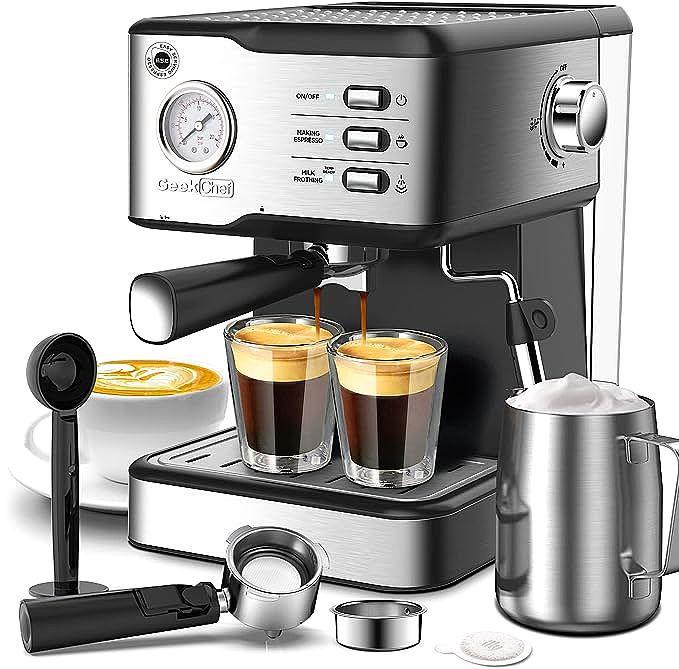
Geek Chef GCF20B
Visualizing Extraction: Why a Pressure Gauge is the Best Teacher
A pressure gauge on an espresso machine turns the brew into a number you can read, and that read is the fastest way a home barista learns what the cup needs. The Geek Chef GCF20B is a 20 bar pump machine whose gauge sits right over the group, and the whole point of the dial is to show whether the grind, the dose, or the tamping is the thing pulling the shot off target. This guide reads the gauge through the numbers, because the pressure is the feedback that decides the flavor.
The numbers to keep beside the machine
The read keeps four numbers in mind. The pump can reach 20 bar against a blocked puck, but that ceiling is not what a balanced dose sees. A 25 g dose holds the needle in the 8 to 9 bar band, and the shot that comes out is 30 to 36 ml in 25 to 30 seconds. The water dissolves an 18 to 22 percent share of the coffee, and the gauge confirms that the pull landed there. A needle under 6 bar means the pull runs fast and sour, while a needle past 11 means the flow chokes and the cup turns bitter. The 9 bar needle is the teacher, the dose and the seconds are the proof, and the gauge is what turns them into a cup you can repeat.
Reading the dial beats reading the clock, because the dial reports the resistance the puck is putting up and the timer only counts the time. Everything the read has to show is on the numbers below, and that is one read you can keep in your head.
What the gauge reads
The needle on the dial reports the pump pressure the puck is seeing, and a healthy pull sits in the 8 to 9 bar window where the extraction is balanced. A 20 bar machine does not brew at 20 bar, the pump can reach that number against a blocked puck, but the brew pressure the water pushes through the coffee is the 8 to 9 band. The gauge shows the real number rather than the box claim, and that is why it teaches. When the needle drops below 6 bar the shot runs fast and sour, and when it climbs past 11 the flow chokes and the cup turns bitter and ashy. The 8 to 9 bar window is the number to hold.
The 9 bar target and the grind
The 9 bar target is the pressure a balanced puck resists at, and the grind is the knob that moves the needle toward or away from it. A 25 g dose ground fine enough to hold 9 bar pulls 30 to 36 ml in 25 to 30 seconds, and that pull is the balanced one. Drop the grind a step coarser and the needle falls to 7 bar, the pull rushes to 20 seconds, and the cup thins out sour. Grind a step finer and the needle climbs past 10, the pull drags to 40 seconds, and the cup picks up the bitter edge. The 9 bar needle is the feedback, and the grind is the hand on it.
Reading the extraction
Extraction measures the share of the coffee the water dissolves, and the gauge tells you when that share lands in the 18 to 22 percent band that tastes sweet. A 9 bar pull of a 25 g dose extracts about 20 percent of the soluble mass in a 25 to 30 second window, and that is the number the gauge is confirming. When the needle reads 9, 30 ml lands in 28 seconds, the extraction sits in the band, and the cup balances out. When the needle reads 7 the pull lands in 18 seconds and the share drops under 18 percent, so the cup turns sour and thin. The gauge is the window, and the seconds are the proof.
The dial that teaches
The reason a gauge beats a timer is that the gauge reads the puck, not the clock, and the puck is the thing that changes day to day. Humidity, a fresh bag, and a new dose all shift the resistance, and the gauge shows the shift before the cup does. A 25 g dose that pulled 9 bar yesterday might read 8 today because the beans released gas, and the gauge tells you to grind finer before the timer ever rings. The 9 bar needle is the teacher, and the barista who reads it learns the puck faster than the one who only watches the clock.
The teacher you keep
A pressure gauge pays for itself in the shots it saves, because every misdiagnosed pull is a wasted dose of 25 g and 30 ml. The Geek Chef GCF20B puts the dial over the group where the eye already is, and that placement is the reason it teaches rather than decorates. Hold the 8 to 9 bar window with the 25 g dose, and the 25 to 30 second pull stays inside the sweet band.

Reading the pressure numbers
A pull that holds the window gives you the cup you can repeat: 25 g in, the needle sitting in the 8 to 9 band, 30 to 36 ml out in 25 to 30 seconds. Every cup costs about 0.11 dollars at home against 4 to 6 at the cafe, and that is what the read buys.

The dial over the group
Each pull starts with the eye on the dial, and the GCF20B puts the gauge directly over the group so the 8 to 9 bar window reads at a glance. The 20 bar pump is the ceiling the machine reaches against a blocked puck, while the 25 g dose that lands 30 to 36 ml in 25 to 30 seconds is the pull the dial reports. A needle that holds 9 bar through the whole extraction says the grind is right, and a needle that sags to 7 bar before the shot ends says the puck has given up.
Grinding is the lever the home barista turns to move that needle. The 25 g dose wants a bed fine enough to hold 9 bar, and stepping the grind coarser drops the same dose to 7 bar and rushes the pull under 20 seconds. Stepping finer climbs past 10 bar, drags the pull toward 40 seconds, and pulls the bitter edge into the cup. The dial ties the grind to the extraction, so the 18 to 22 percent soluble share stays in the band the gauge confirms.
Back to back pulls are where the gauge earns its place. The first 25 g dose runs the 25 to 30 second window, and the second holds the same window once the 1450 w boiler has the chamber at 93 deg C. The second 25 g dose lands the same 30 to 36 ml the first one did, and that repeatability is what the dial over the group is for. A machine with a gauge over the group is one the home barista can learn from pull after pull.
The Geek Chef GCF20B on the counter
The first pull that teaches back
The dial that sits over the group on the GCF20B is what makes the first pull a lesson rather than a guess. Start the pull with the needle at 0, and as the pump climbs the read shows where the puck stands: a needle that stalls near 7 bar means the grind is a step too coarse, and the 30 to 36 ml pull rushes past the 25 second mark. Step the grind in and the next pull holds the 8 to 9 band, and that change is visible on the dial before the cup is ever tasted.
Watching the pull while the milk steams
The 1450 W boiler has the chamber at 93 deg C in under a half minute, which is close enough to a stable pull that you can start the shot, watch the needle hold, and steam the milk while the 25 g dose runs. The gauge over the group keeps the read in front of you the whole time, so the shot and the milk stay in step instead of one waiting on the other. A needle that drifts past 11 mid-pull is the cue to ease the grind a step coarser before the cup chokes, and the next pull lands back in the window.
Geek Chef GCF20B
Related Essays
