Ninja PB051 Coffee Maker: Pods and Grounds

Ninja PB051
Ninja PB051 Coffee Maker: Pods and Grounds, Two Ways to Brew
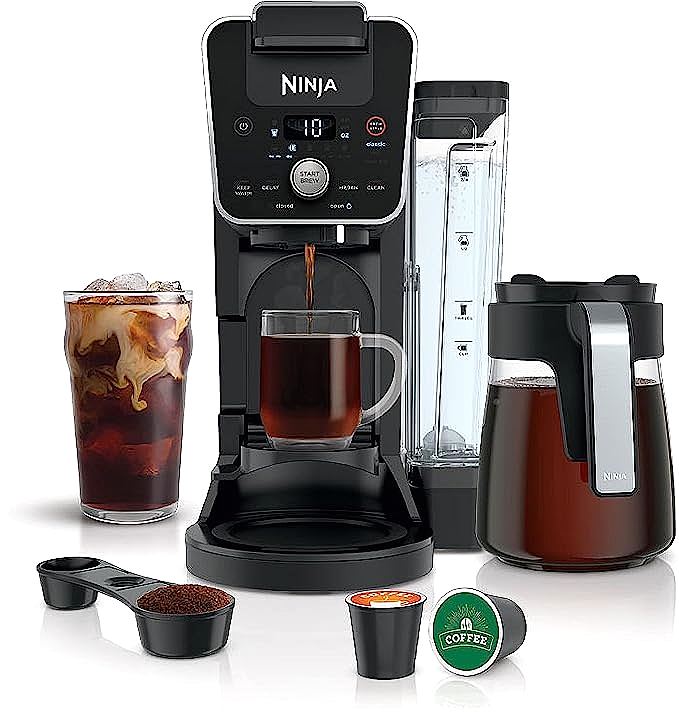
A single serve coffee maker that accepts a K Cup pod one morning and a scoop of fresh grounds the next has to earn its counter space on more than novelty, and the Ninja PB051 makes that case with one reservoir feeding two separate brew paths. The pod side is the fast lane for a weekday. The grounds side is the cup worth tasting. What follows is the working detail: which cup sizes each path reaches, what a cup costs, how the four brew styles change the result, and how many cups the tank holds before a refill.
Two brew paths on one base
The base is shared, and so is the water. One removable reservoir feeds both paths, so refilling is a single job no matter which mode you pick, and the tank lifts off for a rinse at the sink. The pod side takes a standard K Cup through a dedicated pod adapter. The grounds side takes the removable brew basket that ships in the box, along with a permanent filter and a Ninja Scoop for dosing. Switching means moving the adapter or the basket into the brew head, which takes a few seconds and no tools. Nothing about that changeover resets the brew style you selected, so a household that alternates mornings does not relearn the controls.
Pods in the morning
A pod morning is short. Drop a K Cup into the adapter, choose 6, 8, 10, or 12 oz, press the style you want, and the machine runs a calibrated cycle while holding extraction temperature steady. The sealed dose is why the cup repeats so closely: grind, weight, and tamp are decided at the factory, so the variance a home barista fights on a scale is already gone. Pods bought in bulk at around 35 cents each put a cup at about 0.35 dollars before milk. The trade is real though. You cannot change the grind for a brighter cup, the roast list is whatever the pod maker sells, and the capsule goes in the bin. Twelve pod ounces is the ceiling on this path, so a full travel mug has to come from grounds.
Grounds for the slower cup
Fresh grounds are where dosing becomes your decision. A 17 g scoop into the permanent filter, ground medium, and a 10 oz cup on the grounds side lands near a 1 to 17 coffee to water ratio, which is where a decent drip brewer sits. Want it stronger, use 20 g in the same cup and drop toward 1 to 15. Want a full 24 oz travel mug, scale the dose to about 40 g so the ratio stays in that window instead of turning into brown water. Ground coffee at roughly 8 dollars a pound covers about 26 of those 17 g doses, which puts a cup near 0.30 dollars. The permanent filter means no paper to buy, and the basket rinses under the tap in seconds.

Four brew styles and a fold-away frother
The style buttons do more than change strength. Classic runs the standard cycle for a balanced cup. Rich slows the flow so the same dose lands more concentrated. Over Ice brews hotter and stronger, which keeps the melt from flattening the drink, and that style matters more for grounds than for pods. Specialty pushes a short, intense concentrate that you can build on. That last style pairs with the built-in milk frother, which folds away against the machine when idle and lifts out for cleaning. Froth cold milk for an iced latte or hot milk for a cappuccino, then pour the concentrate over it. A pod can run Specialty too, so milk drinks are not closed off to grounds users.
Cup sizes and the 56 oz reservoir
The reservoir holds 56 oz, which works out to five 10 oz cups before a refill, or seven pod cups at 8 oz. Cup range runs 6 to 24 oz across the two paths: pods stop at 12 oz, while grounds go all the way to 24 oz in steps that include 14 and 18. That is honest capacity for a single serve coffee maker, enough for a couple of people through a morning and not enough to stay full through a dinner party. The drip tray adjusts down for a short cup and drops out of the way for a travel mug. Descaling is the one maintenance item that matters, and the reminder light is the machine telling you the tank has seen enough hard water.

What the two paths cost per cup
Pod at 0.35, grounds at 0.30, and the gap is smaller than most people expect. The real difference is what each one buys. A pod buys repeatability and no cleanup at a premium of about a nickel a cup. Grounds buy control over grind size, dose, and origin, plus a permanent filter that replaces paper. At two pod cups a day that nickel comes to about 37 dollars a year, roughly four and a half pounds of the eight dollar grounds. Where the pod path loses is selection and waste. Where the grounds path loses is a minute of hands-on work. The pod side also spends every cup in single use plastic, and at two cups a day that is over 580 pods a year; the grounds side keeps one metal filter and the only waste is the paper it replaces. Selection is the other half: pods come in whatever roasts a pod line lists, while the grounds path works with any bag, any origin, any roast, and that range is where a household saves more money than the nickel gap and gets better coffee while it is at it.
Scale the habit up and the arithmetic keeps the same shape. Two cups a day is 730 cups a year, and split evenly at 0.35 and 0.30 the coffee bill lands near 237 dollars. A cafe charging 4 dollars a cup would run 2,920 dollars for the same count. Against that, the 99.94 dollar machine clears its own price after about 27 home cups, roughly two weeks of the habit. After that the saving is the coffee itself.
Who should skip this machine
Skip it if the household only ever wants a 12 oz pod cup, because a single mode pod brewer does that for less money and takes up less counter. Skip it if someone needs a carafe, since this machine brews cups and not pots. A full pot house wants a drip pot machine with a carafe instead, because this one serves single cups and nothing larger. And a picky pod drinker should check the pod line first: the combo path only pays off when the pod catalog covers the roasts the household drinks, since a grounds habit in the house needs a burr grinder behind it before the 56 oz reservoir does anything more than save a second refill. Buy it if one person drinks pods and another grinds, if the travel mug is a daily object, or if a milk drink belongs to the routine and the frother saves a second appliance. The clearest case is a two person kitchen with split habits and a narrow counter, where one tank, one drip tray, and one set of four style buttons replace what would otherwise be two machines, and where the pod adapter, the brew basket, and the permanent filter all live in the box rather than in a drawer of accessories.
Ninja PB051
Related Essays

The Calculated Cup: Deconstructing the Science of the Ninja Single-Serve Coffee Maker

Ninja PB051 Single Serve Coffee Maker
Ninja CFP201 DualBrew System: Brewing the Perfect Cup with Science

Hamilton Beach 49900 FlexBrew: Brewing Science in Every Cup

Hamilton Beach FlexBrew 49918: Fast, Flexible Single-Serve Coffee Brewing

Ninja CM401 Specialty Coffee Maker: Your At-Home Barista

Ninja CE251 Programmable Brewer: Your Perfect Cup, Every Time

Unlock the Perfect Brew: Ninja DCM201 Coffee Maker & The Science of Coffee

Keurig K-Express: Brewing Science and Speed in a Single Serve
