SOWTECH Static Free Coffee Grinder
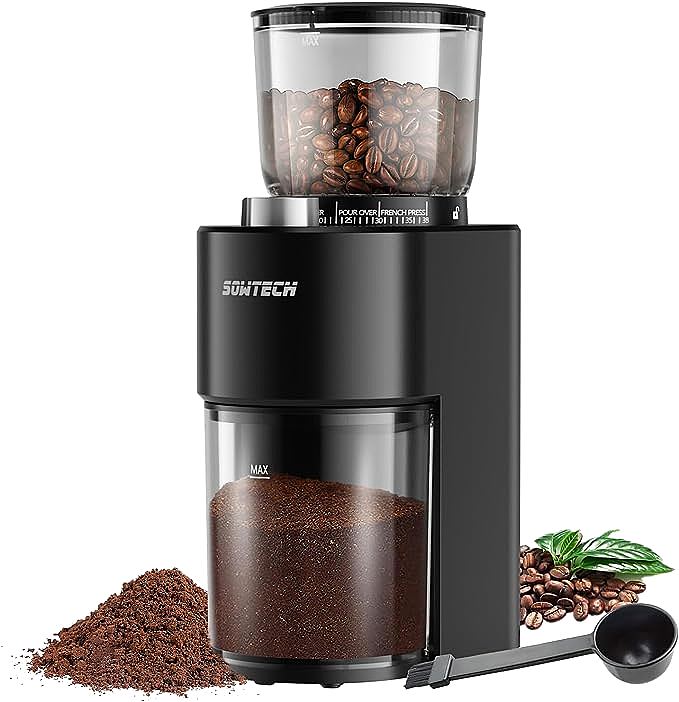
SOWTECH Static Free Coffee Grinder
SOWTECH Static Free Coffee Grinder is the electric coffee grinder this guide examines, and it builds its case around one quiet failure mode: the grounds that refuse to leave the machine.
The Invisible Storm, Static and the Coffee Grind
Grinding coffee is a charge builder. Every pass of the burr across the bean sheds static across the chamber, and the finest powder is the first to stick to whatever it touches. A patchy charge means a patchy grind, and a patchy grind means the water finds an easy path through the fines while the larger pieces sit barely extracted. The point of a grinder like this one is to keep the grounds moving through the chamber instead of gluing them to it, and the rest of the spec sheet is how it does that.
The burr and the dose
Grinding starts at the burr, a 64 mm flat disc that shears the bean into a consistent cut. A flat burr cuts rather than chops, and the cut comes out as one particle size instead of a mix of dust and shards, which is what gives the shot a level bed to work with. The dose that feeds it runs 18 g, one clean pass through the chamber. The 250 w motor drives the burr, and a full pass fits inside a 45 second run. Those are the four numbers to hold onto; everything else is the machine holding them in place.
The static and the retention
The charge the burr builds wants somewhere to go, and left alone it settles on the walls and the basket. That is where retention joins the problem: the chamber holds a 5 g amount of ground coffee even after the grind ends. Neither number is dramatic by itself, but together they compound. Static glues the fines to the walls, retention parks old grounds in the channel, and the next batch brews from a patchy mix. Old coffee also sits there and goes stale between grinds, so the two problems quietly feed each other with every morning.
The anti static design
Where the charge goes matters more than where it builds. The 0.8 kg body is the frame the charge has to shed into, and the 6 inch width is the footprint that frame asks of the counter. The charge lands on a shell instead of the walls, and the grounds fall through clean instead of hanging on the channel and clogging the exit. The machine does not need a scrub between grinds; it just needs the charge to have somewhere to go that is not the coffee.
The 250 w motor
The motor is doing more than spinning. Driving the burr through an 18 g dose takes steady torque, and a run that stalls mid pass leaves the cut uneven and the next grind inconsistent. A strong enough motor runs the whole pass at the same speed, so the particle size lands the same from the first bean to the last. Heat is the other half of the same job: a 45 second run at 250 w ends warm, which keeps the grounds from picking up a burnt note before they reach the brewer.
The cup math
Counter space comes first. The 6 inch width clears most shelves, and the body sits there without crowding a machine or a kettle. The second constraint is fineness. The three settings span a 0.6 mm fine cut for the 30 ml shot, a 1.0 mm medium for drip, and a 1.4 mm coarse cut for the slow brewers, and each one rides the same 45 second run. The morning routine is short: the dose drops in, the run ends, and the cup starts from a level bed of grounds.
Why the static free body matters
Static charge is the quiet failure behind most electric coffee grinder routines that leave fine powder clinging to the basket, so the grind that reaches the brewer is patchy. The SOWTECH Static Free Coffee Grinder treats this as a materials choice rather than a cleaning habit. The grinding path uses non conductive contact surfaces, so the charge that builds across the burr sheds back into the body instead of sticking the fines to the wall. That keeps the dose moving as one even stream through the run, and the shot you pull starts from a level bed of grounds rather than a mix of fines and chunks.
The retention side of the routine
The 5 g retention number is the spec most brewers skip. After a grind the chamber keeps that amount of ground coffee inside, and the next batch inherits it unless you flush the channel with a short burst of unroasted beans first. The flush works because the raw beans have no charge of their own and carry the old fines out of the channel without absorbing the roast they sit next to. The habit is small, but it stops the retention from compounding into a flat under extracted cup, and it is the reason the anti static body earns its keep past the first week. A clean grind and a clean channel are the two things that keep the 30 ml shot tasting like the roast it was cut for.
Tuning the dial daily
The three settings are a range, not a verdict. If the shot drinks thin, move a step toward the fine end and give the water more surface to work on. If it turns sharp or bitter, step back toward the medium or coarse cut, because the water cannot pull through a grind that is finer than it can extract in the time you brew. Move one setting at a time, and keep the roast and the dose fixed while you do it, or you will never know which change moved the cup.
The dose is the second lever, and the gentler one. Nudging the amount up or down changes strength without touching texture, which is why it is the right tool when the machine behaves but the taste does not. A change of a few grams on the standing dose shifts the cup noticeably more than a full step on the dial, and it is the adjustment that takes the least time to reverse.
The sheet to remember
When a number comes up again later, this is the short list: burr 64 mm, dose 18 g, retention 5 g, run 45 seconds, body 0.8 kg, width 6 inches, motor 250 w, settings from 0.6 mm fine to 1.4 mm coarse, shot 30 ml.


SOWTECH Static Free Coffee Grinder
Related Essays
