KIDISLE MF0801 Milk Frother: Master the Art of Froth at Home

KIDISLE Electric Milk Frother and Steamer 4 in 1
The usual problem is flat, collapsing foam, and it rarely comes from the machine. The KIDISLE MF0801 milk frother handles the two variables you cannot fix by hand, heat and air, in about ninety seconds. Pour to a fill line, press one of four buttons, and the pitcher warms and whips in the same pass. What lands in the cup is foam thick enough to hold a spoon upright, or thin enough to pour a rosetta, depending on the mode you chose.
The milk, though, is still on you. Foam fails for reasons a machine cannot see: the wrong milk, too little liquid, or a temperature pushed too high. This guide walks through what each mode does, why some milks foam and others collapse, the temperature window that keeps foam sweet, and the habits that separate a cafe cup from a disappointing one.
What This Frother Does and Where Its Limits Sit
The KIDISLE Electric Milk Frother and Steamer 4 in 1 is a four-function countertop design. Fill it to 300 ml (10 oz) and it will heat milk with no foam at all. Drop to 150 ml (5 oz) and it will whip that milk into foam. It will not start below 75 ml (2.5 oz), because the whisk needs enough liquid to draw air without running dry. Four buttons cover cold foam, warm light foam, warm thick foam, and plain warming.
Inside the base, a magnetic drive spins a wire whisk that never touches the motor. There is no shaft seal to leak and no gasket to replace. A Strix temperature control cuts the element when the milk hits its target and shuts the unit down if the pitcher runs empty. The body is stainless steel with a non-stick interior, so a rinse and a wipe handle cleanup. The unit is backed by a warranty of 2 years and ships with one whisk.
That four-mode layout is the useful part. This frother lets you pick a texture, which matters because a cappuccino and a latte want different foam.
Why Milk Foams at All
Milk foams because of protein. Two proteins do the work: casein, which makes up roughly 80% of the protein in cow's milk, and whey, the remaining 20%. In liquid milk these proteins sit as tightly coiled strands. Whipping drags them to the surface where air meets liquid, and there they uncoil and link into a film around each bubble. That film is the foam. Without protein, air bubbles pop the moment the whisk stops.
Fat plays the opposite role. Fat globules crowd the bubble surface and keep the protein film from linking up, which is why fat content runs inversely to frothing potential. Skim milk produces more foam and a drier, stiffer one. Whole milk, at about 3.9% fat, produces less volume but a finer, creamier texture that holds its shape in a latte.
Sugar and stabilizers change the picture too. Oat milk with added oil foams easily and tastes sweet, but the foam can turn gummy. Almond milk, low in both protein and fat, often collapses within a minute. Soy milk sits in the middle. If your foam dies on the counter, the milk is usually the reason, not the machine.

The Four Modes and When to Use Each
Each button maps to a texture and a job, so the mode you pick decides what lands in the cup.
Cold foam whips without heat. Use it for iced coffee, cold brew, and iced matcha. Cold foam wants a higher fat base, so a splash of cream or a barista-style oat milk gives the best body.
Warm light foam heats gently and whips to a pourable texture. This is your latte mode. The foam flows, so you can pour a heart or a leaf instead of spooning a blob on top.
Warm thick foam drives more air into the milk for a dense, spoonable cap. Cappuccino and hot chocolate want this one. The foam sits high and holds.
Plain warming heats milk with the whisk off. Use it for a flat white base, for cocoa, or for warming milk you will foam by hand.
It reaches dense foam in about 1.5 minutes. Sibling units in the same line keep the drink warm for up to 30 minutes, so a second cup does not need a second run.

Temperature Is the Whole Game
The thermostat matters more than the whisk. Above roughly 160°F (71°C) milk proteins begin to denature and the sugars start to scorch, which is why heated milk can taste cooked or eggy. Below about 140°F (60°C) the foam feels thin and the drink cools too fast. The machine holds milk between 140-160°F (60-71°C), which is the band cafe steam wands aim for.
Research on steam frothing puts the optimal final temperature at 50-60°C (122-140°F) for the finest microfoam. That range overlaps the lower half of that window. If you want maximum sweetness, stop at the lower end. If you want foam that lasts while you carry the cup across the room, the higher end holds longer.
Other models in the line expose four discrete settings across 130-160°F (54-71°C), and the adjustable-temperature one shows the number on an LED panel. They also run quietly, one at under 40 dB and another at under 66 dB. This unit handles the same job with a fixed target and a Strix cut-off, so there is nothing to dial in.

Capacity Math Before You Pour
Fill lines are not decoration. Overfill a frother and the expanding foam climbs past the lid, floods the base, and trips the safety cut-out. The numbers are simple once you know them.
For heating only, the ceiling is 300 ml, about 10 oz, which fills a large mug. For frothing, the ceiling drops to 150 ml, about 5 oz, because foam expands to roughly twice its liquid volume. The floor for either job is 75 ml, about 2.5 oz, enough for one cappuccino. Two people who both want foam need two runs, since 150 ml of milk covers one cup, not two.
Heating 300 ml takes a few minutes. Frothing 150 ml takes closer to 90 seconds. Leave a short cooling gap between back-to-back runs, since the element and the pitcher both hold heat.
Cold Foam Without the Coffee Shop
Cold foam is the same process at a lower temperature. The whisk drags in air, the protein film stabilizes the bubbles, and the fat keeps it creamy. The difference is that cold milk is more viscous, so the foam builds slower and holds better.
A cold-foam base with more fat than plain milk works best. Heavy cream thinned with a little milk, or a barista-blend oat milk, gives a foam that sits on top of iced coffee instead of sinking. Add syrup before you froth, not after, so the sugar spreads evenly through the foam.
Pour cold foam over the back of a spoon to layer it, or straight in for a mixed drink. Either way, drink it within a few minutes. Cold foam has no heat to slow the collapse, so it fades faster than warm foam.
Cleaning Between Uses
Milk residue is the fastest way to ruin tomorrow's foam. A scorched film on the non-stick interior gives every later batch a burnt note, and dried protein is hard to scrub off without scratching the coating.
Rinse the pitcher with warm water as soon as you finish, before the milk dries. Wipe the interior with a soft sponge and a drop of dish soap. Never put the base in water; only the pitcher and the whisk are meant to get wet. Let the unit cool between runs, since a hot element under cold milk can scorch the first layer that touches the wall.
The whisk comes off for cleaning on most models. Soak it in warm water for a minute and the film releases on its own.
When the Foam Comes Out Wrong
Thin foam almost always means skim milk, old milk, or too little liquid. Check the fill line first, then the date on the carton. Milk that has sat open for a week loses protein structure and will not hold air.
Foam that tastes burnt points to temperature. If your machine lets you pick a setting, drop one step. On a fixed-target unit, stop the cycle a few seconds early and pour before the element pushes past the sweet spot.
Overflow means you ignored the frothing line. Remember the ratio: foam roughly doubles the liquid volume, so 150 ml of milk becomes about 300 ml of foam, which is already at the top of the pitcher.
No foam at all, with the motor running, usually means the whisk is not seated. The magnetic drive needs the whisk centered on its post. A whisk sitting off-center will spin without drawing air.
Frother, Handheld Wand, or Steam Wand
Three tools make foam at home, and they suit different kitchens.
A handheld wand, the battery kind with a coiled whisk, costs a fraction of a countertop unit and stores in a drawer. It froths cold milk well but cannot heat, so you warm the milk separately. It also leaves you holding the wand for the full fifteen to thirty seconds each batch takes.
A steam wand, the kind on an espresso machine, injects steam straight into the milk and lets you stretch the foam by hand. It takes practice and a machine that costs far more than a frother.
A countertop electric frother sits between them. It heats and whips in one step, needs no technique, and delivers a consistent texture every morning. That consistency is the reason the KIDISLE MF0801 milk frother exists: press a button, get the same foam you got yesterday.

A Routine That Holds Up
The pattern that works is boring, which is the point. Pick one milk and stick with it, so you learn how it behaves. Fill to the frothing line for one drink, the heating line for a mug of cocoa. Press the button that matches the texture you want. Pour within a minute of the cycle ending, while the foam is still tight. Rinse the pitcher before the milk dries.
Do that and the gap between your kitchen and a cafe closes to almost nothing. The machine handles the heat and the air. You handle the milk, and the milk is where the foam is won or lost.
KIDISLE Electric Milk Frother and Steamer 4 in 1
Related Essays

What Each Mode in a 3-in-1 Electric Milk Frother Actually Does

ZACME ZJ-CM36A01 Single Serve Coffee Maker
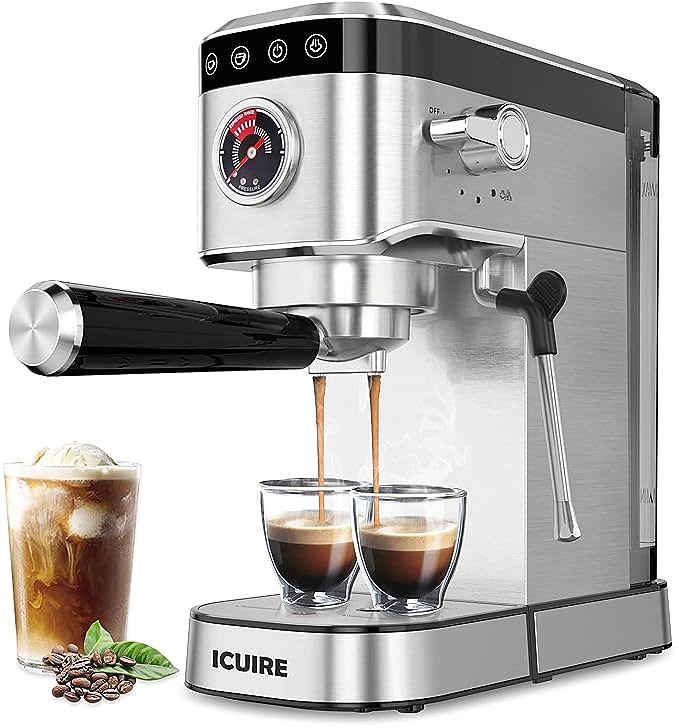
ICUIRE CM5100 20 Bar Espresso

Mr. Coffee 4-Shot Steam Espresso Maker for Cuban Coffee at Home

Emulsifying Lipids at 20 Bars, Semi-Automatic Espresso

Kwister CM1687 Guide: The Numbers Behind the Shot

Home Espresso Machine with Milk Frother Buying and Usage Guide

Mr. Coffee BVMC-EL1 Cafe Latte Maker: The Delicious Science of Your Perfect Home Brew

The Science of Microfoam: Mastering Milk Chemistry at Home
