Swan Nordic Espresso Machine 15 Bar Pressure & Milk Frother Guide

Swan Nordic Espresso Machine
What the fifteen bar rating measures
A pump rating describes a ceiling, not a setting. The Swan Nordic Espresso Machine carries a 15 bar pump, and the brew head it feeds rarely sees all of that force. Water meets the puck of ground coffee and finds resistance, so the pump keeps pushing until flow and resistance balance out. Specialty coffee standards place the working figure near 9 bar at the group head, about 131 psi against the 218 psi a 15 bar pump can produce at its limit. Two machines rated 15 bar and 20 bar pour near-identical shots once both are dialed in.
It rarely matters at the group head, because the working pressure is set by the grind, not by the pump. The figure worth watching is steadiness. Does the pump hold its regulated output for the full 25 to 30 seconds of a shot, or does it fade as the boiler cools? A self-priming pump, the kind fitted here, refills on demand and keeps flow even across back-to-back pulls.
Tank size, boiler draw, and daily cost
Capacity shapes daily use more than pressure does. The detachable tank holds 1.2 litre, which is 40.6 fl oz, and the brew head fills one or two espresso cups at a time. The tank lifts off for refilling at the sink, so a household brewing for two people does not have to pull shots in sequence.
Power draw matters when the machine shares a circuit. The 20 bar siblings in this price band run 1350 W boilers, and on a 120 V line that works out to an 11 amp draw. A standard 15 amp kitchen circuit carries it, though not with much left over for a kettle running beside it. A single-boiler machine of this class needs a few minutes to reach brew temperature, which is time to grind and dose.
The running math is simple. A double shot uses 18 g to 20 g of coffee, so a 340 g bag of cafe-grade grounds brews roughly 17 to 19 doubles, and the 1.2 litre tank holds a day's worth of brewing for one or two people.
Texturing milk with the Swan Nordic's steam frother
Milk has its own timeline. As temperature climbs, proteins unfold, and the sweet spot for trapping air sits between 140 F and 160 F (60 C to 71 C). Go past 170 F (77 C), and the foam tends to go flat and taste scalded. With a steam wand, there's room to stop at just the right moment.
The frother on the Swan Nordic Espresso Machine runs on steam pressure, with a dial controlling how much reaches the milk. A shallow angle and keeping the tip just under the surface for the first few seconds helps draw in air, then sinking it deeper spins the milk into a smoother texture. Opening the dial all the way at the start tends to produce a loud jet of steam and hot milk with a thin skin on top.
The type of milk makes a difference too. Whole milk at 3.5% fat foams more easily than skim at 0.1%, and barista blends of oat milk often add fat for much the same reason. Cold milk straight from the fridge buys a little extra time before the proteins set, while a pitcher left out for 45 minutes will foam faster and collapse sooner.

Grind, dose, and tamp
A pump cannot rescue a bad puck. Grind sets the resistance the water meets, and the correct setting shifts with the roast, the humidity, and the age of the beans. A burr grinder produces even particles, which lets water pass through at a predictable rate. A blade grinder produces a mix of dust and chunks, so the shot runs fast through the gaps and bitter through the dust.
Dose follows grind. Most double baskets take 18 g to 20 g of coffee, and the tamp only needs to level the bed rather than compress it into a brick. Aim for a shot that yields roughly twice the weight of the dose in about 25 to 30 seconds, so a 19 g dose pours 38 g of liquid. Shots that finish in 15 seconds taste thin and sour. Shots that take 40 seconds taste harsh.
The 18-22% extraction window that coffee scientists use describes how much of the dry grounds dissolves into the cup. Below that range the cup tastes weak and grassy, and above it the cup turns dry and bitter. A commercial basket measures 58 mm across, and home machines often ship with a smaller one, which is why the same grind setting can behave differently on two machines.

Where this machine sits among other 15 bar models
Pump machines in this class run close on price, and the differences show up in controls rather than in pressure. The Swan Nordic keeps its hardware minimal: the money goes into the housing and the steam frother, not into a gauge or a display.
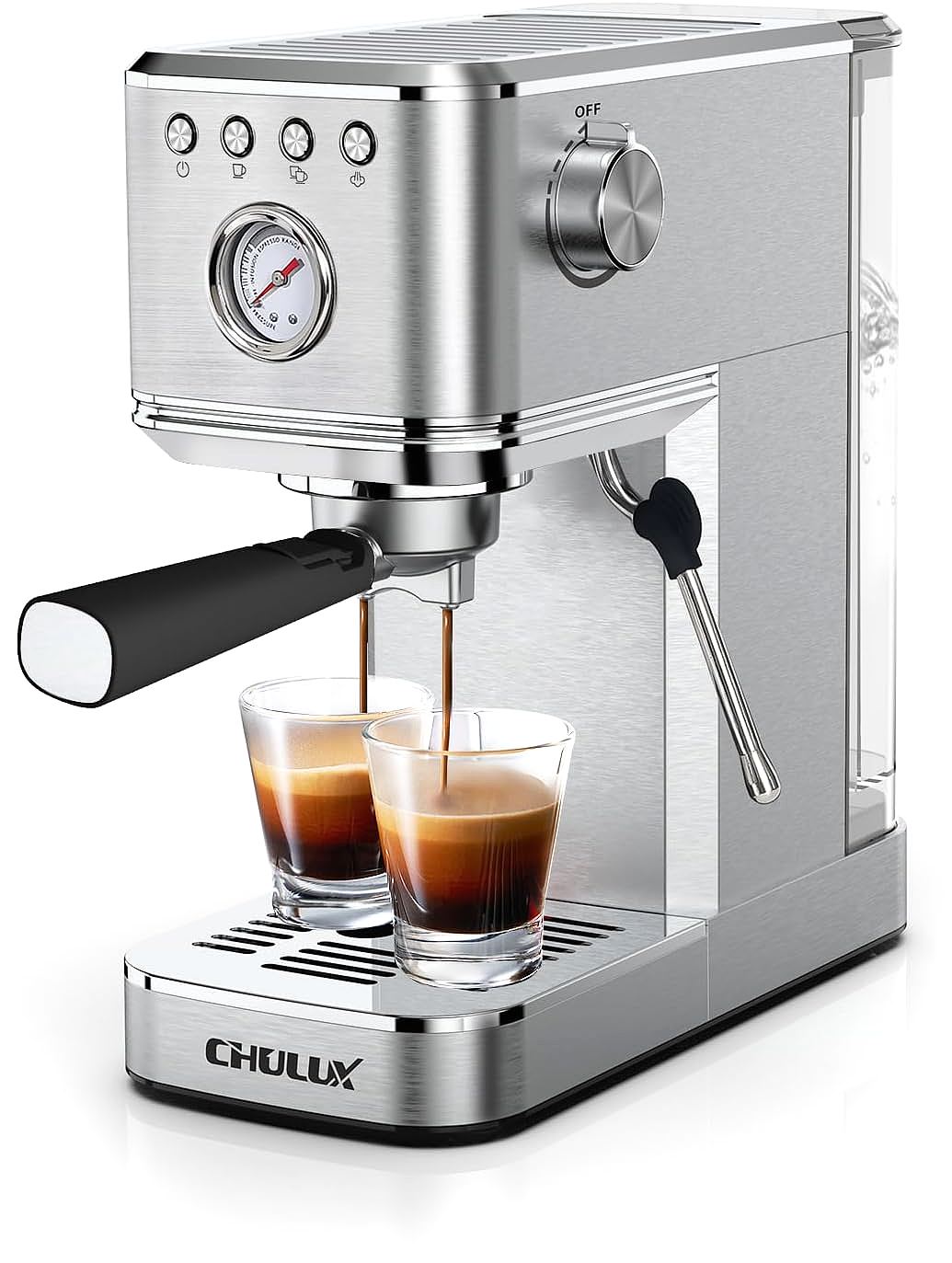
The CASABREWS CM5418 pairs a 20 bar pump with a built-in pressure gauge, a 1350 W boiler, and a 34 oz detachable tank, which suits someone who wants to watch the needle move while they learn. The compact Neretva model uses the same 20 bar figure and adds a temperature readout. The CHULUX slim unit measures 5.5 inches wide and carries a 40 oz tank with a 25 minute inactivity shut-off. The retro Neretva model ships with a 58 mm portafilter and a visible pressure gauge.
Every one of those machines regulates down to the same working pressure, so a 20 bar ceiling buys nothing at the puck. What it does buy is a gauge that tells you when the grind has drifted, and a drifting grind is the most common cause of a bad shot.

Learning to read the shot
Without a gauge, the stream tells the story. Starting a timer when the pump engages and watching how it pours gives plenty of clues. A thin, pale stream that turns blonde in 15 seconds points to a grind that's too coarse. A stream that drips and stalls points to a grind that's too fine. Ideally, it comes as a thin ribbon, dark honey in color, arriving after 6 to 8 seconds of pre-infusion and finishing near 30 seconds.
Taste usually settles the question. A shot that's sour and thin tends to be under-extracted - finer grinding or adding a gram to the dose can help. One that's dry and bitter tends to be over-extracted - coarser grinding or dropping the dose is often the fix. Changing one variable at a time and keeping the beans consistent helps dial things in without guessing.
Keeping an eye on the pump helps too. Running a shot of plain water through the group every week or so keeps the flow predictable. Over time, a machine that pours a similar shot each morning becomes one you can rely on before the day starts.
Keeping things in working order
Over time, grounds and milk residue tend to build up in places you cannot see. Giving the group a quick water backflush after the last drink of the day, along with wiping the steam wand while it's still warm, goes a long way. Dried milk on the tip hardens into a crust that blocks the holes, and a blocked tip can turn a smooth froth into a sputtering jet.
How often descaling comes up depends on the water. Soft water might only need it once every six months, while hard water can leave scale after 30 minutes of boiling time spread across a few weeks. Scale narrows the passages inside the boiler, raising the pressure the pump has to fight and shortening its life. A purpose-made descaler does the job, and the full process takes about 1 hour including the rinse cycles.
The basket and portafilter deserve attention too. Old oils turn rancid and can add a stale note to an otherwise good cup, while residue slows the flow and pushes the shot toward over-extraction. A 2 minute rinse after the last drink of the day is often all it takes to keep the basket sweet.
Water quality changes the cup
Water carries most of what ends up in the cup, and the mineral content sets how the coffee tastes. Water with almost no minerals extracts poorly and leaves the shot flat. Water loaded with bicarbonate buffers the acids that give coffee its brightness, so the shot tastes dull and chalky. A middle range works best, and a simple carbon filter gets most households close enough.
Temperature stability matters as much as water chemistry. The ideal brew water sits between 195 F and 205 F, and a home boiler swings wider than a commercial group does. Pull a warming shot before the first real one, and the second pull lands closer to the target. The fastest machines in this price band preheat in about 30 seconds, and a single-boiler unit still wants a short flush before the first shot of the day.
Settling into a rhythm
The first few days tend to bring uneven shots, which is all part of the process. Grind, dose, and tamp need a bit of tweaking before the flow settles, and a fresh bag of beans often changes character as it rests. It's not unusual to use 100 g to 200 g of coffee while dialing things in - a small cost that tends to pay off in frustration saved.
After about a week, the rhythm often falls into place. From cold start to a finished drink takes about 4 minutes; the pump reaches pressure, the frother textures the milk, and cleanup adds another 2 minutes. For many, that's a fair trade compared with a 20 minute round trip to a cafe.
The first week on the Swan Nordic Espresso Machine
The matte slate grey finish holds up better than polished steel against fingerprints, and the spoon and coffee presser in the box cover the grind, dose, and tamp steps until a burr grinder arrives. The 1.2 litre tank lifts straight off to the sink, and the self-priming pump means a cold start is a 30 second flush rather than a long wait.
Swan Nordic Espresso Machine
Related Essays
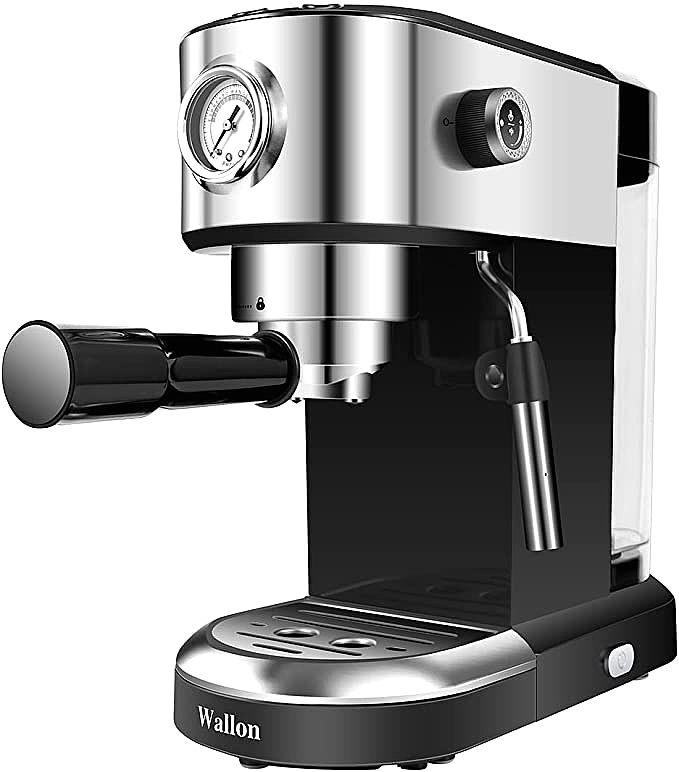
Wallon EM3105 Espresso Machine: Unlock Barista-Quality Coffee at Home
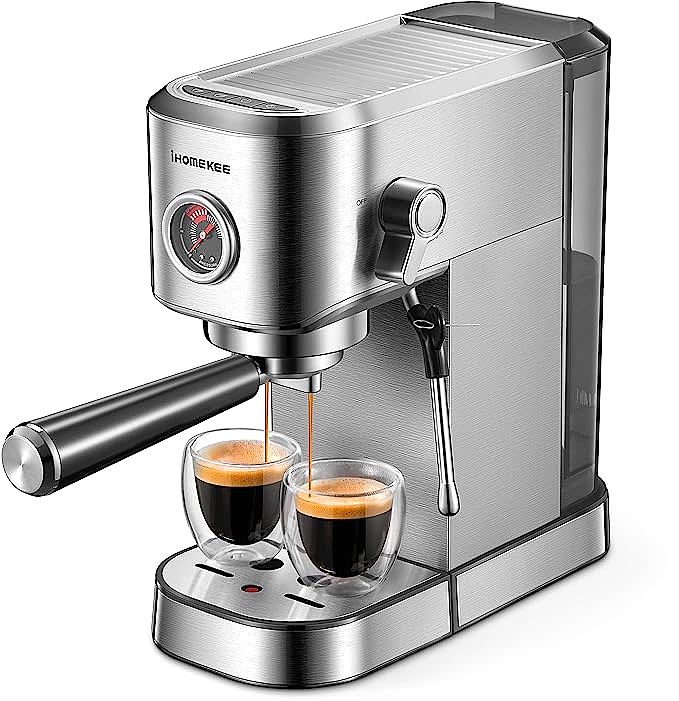
Why Is My Espresso Puck Wet? An Engineer's Guide to the Ihomekee CM5200 and Home Espresso Machines
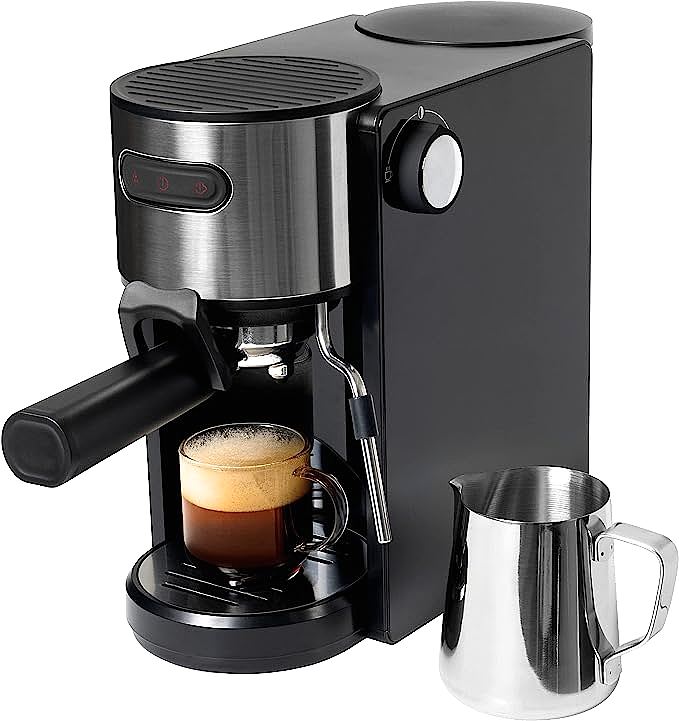
Willow & Everett Espresso Machine: Your Home Barista for Perfect Espresso & Cappuccino
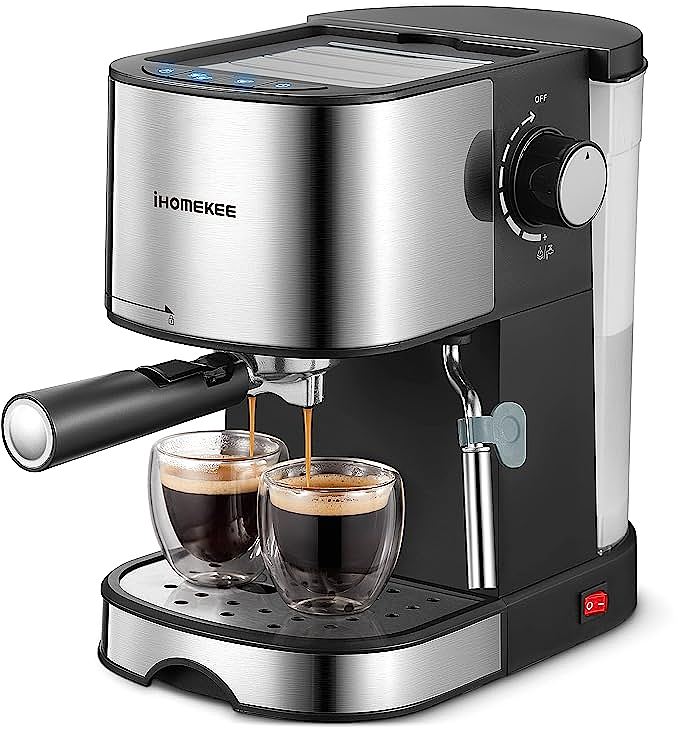
The Secret Life of an Espresso Machine: A Journey Through Pressure, Heat, and Science
The Science of the Shot: A Deep Dive into the 15-Bar Espresso Machine
CHULUX QF-EM531541 Espresso Machine: Mastering Coffee Science at Home | 20 Bar
Espresso Extraction, Thermodynamics at 15 Bars
ICUIRE CM5100 20 Bar Espresso

Mr. Coffee 4-Shot Steam Espresso Maker for Cuban Coffee at Home
