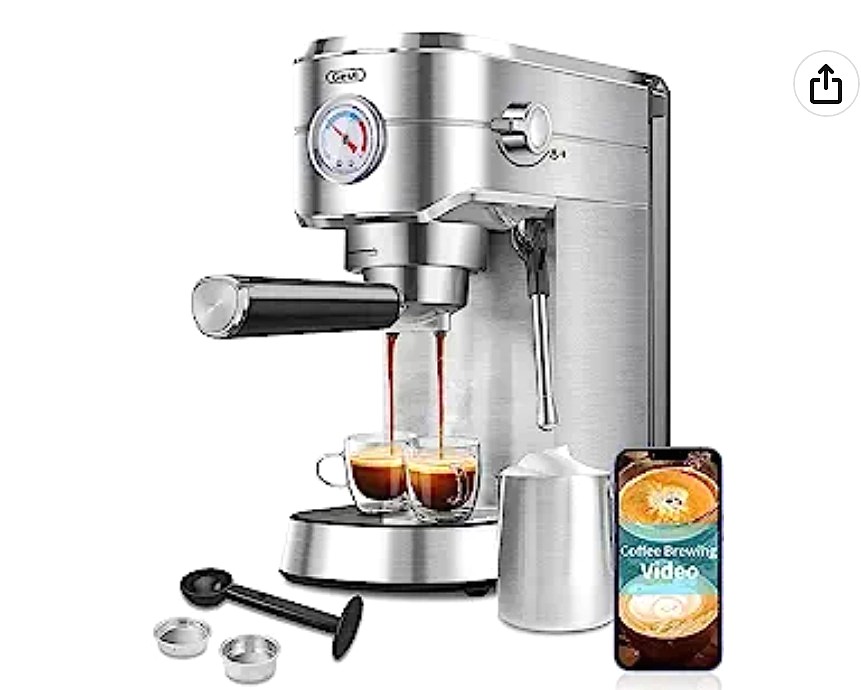
Gevi GECME003D Soggy Puck Fix

Gevi GECME003D
Fixing the Soggy Puck, Gevi GECME003D and the Dry Shot
A soggy puck is the clearest sign that water found a shortcut through the coffee instead of pushing evenly through the whole bed. The Gevi GECME003D is a compact espresso machine that answers that with a 20 bar pump, a pre-infusion cycle, and a pressure gauge you can watch, and this guide walks through the dose, the grind, and the routine that turn a wet, sloppy puck into a dry one you can knock out in a single tap.
What a soggy puck is telling you
When the puck comes out soupy, the shot almost always ran too fast or too thin. Water takes the path of least resistance, so a coarse grind or a loose fill lets it punch a channel through the center, and the coffee around that channel never gets properly extracted. The result is a wet puck, a pale and sour cup, and a spent bed that collapses instead of holding its shape. The fix is not more pressure; it is even resistance, so every drop of water has to work through the full bed before it reaches the basket holes.
Read the puck before you change the recipe. A puck that is wet on top but dry underneath usually points to a grind that is too coarse, while a puck that stays soupy all the way through often means the dose was too small for the basket. Both are dosing and grinding problems, not a sign that the pump is weak.
How pre-infusion and the gauge keep the bed even
The Gevi GECME003D starts each shot with a short pre-infusion, so the pump wets the puck gently before it ramps to full pressure. That quiet first moment lets the grounds swell and settle evenly, and when the 20 bar pump pushes through, the water meets the same resistance across the whole basket instead of drilling a single channel. A built-in pressure gauge sits on the front of the machine, and watching it climb is the fastest way to spot a shot that is running away from you: a needle that spikes and then falls has found a channel, while a needle that holds steady through the pull is riding the 9 bar band the way it should. Paired with NTC temperature control that holds the brew water near 93 deg C, the machine gives you three things to read on every pull: the pressure, the temperature, and the time.
A machine without pre-infusion has to hit the bed hard from the first second, which is exactly the condition that carves channels. On a compact espresso machine like this one, that gentle start is the quiet upgrade, because it forgives a slightly uneven tamp and still leaves the dry puck this guide keeps coming back to.
Setting the dose and the grind
A dose between 18 and 20 g is the mass a 30 ml double shot wants, and the grind is what holds the shot inside the extraction window. A 0.6 mm grind gives the water enough resistance to build the 9 bar band the pump is aiming for, and it keeps the pull inside a 25 to 30 second window. Go coarser, toward 0.9 mm, and the shot rushes through in under 20 seconds, leaving the puck wet and the cup thin. Go too fine and the pump stalls against a bed it cannot push through. The ratio is the other half of the picture: an 18 g dose against a 30 ml shot lands near 1 to 1.7, while a 20 g dose tightens toward 1 to 1.5, and both sit inside the 18 to 22 percent extraction band a balanced cup lives in.
Steam, tank, and the rest of the machine
The steam wand is what turns the same machine into a milk drink maker. Its removable froth nozzle pulls off for cleaning, and a 65 deg C stream foams a 200 ml pitcher in 20 to 30 seconds for a cappuccino or a flat white. The 34 oz water tank lifts out for a refill at the sink, which matters more than it sounds when you pull several shots in a row. The housing is full stainless steel, the controls are a straightforward semi-automatic layout, and a hot water function covers an Americano or a warmed cup before the first shot. The machine carries a 12 month warranty.
The frame is compact enough to tuck against the back of the counter. It measures 12 inches tall by 12.3 inches deep by 5.5 inches wide at a weight of 8.6 lb, so it slides out of the way when the counter is needed for prep.
What a dry puck costs to chase
A 1 kg bag at 20 dollars gives about 50 doses of a 20 g shot, which is 0.40 dollars a cup against 5 to 6 dollars at a cafe. The machine lists at 119.98 dollars, and the gap closes over a year of daily pulls. The math only works if the puck is dry and the dose is consistent, because a soggy shot wastes the coffee you paid for and sends you back to the grinder to chase the grind you should have set once.
A morning routine that keeps the puck dry
Each morning, fill the 34 oz tank and let the boiler come up to temperature. Weigh an 18 g dose into the basket, level it, and tamp straight down so the bed is flat. Lock the portafilter in, watch the pressure gauge as the pre-infusion wets the puck, and let the shot run 25 to 30 seconds into a warmed cup. Knock the puck out while it is still warm: if it holds its shape and drops out clean, the grind and the dose were right. If it smears and sticks, tighten the grind a notch and pull again. Then steam the milk, and wipe the steam wand before the residue sets.
The numbers worth remembering
The numbers that matter are a 20 bar pump, a 34 oz water tank, a built-in pressure gauge, pre-infusion, and NTC temperature control, with a 0.6 mm grind and an 18 to 20 g dose pulling a 30 ml shot in 25 to 30 seconds. The stainless steel housing and the compact 8.6 lb frame keep it on the counter, and the 12 month warranty covers the years of morning pulls ahead.

Reading the shot, not the slogan
A dry puck is not a trick; it is the visible result of even resistance, and even resistance comes from a grind that matches the dose and a pump that starts gently before it pushes. Watch the gauge, keep the dose steady, and the puck will tell you whether the pull worked long before you taste the cup.

Gevi GECME003D
Related Essays

De'Longhi ECP3420: Unlock the Science of Perfect Espresso at Home

Breville Bambino Plus: The Science of Perfect Espresso at Home

Gaggia Classic 14101: Mastering the Art of Espresso at Home

IMUSA GAU-18200 Electric Espresso & Cappuccino Maker: Your Easy Path to Authentic Coffee
JASSY 20-Bar Budget Espresso

How to Choose and Use a Home Espresso Machine

Decoding Your Daily Brew: Mastering the De'Longhi Magnifica Smart (ECAM23260SB)

Gevi 20 Bar Espresso Machine: Brewing Barista-Quality Coffee at Home
SUMSATY Espresso Machine: Brewing Barista-Quality Coffee at Home