The Open Source Espresso: How the Patent Cliff Created a Golden Age of Coffee

Breville BES870XL Barista Express Espresso Machine
In 1901, a Milanese inventor named Luigi Bezzera filed a patent for a machine that forced steam through ground coffee and served the result in seconds. The patent office stamped it, the clock started, and espresso became property. What happened when those filings ran out is the story behind nearly every pump espresso machine on a kitchen counter today, including the Breville BES870XL Barista Express Espresso Machine that anchors this guide.
Espresso is an odd case in the history of technology. The core ideas fit on a few drawings: pressure, hot water, ground coffee, a filter, a seal. A patent on that bundle did not just protect one machine. It gated an entire category of invention. For most of the twentieth century, the workshops that could legally build an espresso machine were the ones holding licenses, and the customers who could buy one were cafes with commercial budgets. The open era, where any shop with a lathe could assemble a working group head from catalog parts, began only when the foundational patents expired, one filing at a time.
The Patent Wall, 1901 to 1961
Bezzera's 1901 patent covered a steam-driven brewing machine built for speed in busy cafes. Desiderio Pavoni bought the patent in 1905 and showed the machine at the 1906 Milan Fair, where it drew crowds. Steam was the power source, which meant pressure came from a boiler, which meant the shot tasted like boiler water and took as long as the boiler allowed.
The first crack in the wall came from Achille Gaggia. In 1948 he filed a patent for a spring-loaded piston that pushed water through the coffee at pressure far above what steam could manage. His machine, sold from 1949, produced the first shots with the pale foam customers now call crema. The patent office gave him exclusivity on the breakthrough for another twenty years.
Then came the design that defined the modern machine. In 1961, Faema released the E61, an espresso machine with an electric pump, a heat exchanger that kept brew water at a stable temperature, and a hydraulic group that let a barista pull a shot with one lever. The E61 was expensive, heavy, and built for volume. It was also, under patent, effectively a trade secret with a serial number. Cafes that bought one were buying into a service contract as much as a coffee machine.
Three eras of invention, three walls. Each filing held for twenty years under the rules of the time. The wall math is simple. Add twenty years to 1901 and you reach 1921; add twenty to 1948 and you reach 1968; add twenty to 1961 and you reach 1981. The espresso patent cliff, when it came, was not a single day but a decade in which the foundational ideas behind these machines fell into the public domain.
The Cliff, 1968 to 1981
By the late 1970s and into the 1980s, the original filings had lapsed. The E61's pump and heat exchanger were no longer property. Workshops in Italy and, soon after, factories in Asia could copy the hydraulic group, the exchanger, and the lever mechanism without infringing anything. The compact vibrating pump from Italian makers such as ULKA became a catalog part. Pressure ratings on boxes climbed because a 20 bar pump was cheap to buy and the number printed larger than the 9 bar that brewing needs. The pump delivers a maximum; an overpressure valve trims it back to the working range extraction calls for. Marketing claimed the ceiling. Brewing used the floor.
Prices collapsed next. A pump espresso machine stopped being a cafe appliance and became a consumer appliance. The companies that exploited the cliff were not the heritage brands. They were new entrants who treated the expired designs as a shared toolbox. That toolbox is the direct ancestor of the budget machines in this guide, including the 3700 Essential at 99.99 USD with a 20 bar pump and a 43.9 oz tank, and the CM5418 at 139.99 USD (in our live check, October 2026) with a built-in pressure gauge.
The Golden Age the Cliff Built
What arrived after the cliff was not a flood of copies. It was an explosion of refinement, because improvement no longer required permission.
Temperature control was the first frontier. Boiler machines ran hot or hotter; the E61's exchanger helped, but it still cycled. PID controllers, small electronic loops that hold water within a degree of the target, migrated from industrial equipment into consumer machines. The Breville BES870XL Barista Express uses exactly this: digital temperature regulation holds the brew water steady so extraction stays repeatable from shot to shot.
Pre-infusion followed. Instead of hitting a dry puck at full pressure, the pump wets the grounds first, lets the bed settle, then ramps up. The Barista Express runs a low pressure pre-infusion that draws flavors out evenly, and budget machines copied the idea as soon as the parts allowed. Machines like the CM5418 carry pressure gauges so the same behavior can be watched, not just set.
Dose control moved from feel to dial. The Barista Express integrates a conical burr grinder with a half pound hopper, a grind size dial, and a cradle that drops fresh grounds straight into the portafilter. Beans to espresso in under a minute is the pitch, and the machine earns it. Grinding at home was once a separate purchase, a separate footprint, a separate skill. Folding it into the group turned the open design into a complete workflow.
Portafilter size standardized around two diameters. Italy's commercial standard settled at 58 mm. Breville standardized its consumer line at 54 mm and built the accessory market around it. That standard is why a home barista can buy third party tampers, distribution tools, and bottomless handles that fit, and why the 54 mm BES870XL can take single or dual wall baskets without exotic parts.
Prices tell the story best. The budget pair from the previous section, the 3700 Essential at 99.99 USD and the CM5418 at 139.99 USD, land under 140 USD. The BES870XL sells at 699.95 USD with the grinder, the PID, and a 67 oz tank. The smaller BES450 Bambino at 299.95 USD keeps the 54 mm portafilter, the PID, and a ThermoJet heater that reaches brewing temperature in 3 seconds. In the patent era, none of these machines could have existed at these prices, because none of these parts could have been used without a license. The cliff did not just lower the price of espresso. It set the price of admission for the whole category.
What the Open Design Means at Home
The practical gift of the open era is repairability and choice. A pump, an overpressure valve, a gasket, a shower screen: these are standard parts with standard threads, stocked by suppliers who never heard of the original patent holders. When a budget machine wears out, the fix is often a catalog part and an online video, not a service contract.
The second gift is a learning curve you can climb. With a pressure gauge, a grind dial, and a PID, the variables become visible. You can taste what a finer grind does, what a degree of temperature does, what a longer pre-infusion does. Machines like the Barista Express expose the controls because the controls themselves came from the public domain toolbox.

The third gift is breadth. The same open parts list that built the 99.99 USD machine also built the 699.95 USD Barista Express. The gap between budget and premium is no longer a locked design. The tier comes down to the boiler quality, the grinder inclusion, and the finish on the panel. You choose on specs you can compare, not on licenses you cannot see.
The borders that stay locked
The open source espresso story has an honest limit. Hardware went open; some layers never did. Capsule systems built a second wall with fresh patents on the capsule, the brewing chamber, and the insertion mechanism. A capsule machine is a printer, and the capsule is the cartridge. That model is profitable precisely because the old hardware patents could not contain it.
Software is the quieter wall. Connected machines now ship apps, firmware updates, and dose memories behind accounts. The open design covers the pump and the portafilter. It does not cover the code that runs them, and the trend runs toward more code, not less.
And the heritage brands still trade on the years before the cliff. A vintage E61 group head commands a price that has nothing to do with its parts bill. Some of that is craft. Some is nostalgia for the era when espresso was locked.
The View from the Counter
The espresso patent cliff is not a metaphor. It is a date on a set of filings, and everything on a modern counter descends from it. The PID holding the brew water at a precise, steady temperature, the pre-infusion wetting the puck, the 54 mm basket clicking into the group, the 20 bar pump trimmed to 9: all of these were once license gated ideas, and now they are parts you can hold in your hand.
If you buy a machine today, you are standing in the golden age the cliff created. The budget end gives you a workable pump and a steam wand for under 140 USD. The 299.95 USD BES450 Bambino brings a PID and a 3 second heat up; the 699.95 USD BES870XL pairs its PID with an integrated grinder. The patents are gone, the toolbox is shared, and the coffee is, cup by cup, the better for it.

Now the cliff is a tool, not just a story. Size the counter to how you drink: one cup a day points at the sub-140 USD pump class; a second coffee in the afternoon points at the PID machines in the 299.95 to 699.95 USD band, because a stable brew temperature beats a faster one. Every idea that sat behind a filing between 1968 and 1981 now ships as a shared part, so the 20 bar pump, the pre-infusion, and the 54 mm basket are things you assemble yourself. Set one dose, hold it for a month, and change the grind before the recipe: the golden age is the window where the better shot costs only the time.
Breville BES870XL Barista Express Espresso Machine
Related Essays

LEVERPRESSO V3 Manual Espresso
CASABREWS ULTRA Espresso Machine

How to Choose and Use a Home Espresso Machine

The 20-Bar Espresso Machine Myth: What Really Makes the Perfect Home Brew

From Steam and Steel to Your Countertop: The Science and History of the Espresso Machine
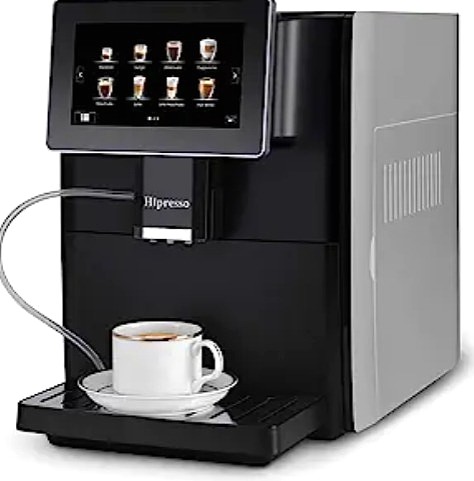
La Reveuse Hipresso: Your Gateway to Barista-Quality Coffee at Home

The Home Barista’s Cockpit: Decoding the 20-Bar Olayks Espresso Machine

Aeomjk CM5320 Espresso Machine: Elevate Your Coffee Experience with One-Touch Convenience
