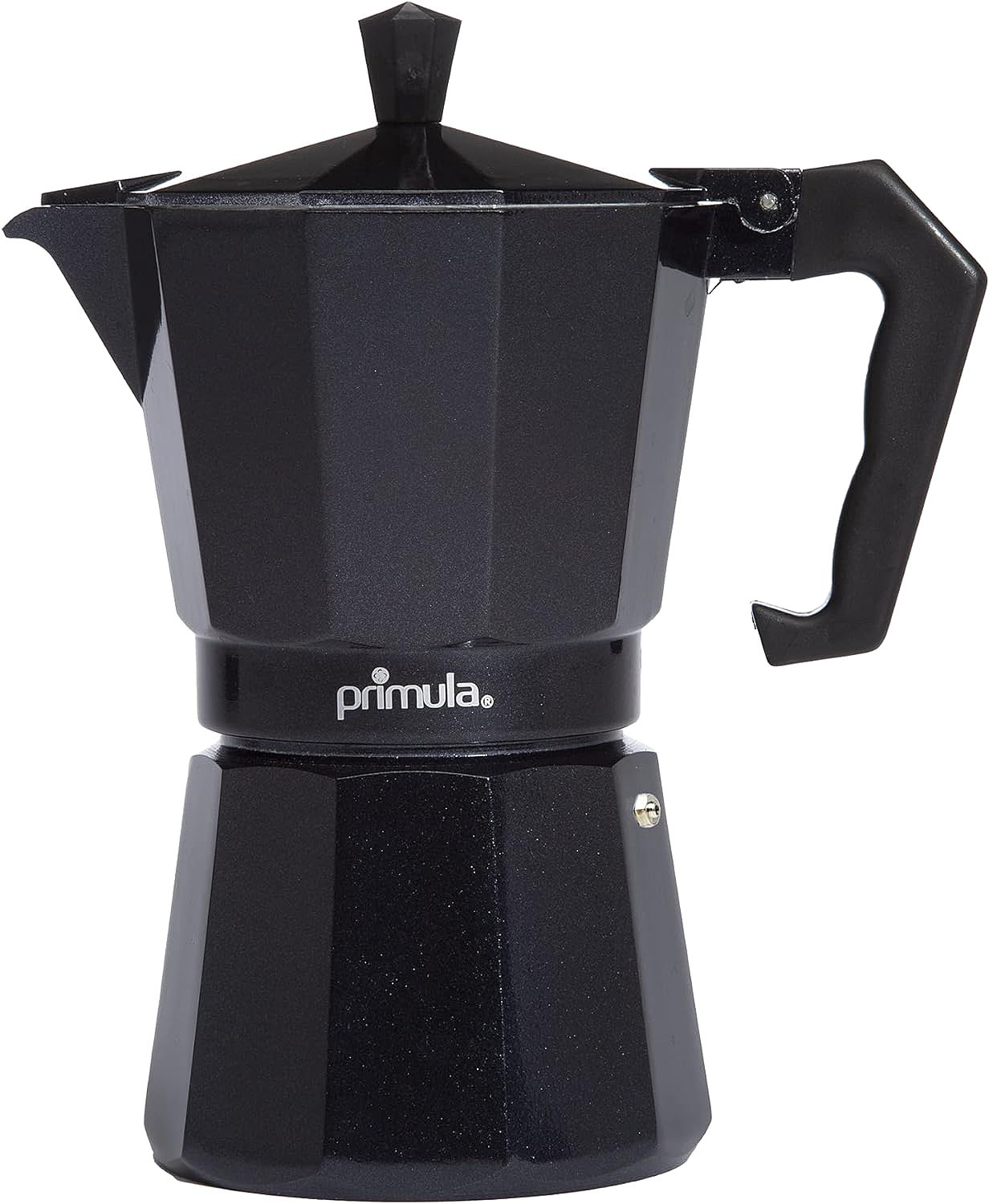
The Steam Engine of Coffee: How a Moka Pot Really Works
Bialetti Moka Express
The steam engine of coffee, and the espresso myth
A stovetop moka pot espresso maker is sold as a home espresso machine, and that is the claim this piece takes apart. The pressure a moka pot builds is only about 1 to 1.5 bar, far below the 9 bar a pump machine holds, so what lands in the cup is a strong, concentrated brew rather than a true espresso. Inside, a 130 ml chamber meets a 12 to 14 g dose, and steam does the rest.
Where the pressure comes from
The pressure in a moka pot is steam, not a pump. Water in the base boils, the vapour expands, and that expanding gas is the only thing pushing hot water up through the coffee. The force it generates is modest, and the brew is driven at roughly 1 to 1.5 bar, an order of magnitude below the 9 bar a pump espresso machine holds. A 3 cup form takes a dose of about 12 to 14 g of ground coffee, and how much water meets how much coffee is what decides how strong the result tastes.
Why the espresso label does not fit
Espresso is a defined method rather than a flavour. A pump machine forces water through a compacted puck at about 9 bar in under half a minute, and that pressure is what builds the crema and the syrupy body. A moka pot never gets near it. The steam tops out around 1 to 1.5 bar, and the water passes through the bed in an even percolation over 3 to 5 minutes. What comes out is dense and full of flavour, but it is a moka brew, and the espresso badge is the part that misleads.
What the extraction does
The moka runs a fast, hot percolation rather than the slow pressure extraction of a pump espresso. Water in the 88 to 94 deg C range passes through the 12 to 14 g bed over 3 to 5 minutes and collects about 130 ml of a strong, concentrated brew in the top chamber. Because the driving pressure is only about 1 to 1.5 bar, the cup comes out rich without the crema and body a 9 bar machine produces. That gap in pressure is the reason the result is close to espresso in style but not espresso in fact. The box states the same capacity as 4.3 oz, which is the 130 ml the chamber collects.
Why the 3 cup form is the honest benchmark
The 3 cup Bialetti Moka Express is the form this piece measures, and its numbers are the ones to judge the espresso claim by. A 12 to 14 g dose sits in the funnel above a 130 ml chamber, and the steam loop turns that into three espresso-sized servings of roughly 43 ml each. The body is the practical part of the story: it stands 6.3 inches tall, weighs 0.88 lb, and fits on a single burner, which is why the 3 cup pot is the stovetop moka pot espresso form a household reaches for first. It makes a concentrated brew for one or two people, and the pressure it builds never gets close to the word espresso.
What the 3 cup form pours
The cup count is the part the box states plainly and the part the chamber quietly corrects. Three demitasse servings from a 130 ml chamber work out to roughly 43 ml each, which is the real pour the 12 to 14 g dose produces, a strong, concentrated shot rather than a mug of coffee. Read that way, the 3 cup label holds up, since it is a three-serving pot and not a small espresso machine.
The cup cost against the espresso myth
Cost is where the honest comparison lives. A 1 kg bag of beans at about 20 dollars is roughly 75 doses at 13 g each, which puts a home cup near 0.27 dollars against the 5 to 6 dollars a cafe charges. The 39.98 dollar pot pays itself back in a few weeks of daily use, and it does that while making a strong concentrated brew rather than the espresso the badge implies. For a lot of kitchens, the stovetop moka pot espresso routine is the one that ends up worth the stove slot.
Stated plainly
One moka pull is a steam build of about 1 to 1.5 bar through a 130 ml chamber and a 12 to 14 g dose. The safety valve releases at about 1.0 bar, the water sits at 88 to 94 deg C, and the whole brew takes 3 to 5 minutes. What comes out is a strong concentrated cup at around 0.27 dollars, which is not espresso but a good argument for leaving the pump machine on the shelf.
So the next time a stovetop moka pot espresso maker is pitched as a home espresso machine, the numbers settle it: about 1 to 1.5 bar of steam, a 130 ml chamber, and a cup that is honest about what it is. The myth was never in the coffee. It was in the label.

The valve is a ceiling, not the brew
Every Moka Express carries a patented safety valve, and that valve is easy to misread. It is a release rather than a target. The over-pressure valve lets steam out once the internal pressure climbs past about 1.0 bar, and a blocked valve is the main cause of over-pressurization. Clearing the funnel port after each brew and letting the chamber cool before it comes apart is the habit that keeps the valve doing its job.

Caring for the aluminum body
The aluminium body behaves differently from a pump machine in one way that matters. Aluminium heats fast and holds heat unevenly across the base, so a medium-low flame is the setting that keeps the 12 to 14 g bed from scorching in the first minute. The base is magnetic and sits on gas, electric and ceramic hobs, and it wants a 10 cm gap from a wall so the handle stays clear. Fill the boiler to the safety valve, load the funnel with the dose and no tamping, then close the pot and pull it off the heat the moment it starts to gurgle. Store the two chambers apart and dry, since a sealed pot picks up a wet, sour note, and the body will outlast its seals if the gasket, not the whole pot, is the part you replace on a schedule.
Bialetti Moka Express
Related Essays

The Physics of the Stovetop: Why Pressure Matters in Analog Brewing
The Alchemy of Automation: Ceramic Physics, Adaptive Grinding, and the Engineering of Espresso