FRIGIDAIRE ECMN103-BLACK Multi-Capsule
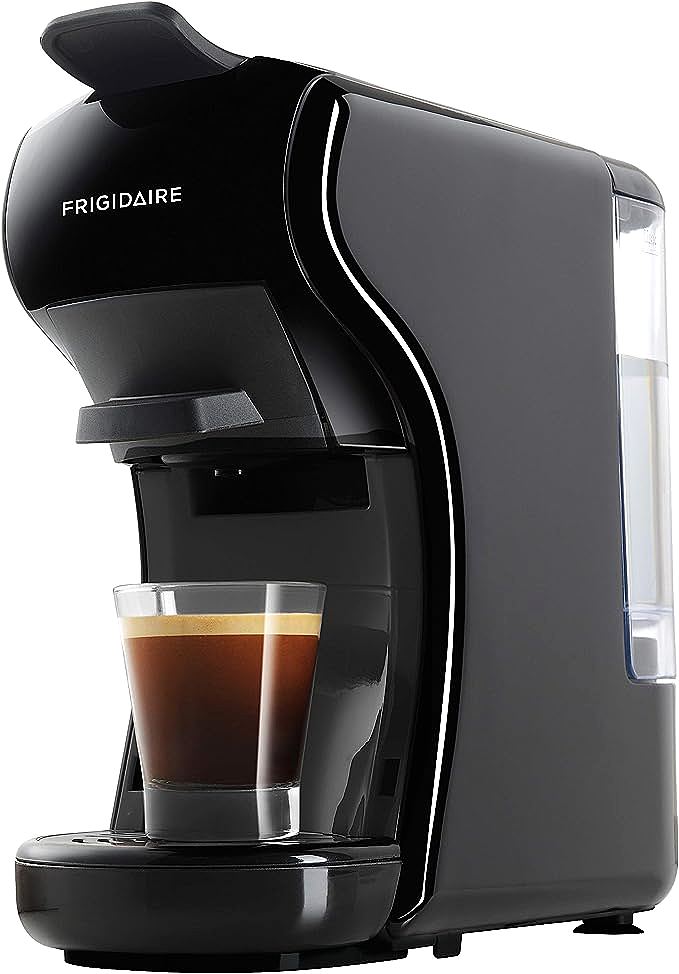
FRIGIDAIRE ECMN103 Multi-Capsule
The FRIGIDAIRE ECMN103 Multi-Capsule, sold in the ECMN103-BLACK finish, is the multi capsule coffee maker this guide examines. It runs three brewing paths from one body: a sealed K-Cup pod, a 12 g scoop of ground coffee, or a small espresso capsule that the 15 bar pump pushes through. A 1.5 L tank feeds all three paths, the cup under the spout is sized to 12 oz, and a 40 second cycle sets the time for each pour.
FRIGIDAIRE ECMN103-BLACK Multi-Capsule Coffee Maker
Several pod formats run through one brew head: a pod holder for sealed capsules, a dosing spot for a K-Cup, and a ground basket where you spoon in 12 g of coffee. The 2.8 kg steel shell holds the element, the pump, and the 1.5 L tank, and the 10 inch width is the counter footprint that arrangement needs.
The three formats from one brew head
Choosing a format is choosing a dose. Drop a K-Cup in and the pod path measures out its own dose for you; weigh a 12 g scoop into the ground basket and the dose is yours to set; seat an espresso capsule and the 15 bar pump pulls the water through until the shot stops at about 30 ml. Ground and pod paths end the same way, with the brew dripping out under the spout, but espresso is different in two respects: the water is forced through the capsule at 15 bar instead of dripping, and the yield is small, so a cup takes a shot or a dilution rather than a full pour.
The tank and the water
The 1.5 L tank sits at the back, and it is the same source for every path. Fill it once and it covers roughly four 12 oz cups, so a morning and an afternoon brew both fit in one fill on a light day. The element brings the water up to brew temperature, and the 40 second cycle is the time you wait while that happens, whether the cup is 8 oz or 16 oz because the cup size does not move the heat up clock. Refilling is a short trip to the sink; a 1.5 L tank means you do it a couple of times a week on a routine with two cups a day, not after every cup.
Dosing the two drip paths
The K-Cup path is the one that asks for nothing: the seal is already weighed, so you drop the pod in, close the head, and start the cycle. The ground path needs a scoop, and 12 g is the amount the machine is tuned around, about 20 scoops out of a 250 g bag. If a cup comes out thin, the fix is more coffee in the basket, not a longer wait, because the 40 second cycle stays the same either way; the element, not the dose, sets that clock.
The espresso capsule path
The capsule path is where the 15 bar pump earns its keep. The pump forces water through a small dose of fine coffee, and the pressure is what produces the shot body and the thin foam that settles on top of a real espresso pull. The machine stops the pour at around 30 ml, which is a standard single shot, and you either drink it at that size or add hot water until the cup is closer to the 90 ml size of a small drink. The same 40 second heat up applies, because the element has to be at temperature before the pump will build pressure.
Counter space and the 2.8 kg body
Counter space is the practical constraint. The 10 inch width is the number to check against your shelf or gap before the machine lives there, and the 2.8 kg body is what keeps it planted while a pod is pressed in or a capsule is seated, so it does not shift when the pump builds pressure. The tank at the back and the 12 oz cup at the spout are what the footprint clears: measure the width, confirm the weight is nothing a counter worries about, and the layout works.
Cup math from one tank
The 12 oz mug is the size the maker is built around, and a 1.5 L tank holds about 50 oz of water. That is four mugs of 12 oz before a top up, three of the 16 oz travel mug, or five to six of an 8 oz cup, the setting that gets the most out of one fill. A two-cup morning uses under half the tank and leaves enough for a third cup later, which is the reason most households stop at one refill a day. The math is the same on every path, because the tank does not know whether the dose behind it is a pod, a scoop, or a capsule.
Keeping the ground basket between brews
The ground basket is the one part that touches dry coffee, and a little ground left in it after a pour dulls the next cup. Rinsing the basket out and letting it dry between brews is the whole upkeep the ground path asks for. The sealed paths need no such attention because the dose is already wrapped, which is part of why most mornings start with a pod and save the ground brew for a slower hour.
Three doses from one fill
Because the tank serves every path, the switch between them costs nothing: the pod path runs a sealed K-Cup, the ground path runs a 12 g scoop, and the espresso path runs a capsule, each landing on the same 40 second heat up. A household that wants a pod in the morning and a ground brew at noon covers both on one fill and one change of dose at the brew head.
Reading the numbers
Each number in this guide maps to one habit: the 1.5 L tank sets how often you refill, the 40 second cycle sets how long a pour takes, the 12 g scoop sets the ground dose, and the 30 ml yield sets the espresso shot. Keep those four in mind and the rest, the 10 inch width, the 2.8 kg weight, the three cup sizes, is just furniture.


The three formats as a weekly rotation
The body runs all three formats in one week without anything moving except the tank: the pod path on the morning cup, the 12 g scoop at noon, and the espresso capsule late. The 40 second heat up does not read which dose is in the head, and the 1.5 L tank is the only part the rotation touches. Splitting the three formats across a day still fits one fill, because the 50 oz of water covers four 12 oz cups, which is the morning pod, the noon scoop, and a 30 ml shot left with enough water for the hot dilution.
Where each format leaves residue
Each path leaves its own residue, and the residue decides what the next cup inherits. The pod path leaves a used capsule in the holder, the ground path leaves a spent bed of grounds in the basket, and the capsule path leaves the small spent espresso pod beside the spout. Rinsing the basket after a ground brew is the only step that carries over to the next cup, because the sealed formats wrap their dose away. The 40 second cycle covers the heat, not the cleanup, so the ground brew is the one that asks for the thirty seconds of rinsing while the next fill is going to the sink.
FRIGIDAIRE ECMN103 Multi-Capsule
Related Essays
Balun Admhail Moka Pot: Brewing Authentic Italian Espresso at Home

Famiworths Hot and Iced Coffee Maker: Brew Perfect Coffee at Home

Qullai The Original JavaFlex Premium Foldable Silicone Pour Over Coffee Maker - Your Portable Coffee Companion

The 14,000-Joule Problem: Physics, History, and the Engineering Behind Portable Espresso

CASABREWS CM5418 Home Espresso Machine, the Household Pull

Neretva PE3650U 20 Bar Espresso

FCUS Stovetop Espresso Maker: Brewing Authentic Italian Coffee at Home
Mr. Coffee 4-Shot Espresso Maker: Your Gateway to Delicious Homemade Lattes & Cappuccinos

Capresso 4-Cup Espresso Machine: Your Gateway to Delicious Espresso at Home
