The Engineering Logic Inside Every Dual Brew Coffee Maker Single Serve Appliance

BELLA Dual Brew Single Serve Coffee Maker
Two Brewing Paths Packed Into One Small Box
A dual brew coffee maker single serve appliance looks simple from the outside. You drop in a pod or scoop in grounds, press one button, and coffee comes out. Under the lid, though, the machine is solving two different engineering problems at once. One path has to handle a sealed plastic pod under pressure. The other has to handle loose ground coffee flowing through a filter. The BELLA Dual Brew Single Serve Coffee Maker (B09ZWQ7RY2) is a clear example of how manufacturers reconcile those two jobs in a single compact body, and the choices inside it reveal the logic that runs through every machine in this category.
Looking at how these machines work makes the choices easier to weigh. Water heating and the pressure gap between the two paths come into focus, as do what auto shut-off is really for and what a 14 oz reservoir holds in practice.
The core problem: two very different brews
Pod brewing and ground brewing are not the same physical process. A K-Cup style pod is a sealed chamber. The machine must puncture it, force hot water through under pressure, and extract flavor in a short burst. Ground coffee is an open bed. Water must flow through it evenly, without channeling or overflowing, and the filter must hold back the solids while letting the liquid through.
A machine that does only one of these is relatively simple. A dual brew coffee maker has to carry two sets of hardware: a pod holder with puncture needles and a ground basket with a reusable filter. This machine carries both, and it ships with a ground coffee adapter in the box so you can switch paths without buying anything extra.
The engineering tradeoff is space. Every cubic centimeter spent on the second brew path is a cubic centimeter not spent on the water reservoir or the heating element. This machine settles at 14 oz, the largest single serve capacity in this comparison set, because squeezing the ground coffee path into the same compact body leaves less room for a bigger tank.
How the Water Gets Hot Fast
Speed is the whole point of a single serve machine. Nobody wants to wait for a heating element to warm a full tank. The solution in this category is a small thermoblock or inline heater rather than a big reservoir boiler. Water flows through a heated channel and reaches brewing temperature quickly. The clearest published timing figure in this comparison set is Horavie's 120 second brew.
The target temperature matters. Coffee extracts best between roughly 90 and 96 Celsius, or about 194 to 205 Fahrenheit. Below that range the extraction is sour and thin. Above it the water starts pulling bitter, astringent compounds and can scorch the grounds. This machine, like most machines in this class, aims for the middle of that window.
A quick conversion keeps the numbers straight. 90 Celsius is 194 Fahrenheit. 96 Celsius is 205 Fahrenheit. The difference between a good cup and a harsh one can be as little as 3 Celsius, which is about 5 Fahrenheit. That is the band the heater is trying to hold.

Pressure: The Pod Path vs the Ground Path
The two brew paths do not share the same pressure logic. On the pod side, the machine relies on a small pump to push water through the punctured capsule. The pressure is modest, far below an espresso machine, but it is enough to force water through the tightly packed grounds inside the pod and extract quickly.
On the ground side, there is no sealed capsule to build pressure. The water flows through the open basket by a combination of the pump and gravity. This is why the grind size and the dose matter more on the ground path. Too fine a grind and the water stalls, over-extracting and turning bitter. Too coarse and it rushes through, under-extracting and tasting weak.
The engineering insight is that the same pump serves both paths, but the resistance changes. The machine cannot know the difference, which is why the grind and dose on the ground side are the user's responsibility. It ships with a reusable filter basket precisely so you can tune that side yourself.
One Button, Several Hidden Decisions
The one touch operation looks like a single press, but behind that press the control board runs a short sequence. It checks that the water level is sufficient, energizes the heater, waits for the temperature to reach the target window, then runs the pump for the brew cycle. When the cycle ends, it triggers the auto shut-off.
That auto shut-off is not a luxury. It is a safety and a convenience layer. A machine left on with a dry or near dry heating element can overheat, warp plastic, or in the worst case become a fire risk. It cuts power after brewing completes, which also means you can press the button and walk away without coming back to a hot, idle machine.
The control logic also has to handle the two paths differently. The pod path and the ground path may use slightly different flow rates or timings, and the button press has to select the right one based on which holder is seated. This is a small piece of firmware, but it is the part that makes the machine feel simple to the user.
The 14 oz Reservoir and What It Really Holds
The 14 oz figure is the reservoir capacity, not the brew size. In practice, a 14 oz reservoir gives you roughly one full cup, or a little less once you account for water that stays in the heating channel and the filter. For a single serve machine that is the intended use: one fresh cup at a time.
It helps to be precise about the units. 14 fluid ounces is about 414 milliliters. A typical large coffee mug holds 12-16 oz, so the reservoir is sized to fill a tall mug once, with a small margin. If you want a second cup, you refill. That is the honest tradeoff of the single serve form factor: freshness and speed in exchange for not brewing a full pot.
Descaling: the maintenance most owners skip
Hard water is the quiet enemy of any heated coffee machine. As water heats, dissolved minerals come out of solution and build up as scale inside the heating channel and on the element. Over months, that scale slows the heater, raises the energy needed to reach temperature, and can eventually block the flow path.
The engineering answer is descaling. Running a diluted descaling solution or white vinegar through the machine on a schedule dissolves the scale and restores flow. This machine, like most in this class, benefits from a descaling cycle every 1-3 months depending on your water hardness. Machines with a descaling reminder, like some competitors, simply track the number of cycles and prompt you when the interval is due.
The logic is the same across the category. Heat plus hard water equals scale. Scale equals slower heating and weaker flow. Descaling reverses it. There is no way around the chemistry, only a schedule to manage it.
How the BELLA Compares to Other Dual Brew Machines
The dual brew single serve category is crowded, and the differences are mostly in capacity, pressure, and extra features. The BELLA Dual Brew B09ZWQ7RY2 at 14 oz and a price near 35 dollars sits at the value end. It does the two core jobs, pod and ground, with one touch and auto shut-off, and it keeps the footprint small.
The Hamilton Beach 2-Way Programmable B0896NP59N takes a different approach. It pairs a single serve side with a full 12 cup glass carafe, so it is really two machines in one body. That makes it more expensive, near 89 dollars, but it can brew a pot for a group and a single cup for one person, and it holds coffee warm for 2 hours on a keep-warm plate before auto shutoff. The engineering cost is the second brew path and two separate water reservoirs.
The Horavie single serve machine B0DCJMFPDH focuses on compactness and a fast 2 minute brew, with brew sizes from 6-12 oz, a descaling reminder and self-cleaning cycle built in. It is a pod and ground machine like the BELLA, but it trades some capacity for a smaller footprint and a maintenance prompt.
The BELLA Dual Brew B09ZWRBJ62 in red is the same engineering in a different color, with an adjustable tray and a silicone cup holder to cut spills. The Deahun Mainstays dual brew machine B09YNV38ZD is another compact option at a similar price, with a removable drip tray for travel mugs.

The pattern across all of them is the same. The dual brew coffee maker single serve category is defined by the two brew paths, a small fast heater, and single serve capacities that top out at 14 oz in this comparison set. The differences are in the extras: programmability, descaling reminders, adjustable trays, and carafe options.
Reading the numbers like an engineer
Once the logic is clear, a list of figures starts telling a story. Reservoir capacity tells you how many cups before a refill. Brew temperature range tells you whether the machine can hold the sweet spot. Auto shut-off tells you about safety and convenience. A reusable filter tells you whether the ground path is meant to be used or just tolerated. Run the method on a real decision: weigh the Hamilton Beach B0896NP59N against a compact dual brewer, and the carafe side and the two separate reservoirs are the specs that settle it, because each path carries its own water. The red BELLA variant B09ZWRBJ62 is the same machine with an adjustable tray and a silicone cup holder to keep travel mugs from slipping; at this writing the listing is currently unavailable.
The BELLA Dual Brew Single Serve Coffee Maker (B09ZWQ7RY2) is a clean example of the category's logic. It carries both brew paths, shuts itself off after the cycle, and holds 14 oz. It does not try to be a full pot machine or an espresso machine. It does one job, one fresh cup at a time, and the engineering inside it is the minimum needed to do that job well.
That is the engineering logic inside every dual brew coffee maker single serve appliance. Two paths, one heater, one button, and a reservoir sized for a single fresh cup. The pattern holds for the BELLA as it does for the machines around it: speed and freshness, in exchange for not brewing a full pot.
BELLA Dual Brew Single Serve Coffee Maker
Related Essays

BELLA Dual Brew Single Serve Maker

How to Choose a Single Serve Coffee Maker: A Buying Guide

Compact Single Serve Coffee Maker Buying and Usage Guide

Single Serve Coffee Maker Buying and Usage Guide

Single Serve Coffee Maker for K-Cup Pod and Ground Coffee: A Buying and Usage Guide
Single Serve Coffee Maker Buying and Usage Guide

Homeleader K04-045 Single Serve Coffee Maker: Your Perfect Cup, Anytime

Famiworths Single Serve Coffee Maker: Quick, Easy, & Delicious Coffee
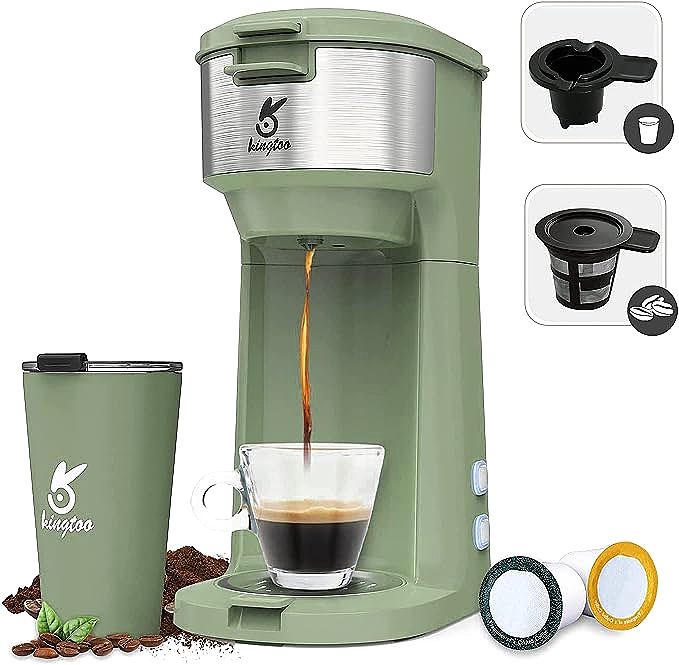
KINGTOO Single Serve Coffee Maker: Brew Perfect Coffee Every Time, Made Easy
