How to Descale a Tastyle Coffee Maker: Ratio and Steps
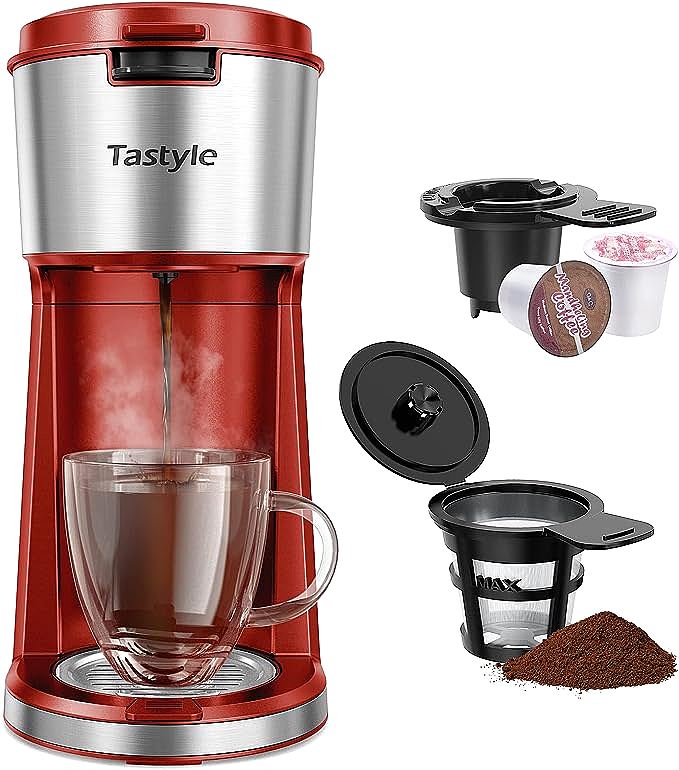
Tastyle Mini Single Serve Coffee Maker
To descale a Tastyle coffee maker, the working ratio is 1:1 (white vinegar and water, 6 oz of each for the 12 oz tank on the Tastyle Mini Single Serve Coffee Maker). A food-grade citric acid solution is the standard low-odor alternative for anyone who dislikes the vinegar smell. Because the machine carries a descaling reminder light and a self-cleaning function, the light itself is the calendar: the cycle belongs to the day it comes on.
Picking Between the Three Acid Options
The choice comes down to odor tolerance, scale severity, and what is already in the pantry.
White vinegar and water at a 1:1 ratio is the default for most Tastyle owners. Household white vinegar is typically about 5 percent acetic acid, strong enough to dissolve calcium carbonate without harming the BPA-free tank or the internal seals, and it costs less than a cup of coffee (confirm the approved solution list in your unit's manual). Vinegar fits the moderate-scale case: the reminder light is on, and the kitchen can be ventilated during the dwell time.
Citric acid powder dissolved in water is the low-odor alternative, and a common starting point is about 1 tablespoon per cup of water. Citric acid is weaker than vinegar, so the same cycle holds the full 60-minute dwell rather than the 30-minute short cycle. It suits households sensitive to vinegar smell, an open-plan office or dorm room, and the light pass between heavier cycles.
A commercial liquid descaler earns its place when the scale is heavy, visible flakes in the tank or brew times well past the 3-minute baseline, or a first vinegar cycle that did not restore flow. These products are dosed on the packet, so the packet instructions override the 1:1 ratio and a full reservoir fill follows whatever amount the label states.
Three solutions to steer clear of: bleach, which leaves residue that is hard to flush from a narrow water path; abrasive cleaners, which scratch the tank and brew head; and undiluted vinegar, which can degrade rubber seals over repeated uses.
The Rhythm Is Set by Your Water
The reminder light on the Mini Single Serve is the primary trigger because it is built into the machine, and it reads as a prompt to clean within the week rather than an emergency: the brewer stays safe to use, but brew time and temperature are already drifting when the light comes on.
Without the reminder as a guide, the habit for single-serve brewers is a descaling cycle every 1 to 2 months, and water hardness is what moves that window. Where the supply runs hard, above 120 mg/L of calcium carbonate, mineral film forms fast enough that a roughly monthly cycle keeps the machine honest, and most municipal suppliers publish their hardness data online so the local band is knowable. The moderately hard band, 60 to 120 mg/L, is the most common range for city water in North America and matches the two-month rhythm. Soft water below 60 mg/L can stretch to every 3 months, and filtered or bottled water carries fewer minerals still, so the interval can stretch by roughly a month. Machines that sit unused for a season, an RV through winter or a dorm room over summer break, get one descale before the first brew back, because standing mineral film hardens while the machine waits.
Why Scale Builds Up in This Machine
Every time the 800-watt element heats water, dissolved calcium and magnesium salts come out of solution and settle on the hottest surfaces. In a single-serve brewer the path is narrow and the element sits close to the flow channel, so scale accumulates faster than in a full-size drip machine with a wide reservoir. The 12 oz tank on the Mini means the same small volume is heated and reheated cup after cup, concentrating those minerals with every cycle.
Scale is mostly calcium carbonate, the same compound that crusts a kettle. It acts as an insulator, so a thin film over the element forces the 800 watts to work harder and longer to reach brewing temperature. In the flow channel the deposit narrows the passage and thins the stream. At the needle or jet that punctures the pod, a partial block changes the extraction pattern and leaves the cup weak or uneven. The chemistry of the fix is simple: the acid in vinegar or citric acid bonds with the calcium carbonate and converts it into a soluble salt that rinses away, leaving the surfaces clean.
When the Brew Starts Going Off
The symptoms a single-serve machine throws at you all trace back to the same root, mineral film on the element and in the flow channel. What differs between them is how thick the film is and what else is doing the damage, so each one deserves its own read.
A descaling reminder light is the scheduled case and the easiest, because the machine itself is asking for the cycle. The light tracks usage and turns on when the machine estimates scale has crossed a threshold; the exact cycle count is not published in the product listing, so the right read is a calendar reminder rather than an error code. The standard response is a full acid cycle: the machine is unplugged and given 15 minutes to cool if it has been brewing, the pod holder and grounds basket come out (both are dishwasher-safe), and the tank is emptied and rinsed. Six ounces of white vinegar and 6 ounces of water get mixed in a separate container first, then poured to the 12 oz Max line, with a 12 oz or larger mug under the spout. The one brew button starts a partial cycle that stops after about 30 seconds, which fills the lines without emptying the tank; models with a dedicated descale or self-clean mode replace that half cycle with their on-screen prompts. The solution then sits for 30 to 60 minutes, which is when the acid actually dissolves, and 60 minutes is the ceiling. The cycle finishes into the mug and the liquid is discarded, the tank is refilled and run through three full fresh-water cycles, and a taste of the last cup settles it: a faint vinegar note fades after a brew or two, a strong smell asks for one more rinse. The accessories go back in and a final brew with a pod or up to 20 g of grounds confirms normal flow. If the light has not reset after all that, one more full rinse plus the manual's reset button sequence for the specific model is the follow-up.
When a brew that once took 3 minutes stretches to 5 or more, the film is doing two things at once: insulating the element and narrowing the channel, so the water takes longer to reach temperature. A low fill is an easy confounder, because a tank below the minimum trips the water-shortage alert and the machine refuses to run or runs weakly. The answer is the same acid cycle held at the full 60-minute dwell, and while the solution sits it pays to look at the tank walls and the brew head for white or gray flakes. A timed cup after the rinses is the confirmation: brew time back near 3 minutes means the scale was the cause. If a second fresh 1:1 cycle does not bring the speed back, the channel likely has a blockage that home chemistry will not clear, and that is the point to seek service rather than keep forcing cycles.
An off taste has two different owners, and telling them apart sets the fix. Vinegar residue shows up within a few brews after a descaling cycle that was under-rinsed, while scale shows up gradually and worsens cup over cup when no cycle has happened in weeks or months. Residue answers to two extra fresh-water rinse cycles and one full cup of coffee brewed and discarded to clear the line. Scale answers to the full 60-minute dwell cycle plus the 3 rinse cycles. If the taste survives two clean cycles in a row, the suspicion moves to the water itself, and a week on filtered water is the diagnostic: flavor that normalizes points to the tap.
Visible white or grayish residue on the tank walls, the brew head, or around the needle is the clearest signal of the set: the scale has already flaked off in pieces, so waiting for the reminder light adds nothing. The response is the standard cycle at the full 60-minute dwell, with one refinement. Loose flakes left in the tank redissolve into the rinse water, so after the dwell and before the rinses the tank walls and the brew head area get a wipe with a damp cloth, and the pod holder and grounds basket go through the dishwasher or warm soapy water before they come back. One extra rinse on top of the standard three clears the more loose material the visible flakes mean. After a week of normal brewing the same spots are worth another look: fresh residue forming quickly is hard water announcing itself, and the rhythm moves to the monthly band from the section above.
The Mini carries a water-shortage alert and overheat protection, and both can interrupt a cycle mid-run. Three causes cover most of the cases: the tank below the minimum level, which reads as a shortage because the machine expects to pull a known volume; the pod holder or grounds basket sitting misaligned against the needle, the most common cause of a sudden flow stop, fixed by removing and reseating it until it clicks; and a jet partially blocked by scale. A blocked jet usually answers to one more acid pass, unplugging for 15 minutes, restarting, and then a fresh 1:1 solution held for the full 60-minute dwell before the rinses. If water still will not flow after a second fresh solution, cycling the machine is the thing to stop doing: repeated forced cycles against a blocked channel can trip the overheat protection, and past that point the blockage belongs in service, not in more acid.
The Routine Shifts With the Location
A home kitchen is the baseline scenario: a countertop near an outlet, tap water of known hardness, and a 12 oz tank refilled each morning. The light, or a 1 to 2 month rhythm, whichever comes first, sets the schedule, and a bottle of vinegar and a measuring cup kept in the same cabinet is what makes the cycle actually happen when the light comes on.
The camping version adds one variable from the product notice: the machine runs normally at 120V and 800W, and off-grid use wants a power bank with at least 100V output and 500W, with brewing slower at 100V. Slower brewing keeps the element energized longer per cup, so brew time becomes the field signal, a campsite cup creeping past 3 minutes is the moment to act. The full acid cycle happens back at home base where running water and ventilation exist, not in the field, and a light that comes on mid-trip becomes the first cycle on the way home. The machine remains safe to brew with, just slower.
Office and dorm rooms add a shared-use pattern. More brew cycles per week pull the reminder light forward compared with a single-person household, so the light reads as the calendar there. The everyday layer stays light: the tank rim gets a weekly wipe, the accessories rotate through the dishwasher between cycles, and the full vinegar pass lands on a quiet morning when nobody is waiting for coffee.
Why Only the Tank Changes From Model to Model
The acid cycle itself, solution in, partial cycle, dwell, finish, two to three fresh-water rinses, is the same across the Tastyle line. What differs is the tank, and the tank decides how much of the 1:1 mix goes in.
The Mini Single Serve is the reference point: its 12 oz tank is marked at 6, 8, 10, and 12 oz, a full cycle fills to the 12 oz line with 6 oz of vinegar and 6 oz of water, and the light maintenance pass runs at the 6 oz line with 3 oz of each and the shorter 30-minute dwell. The Hot and Iced Minis brew 6 to 14 oz cups from a non-removable tank and carry the same reminder light and self-clean function; the pattern holds, fill to the matching ounce mark, keep the 1:1 split, and the tank sits untouched through the dwell.
The two 40 oz units, the 3-Brew-Styles model and the milk-frother model, use a removable reservoir, which is why their rinse stage is easier, the tank carries to the sink. At the same 1:1 ratio a full 40 oz fill works out to 20 oz of vinegar and 20 oz of water. One model in the Hot and Iced range ships with a built-in descaling procedure that starts by holding the over-ice button for about three seconds; those units follow the on-screen prompts instead of the half-cycle method while keeping the 1:1 fill. A 16-oz variant with a non-removable tank lands at roughly 9.5 oz of each for a full pass. Across all of it, a dedicated descale or self-clean mode, where one exists, is what the machine wants: its prompts set dwell and rinse, and the solution ratio stays the same. For model matching, the span covered here runs from the 12 oz Mini through the 14 oz Hot and Iced Minis to the two 40 oz reservoir units and the 16-oz non-removable model.
In Summary
Every path on this machine arrives at the same sequence: a 1:1 vinegar-to-water mix (or a packet-dosed commercial solution), a partial brew cycle, a 30 to 60 minute dwell, and fresh-water rinses until the cup tastes clean. The reminder light and the self-cleaning function on the Mini exist so the rhythm holds without counting brews. A slow cup, an off flavor, visible flakes, and a stopped flow are the same story at different loudness levels, and the dwell stretches to 60 minutes whenever the trigger is anything more serious than the routine light. The machine that gets attention at the first sign keeps its 3-minute brew and clean flavor far longer than the one waited on until the coffee turns.

