Pre Ground Coffee Freshness: The Science Behind Keeping Your Coffee Alive

Lavazza Crema E Gusto Ground Coffee Blend
Why your ground coffee tastes flat after a week
You open a fresh bag of ground coffee on Monday morning. The aroma fills the kitchen. By Friday, the same bag smells like cardboard. Spoilage is not the issue, and nothing about the coffee is unsafe. It has simply become less interesting than it was five days ago. Pre ground coffee freshness is a race against oxygen, moisture, and light, and the clock starts the moment you break the seal.
The Lavazza Crema E Gusto Ground Coffee Blend is a useful example. It ships as four 8.8-ounce vacuum-sealed bricks packed in one box, 2.2 lbs (1 kg) of coffee in total (ASIN B001E5E0D8), a format that protects the coffee until the first seal breaks. Understanding what happens after that point helps you get more out of every bag.
What goes wrong when coffee stales
Coffee contains more than 800 volatile aromatic compounds. These molecules carry the smell of a fresh bag and much of the complexity of a good cup, and many of them contain carbon-carbon double bonds that oxygen attacks readily. When those bonds break, the aromatics degrade into simpler molecules that smell neutral or stale.
The floral and fruity notes fade first because they come from the most chemically delicate compounds. Chocolate and nut tones last longer, but they fade too. What remains after a week of air exposure is a flattened version of the original profile.
Oxidation is not the only problem. Coffee beans contain oils that make up 10-15% of their weight, and those oils carry a large share of the flavor. When unsaturated fatty acids meet oxygen, they form aldehydes and ketones, the same compounds that give old nuts a rancid taste. In coffee they produce a faintly cardboard-like aftertaste that worsens with time.
The brown, savory compounds formed during roasting, known as Maillard reaction products, degrade as well. These give coffee its roasted backbone, and in the presence of trace moisture they break down further. Caramelized notes fade into a hollow bitterness that many drinkers mistake for strength. A stale cup is not stronger. It is less complex.

Why grinding makes the problem worse
A whole coffee bean resists staling better than grounds do. Its outer surface is modest compared to its volume, and its porous internal structure keeps much of the volatile chemistry away from direct air contact. Sealed in a bag, whole beans hold meaningful aromatic complexity for weeks.
Grinding changes the equation. The process increases the total surface area of the coffee by a factor of roughly 1,000 or more, depending on how fine the grind is. Every newly exposed surface becomes a site where oxygen attacks, volatiles escape, and moisture condenses.
The relationship between particle size and surface area is not linear. Halving the particle diameter roughly quadruples the total surface area. An espresso grind in the 200-400 micron range exposes far more surface than a French press grind at 800-1,000 microns, which is why the freshness trajectory of pre-ground coffee depends so heavily on grind size.
Fine grinds extract more efficiently and produce richer cups, but they lose freshness faster in the bag. Grind size sets the window: an espresso grind can taste flat within 3-5 days, a medium drip grind holds on for 7-10 days, and a coarse French press grind can stretch to 10-14 days. The practical window for pre-ground coffee is measured in days, not weeks. Food-science measurements of stored ground coffee put the aroma loss at about 40% within 48 hours, and around 60% after a week.
Oxygen and temperature: the accelerants
Air at sea level is about 21% oxygen by volume. Every time you open a coffee container, oxygen floods the headspace and reacts with the exposed surfaces. Each opening delivers a fresh dose of oxidizing agent, and the damage accumulates.
Temperature changes the speed. Oxidation follows basic Arrhenius kinetics, and the rate roughly doubles for every 10-degree Celsius increase. At a comfortable 20 degrees in a pantry, staling proceeds at a moderate pace. In a warm kitchen near a stove, where ambient temperatures can reach 28-30 degrees, that pace approaches double. The difference shows up as coffee that still tastes decent on day seven versus coffee that is flat by day three.
Container shape matters as well. A wide, shallow canister leaves more coffee surface exposed to headspace air than a tall, narrow one, so the surface-to-volume ratio of the stored bed is a small but real factor in how long a package stays fresh.
Moisture and light: the silent destroyers
Water plays two opposing roles. During brewing it is the solvent that pulls desirable compounds from the grounds. During storage, even trace amounts trigger a cascade of quality-destroying reactions.
Ground coffee is strongly hygroscopic. It absorbs water vapor from the surrounding air quickly, and at the 60% relative humidity common in kitchens, it can take on enough moisture to cause noticeable flavor changes. The absorbed water acts as both a solvent and a reaction medium inside the particles. It accelerates the breakdown of aromatic molecules and, in extreme cases, can support the growth of mold.
The ideal storage humidity is below 50%. That makes the refrigerator a poor choice despite its low temperature. Refrigerators run humid, and the door cycles cause condensation inside any container. Cold slows the chemistry, but the moisture damage more than offsets the benefit. A cool, dry pantry beats the vegetable crisper.
Light is an independent factor. Ultraviolet light breaks chemical bonds directly through photodegradation. Aromatic compounds contain chromophores that absorb UV energy, and when that energy lands, it can snap the very bonds that hold the aroma together. A glass jar of stale coffee on the counter smells like nothing at all, because the UV-sensitive compounds are gone.
Opaque packaging counters this with foil laminates, metallized films, and dark-tinted plastics. A clear glass jar may look good on the counter, but it is one of the worst vessels for ground coffee. Light exposure combined with the temperature swings near a kitchen window can degrade a jar of pre-ground coffee within a single day.
How packaging fights back
Coffee packaging has evolved from paper bags into multi-layer engineered materials, and each layer addresses a specific threat to freshness.
Vacuum packing removes nearly all the air before sealing, eliminating the oxygen that drives oxidation. The compressed brick format also forces the particles into tight contact, minimizing the air trapped between them. When you tear open a vacuum brick and hear the hiss of air rushing in, the protective environment is gone.
Nitrogen flushing takes a different route. The packaging line floods the bag with inert nitrogen before sealing. Nitrogen does not react with coffee compounds at any meaningful rate, and unlike vacuum packing, it does not compress the grounds. Many pillow-shaped bags combine nitrogen flushing with a one-way degassing valve.
The valve solves a specific engineering problem. Freshly roasted coffee releases carbon dioxide for 2-3 weeks after roasting. In a fully airtight bag, that gas would inflate the package and could rupture it. The valve lets gas escape while keeping outside air from entering, which maintains an oxygen-free interior until you brew.
Even the best packaging cannot stop degradation forever. Oxygen and water vapor diffuse through the film itself, slowly, and warmer conditions speed that transmission. An unopened brick in a cool, dark pantry holds its quality for months. The same brick stored above the refrigerator degrades faster, even with the seal intact.
Storage mistakes that cost you flavor
Storage advice online is abundant and frequently contradictory. Some of the most repeated tips are actively harmful.
Freezing sits at the top of the misunderstood list. The principle is sound, since low temperatures slow every chemical reaction, including oxidation. The problem is the home freezer routine, and the fatal step is opening the frozen container. When frozen coffee meets room-temperature air, moisture condenses on the cold particles the way it beads on a cold glass in summer. That water dissolves soluble compounds and accelerates every degradation pathway. Return the coffee to the freezer and the water freezes and expands, damaging the particle structure. Leave it out, and the water keeps working as a reaction medium.
If freezing is non-negotiable, portion the coffee into single-use amounts in airtight packaging, freeze those portions, and let each one come fully to room temperature before opening. The method prevents condensation, though it is cumbersome. Most people will find it easier to buy smaller quantities more often.
The refrigerator is worse, for a different set of reasons. It is a high-humidity environment with constant temperature cycling, and ground coffee absorbs both moisture and odors from whatever shares the shelf. Coffee stored next to last night's leftovers takes on volatile sulfur compounds from onions and garlic, a process called flavor scalping. The effect is strong enough that many casual drinkers have noticed it without knowing the mechanism.
The original packaging is often the best vessel. Vacuum bricks and nitrogen-flushed bags with valves were designed to keep coffee fresh as long as possible. Once opened, transfer the remainder to a container with a good seal: a ceramic canister with a rubber gasket, a stainless steel container with a clamp lid, or a dark glass jar with an airtight stopper. Size the container to minimize headspace. A mostly empty one-liter jar holding 100 g of coffee leaves a large volume of oxygen-rich air sitting on top of the grounds.
The Lavazza Crema e Gusto example
The Lavazza Crema E Gusto Ground Coffee Blend shows these packaging principles at work. Its vacuum-sealed brick is the format advantage in its purest form: coffee compressed into a dense, opaque block, protected from light and bulk oxygen until the seal breaks. Inside is a blend that pairs Arabica for smoothness with Robusta for body and crema, a medium roast at 7/10 intensity with a creamy chocolate-and-hazelnut aroma, spice notes in the background, and a long, mild finish.
The four-brick format also maps onto the storage discipline above. Each 8.8-ounce brick (250 g) is an individual sealed package, so the multipack runs as a built-in portioning system. Open one brick at a time, finish it within the one-to-two-week window, and leave the rest sealed. That delivers the buy-smaller-batches behavior storage guides recommend without buying extra canisters. If consumption is slower still, an unopened brick can go into the freezer whole, since the seal keeps the condensation risk away until the day it is opened.
Pricing tells a similar story about positioning. The product data behind this guide lists the pack at $23.63 (live check, October 2026), with an earlier capture recorded at $23.79. Comparable ground blends span a wider band, from about $18 for Starbucks House Blend up to $45 for Death Wish. Smaller 2-packs list at $19.94 (B005GTWCTM, live check October 2026), and the whole-bean version is $25.99 (B082VXLF3H, live check October 2026).

Practical tips for better coffee
The most effective practice for preserving pre-ground coffee needs no equipment at all. Buy only the amount you expect to use within 7-10 days of opening. Smaller packages purchased more frequently mean you are always brewing coffee that has spent less time in contact with air. In pre-ground terms, this favors multipacks of small bricks over one large tin.

Match the grind to your brewing method and the package size to your consumption rate. Buying a kilogram of espresso-grind coffee when you make two cups a day means the last third of the bag will taste meaningfully different from the first third. No storage technique can prevent that.
For vacuum-brick products like this one, the format itself provides solid baseline protection. A standard 250 g brick, once opened, keeps reasonable quality for about 10-14 days if it is sealed between uses and stored in a cool, dark cabinet. After that window, the difference between the first morning and the last comes down to personal tolerance.
The most effective storage environment costs nothing: a cool, dark interior cupboard. The temperature is stable, light exposure is zero by definition, and the humidity tends to run lower than in the working part of the kitchen. It may not look stylish on the counter, but it is where the chemistry of preservation works best.
Understanding what happens to ground coffee after you open the bag does not make the problem disappear. It does put the controllable variables in your hands: how big a package you buy, which container you store it in, how warm and humid the room runs, and how quickly you finish the bag. The four-brick format of the Lavazza Crema E Gusto Ground Coffee Blend is one of the simpler tools for managing those variables. Use it well, and the last cup from the fourth brick can taste nearly as good as the first.
Lavazza Crema E Gusto Ground Coffee Blend
Related Essays

Bialetti Smart Coffee Jar: The Secret to Preserving Coffee Aroma
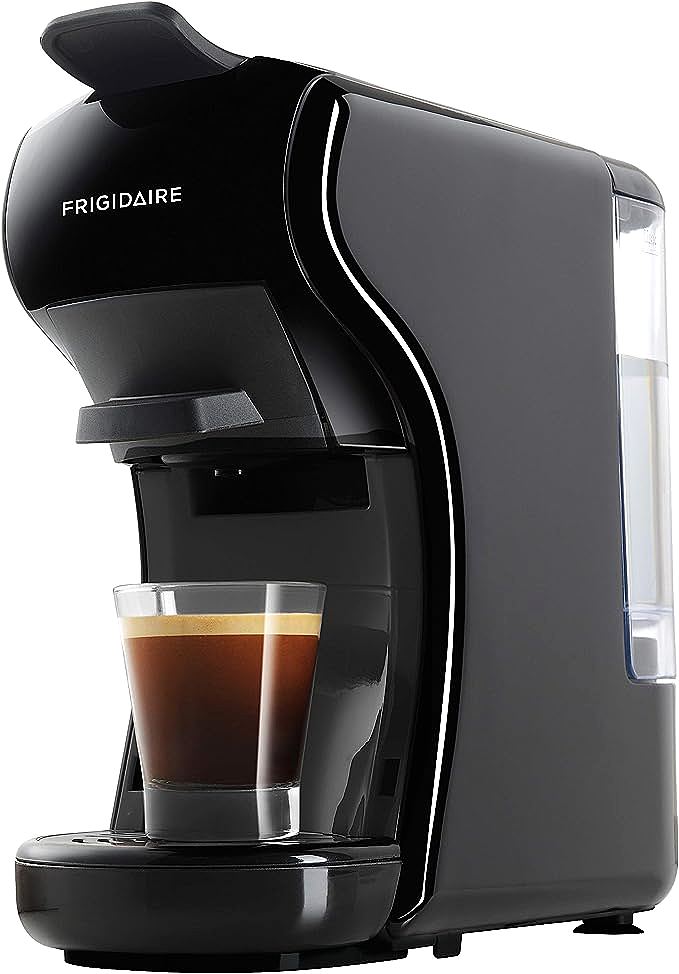
FRIGIDAIRE ECMN103-BLACK Multi-Capsule

Stovetop Moka Pot Brewing Method: Steam Extraction
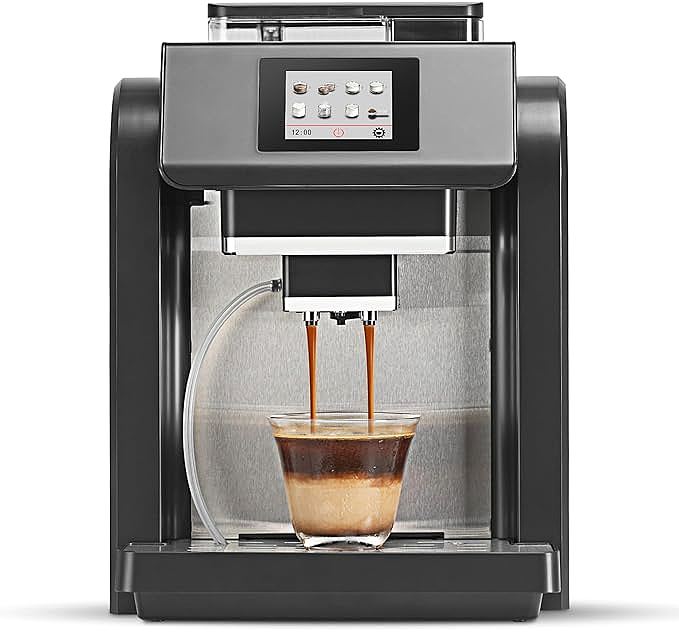
Mcilpoog ES317: Automatic Espresso Science

How an Electric Burr Grinder Transforms Bean


Black Ivory Coffee: Inside the Rarest Bean

Keurig K-Express K-Cup Single Serve Coffee Maker

Solimo Espresso Capsules
