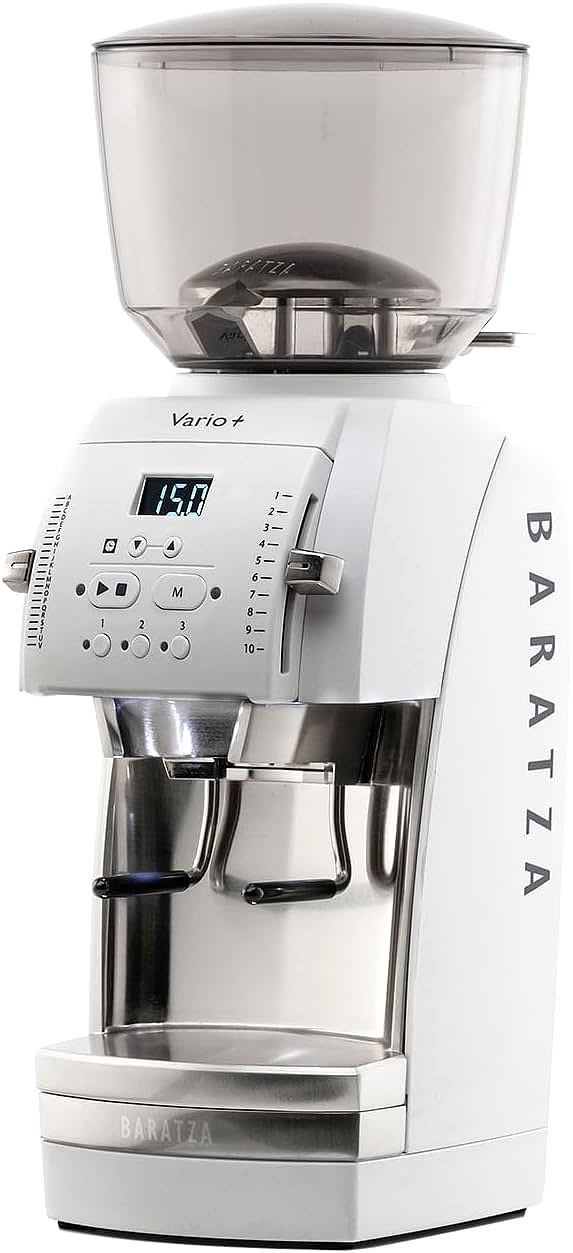
Flat Burr Grinder Guide: 64mm Burrs, 100 Settings, and Static Control

SHARDOR 64mm Flat Burr Coffee Grinder
A grinder is the one tool in a coffee setup that reaches every brew method. The same machine pulls a dense shot on Sunday and fills a cold brew jar on Thursday, and the burr set decides how well it can do both. Motors and boilers change one drink at a time. The grind changes the whole shelf at once.
This working guide covers a flat burr grinder from the inside out: what the geometry does to a dose, how the dial maps onto brewers, and which listing details change daily use. The example that runs through it, a 64mm set with 100 settings, covers the full distance from espresso to cold brew on one dial.
What flat burr geometry buys at the cup level
Burrs work like a pair of millstones. Two cutting surfaces move against each other, and beans feed through the gap between them. A conical set stacks a cone inside a ring, and the grounds fall down and out around the cone. A flat set runs two horizontal discs face to face and pushes the grounds from the center toward the rim. Both crush coffee; they part ways in the shape of what comes out.
Particle distribution carries the difference. Parallel discs shave beans through a gap that stays even along its length, so the grounds cluster in a narrower band of sizes. A tight band extracts at one rate, which lets a cup taste more of what the roaster intended. A wide scatter pulls flavor unevenly: the fine end gives up its flavor early and turns harsh, while the coarse end lags and reads weak.
Why burr size and burr shape answer different questions
Shape sets the flavor signature and diameter sets throughput. Flat discs of any size lean toward a separated, brighter cup, and conical sets with a longer cutting path often land rounder and softer. Diameter enters when volume and speed matter. A wider disc has more cutting surface, so it clears a dose faster and holds less heat from friction, which is why busy shops run large discs in the first place.
A 64mm flat burr set carries that pairing onto a home counter. Its 64mm cutting circle puts shop-scale geometry into a countertop body, which means a fast, cool grind and a distribution worth building a recipe around. The all-metal chamber on the SHARDOR machine frames the same idea from the other side: hardness under load, and a cutting path that holds its shape as beans wear it down.

What a 64mm flat burr set changes at the bean
Grinding is a friction job, and friction makes heat. Coffee carries aromatics that start to leave the moment the grounds warm, so a burr set that runs hot takes a small tax out of every dose. A 64mm set spreads that work across more cutting surface and clears the load in less time, which keeps the contact brief and the temperature down. Less heat at the grinder shows up later as more of the top notes surviving the brew.
Uniformity then does the rest of the work. When most particles sit near the target size, one method's setting transfers cleanly to the next: dial for a pour over, and the same number tracks onto a drip basket without a rebuild. Chamber material adds its own margin. A metal grinding path resists flex under load, so the gap holds steady from the first bean of a dose to the last, and a number written down yesterday still means the same thing today.
Reading 100 grind settings without a cheat sheet
A click count matters less than what the steps do. This dial spans 100 settings from espresso-fine to French-press coarse, and the width of the range is the point. A flat burr grinder with a narrow window forces every method into a few overlapping clicks; a hundred steps leaves room for small corrections that never jump past the sweet spot.
A practical approach starts coarse and moves finer. Beginning at a setting that runs fast, small adjustments upward in fineness tend to slow the brew to the target time; the cup often gains sweetness and body before bitterness creeps in. Espresso lives at the fine end, where one or two clicks separate a syrupy pull from a choking one. Drip and pour over want a middle setting that feels like sand. French press and cold brew take the coarse end, where the grounds read like raw sugar and the filter does the rest.
Consistency comes down to a couple of habits. Keeping dose fixed while adjusting grind avoids compounding changes. Clearing the chute between bags also helps, since even a small amount of old grounds from a darker roast can carry over to a lighter cup.

Anti-static hardware and a tidy counter
Static shows up most in dry kitchens. As beans shatter, particles pick up charge, and charged grounds stick to the inside of a catch cup, drift onto the counter, or cling to the chute and ride into the next dose. A scale reads one number while the basket carries less, which breaks the recipe the brew was built on.
Hardware answers it in two steps. A built-in anti-static system bleeds charge off the grounds as they leave the cutting chamber, and a stainless steel cup gives whatever charge remains somewhere to go. Steel drains stray current, the grounds settle instead of leaping, and the dose makes it into the basket whole. The side effect is a cleaner counter and less wiping between cups.
Dosing by time on the LED display
Most routines pick a dose by weight. Time is the faster lever once it is calibrated. The LED display runs single, double, and continuous modes, and the grind timer sets each dose to 0.1-second accuracy, so a double shot repeats without a scale on the counter. Once the time is set and the output weighed to confirm, the timer can take over for weekday routines.
A weekday pour with the SHARDOR flat burr grinder
At 6:50 on a Tuesday, only the water needs watching. The dose drops into the basket, the display lights up, and a double shot of time comes off the burrs while the water climbs toward a boil. A quick weekly check of the dose against weight helps keep the timer aligned, after which it can hold steady through weekday mornings. A routine that repeats without reaching for a scale each time tends to stick, turning what could be a project into a habit.
Continuous mode covers the other days. A batch for a French press or a cold brew jar runs to a chosen time without a hand on the button, which frees the pour-over crowd to prep the filter while the batch finishes. Grind straight into the steel cup, move the grounds to the brewer, and use the grounds press from the kit to tidy out what stays behind.

Cleaning the burr chamber without a teardown
A dirty chamber erodes grind quality in small steps. Old grounds coat the cutting surfaces, oils go stale, and the next dose inherits a taste that no setting can dial out. The cleaning design on this SHARDOR machine leans on magnets and removable parts: the discharge pipe, the upper burr, and the hopper lift free, which turns a brush-out into a two-minute routine instead of a disassembly project.
For daily use, a quick brush of the chamber each week keeps it in order. Once a month, lifting the upper assembly allows for a deeper sweep. Water stays away from the burrs, with a dry brush doing most of the work since steel and moisture don't mix well. The all-metal chamber takes that handling well, and a clean path from hopper to cup means the taste of the last batch never leaks into the next one.
The 120V rule, the hopper, and the price
Three listing details belong in the decision before the order, not after it. Voltage comes first. The machine is built for 120V outlets, and the listing carries a blunt warning: a 220V outlet damages it, and wrong-voltage damage is not covered by returns or refunds. A buyer in a 220V country needs a transformer or a different model, and the note is worth two reads because the failure lands on the first use.
The second detail is the hopper. The machine ships with its standard hopper, and the brand sells single-dose hoppers separately for anyone who weighs beans per cup instead of filling a bin. The third is the price. The SHARDOR 64mm Flat Burr Coffee Grinder lists at $169.99 and shows In Stock under ASIN B0DRF9PB58, where the 64mm set, the all-metal chamber, and the anti-static cup are the parts carrying the number.
None of it erases the trade-offs. The 120V limit narrows the market to North American outlets, the single-dose hopper costs extra, and any flat burr grinder still asks for clean, consistent dosing to show what it can do. Get those pieces right, though, and the machine rewards the routine: shop-style geometry, a hundred steps to dial it in, and a timer that repeats a dose to the tenth of a second.
The SHARDOR 64mm Flat Burr Coffee Grinder tends to be the last upgrade people make and the first one that changes every cup. Geometry sets the ceiling, the setting dial moves the flavor, and the timer holds the weekday dose steady.
Start with the geometry, set the grind by taste, let the timer carry the mornings, and brush the cutting surfaces once a week. Everything else on the counter stays right where it is.
SHARDOR 64mm Flat Burr Coffee Grinder
Related Essays

What a 64mm Flat Burr Grinder Changes About the Cup

How to Choose and Use a Burr Coffee Grinder

How to Choose a Burr Coffee Grinder: A Buying Guide

Mueller SuperGrind Burr Coffee Grinder: The Science of a Better Brew at Home
The Flat Burr Entry Point: Mastering Your Morning Brew with the FOHERE 1428S
KRUPS GX550850 Precision Grinder: Unlock Perfect Coffee Flavor with Burr Grinding
The Alchemy of the Grind: A Deep Dive into Burr Grinders and Coffee Flavor
LITIFO HY1405S Electric Burr Coffee Grinder: Unlock the Flavor, Customize Your Coffee
Ayybee L Electric Burr Coffee Grinder: Unleash the Full Flavor of Your Coffee with 18 Precise Grind Settings