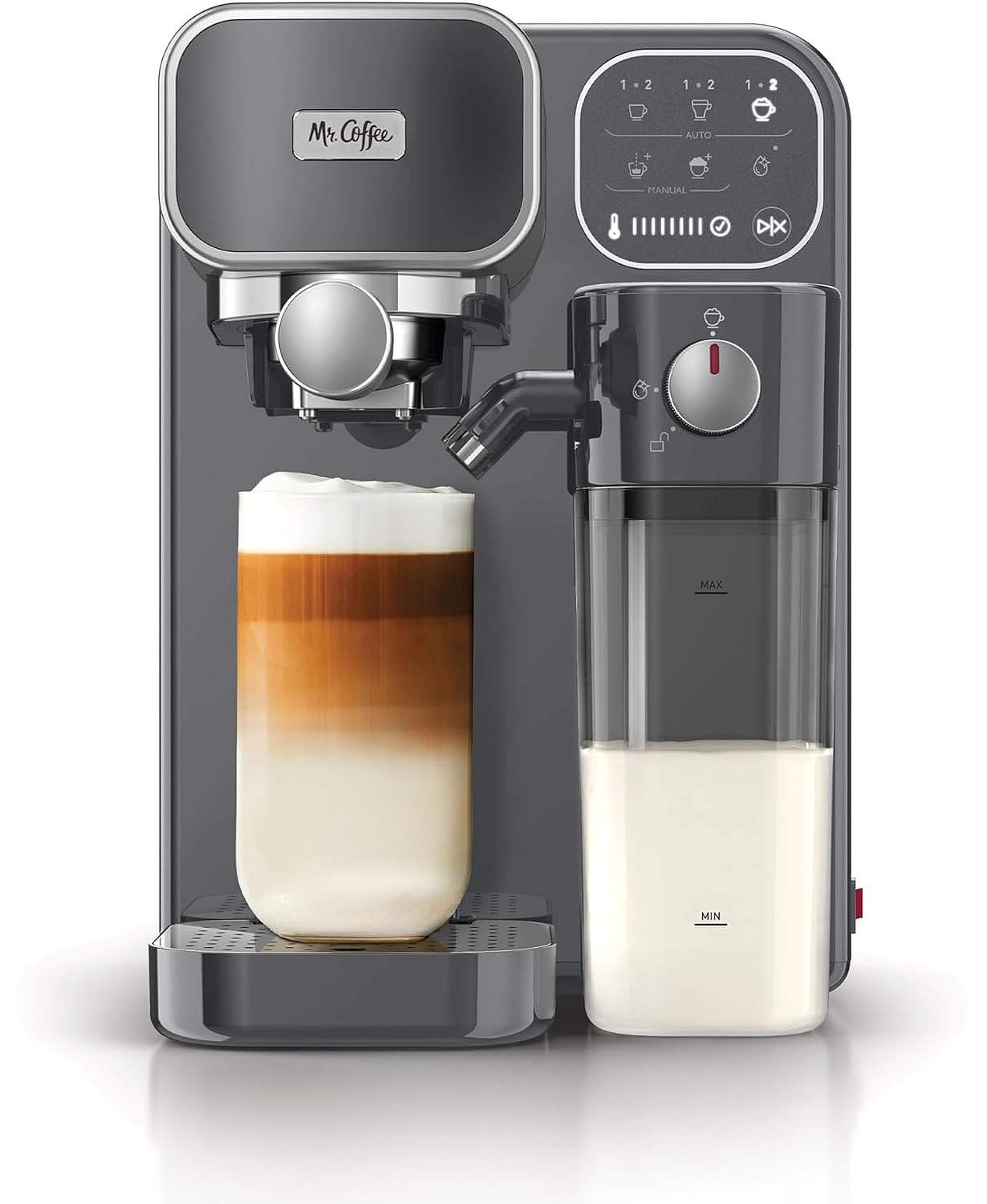
KOTLIE AC-513HF Espresso Machine: One-Touch Cappuccinos & Lattes at Home

KOTLIE 5-in-1 Single Serve Coffee Maker (AC-513HF)
A cappuccino or a latte at home usually means one of two things: a trip to a cafe, or a counter crowded with a grinder, a brewer, and a separate frother. A single-serve machine that accepts the pods you already buy removes most of that friction. The KOTLIE one-touch espresso machine takes five capsule formats plus loose grounds, so a milk drink turns into a short routine instead of a weekend project.
Why Milk Drinks Are Hard to Make at Home
Espresso is the easy half. A cappuccino or a latte is espresso plus textured milk, and the milk is where home setups fall apart. A steam wand takes practice to hit the right microfoam, and a standalone frother adds another appliance to the counter and another part to wash.
Capsule systems sidestep the problem. In capsule lines that cover milk drinks, the brewer runs the coffee and the milk in sequence from one button. You get a drink with a foam layer without owning a frother, and cleanup is one used pod instead of a pitcher and a wand.
That flexibility makes pod-based machines appealing beside a portafilter setup. The catch is that most capsule brewers lock you into a single brand. A brewer that accepts several capsule formats at once removes the lock, and that flexibility is what earns a multi-format machine its counter space.
Inside the One-Touch Espresso Machine
The KOTLIE 5-in-1 Single Serve Coffee Maker (AC-513HF) is a single-serve brewer built around a 19 bar pump. Five pod formats fit the brewing chamber: Nespresso Original capsules, K-Cup pods, Dolce Gusto capsules, 44 mm ESE paper pods, and loose ground coffee. The same machine also accepts A Modo Mio, Caffitaly, and Lavazza Blue capsules through adapters sold separately.

The brewer is built for single servings rather than back-to-back pots. Each drink uses one capsule, and an adapter holds the pod in place while the pump pushes water through at pressure. Because the format changes with the capsule, the same machine can pull a short espresso in the morning and a longer americano after lunch without a second appliance on the counter.
Two brew modes cover hot and cold drinks. A short press of the power button starts the hot cycle for espresso, lungo, and americano. Holding the button for three seconds turns the light blue and starts the cold cycle for iced coffee. Switching between the two is not instant. The boiler has to cool completely first, and the brand's own guidance suggests running an empty pod on the maximum water setting to speed that cooling.
Water volume is set with a 7-level LED indicator. You match the light to the volume printed on the capsule, so each setting lands where the capsule maker intended. The tank and the piercing needle are BPA free, and cleaning uses water plus citric acid rather than a proprietary cartridge.
The current listing price is $112.99, with the machine in stock, and the listing states that its support team replies within 24 hours. Prices and stock levels in this article were pulled from Amazon's product API on October 22, 2026.
Pressure, Volume, and the Numbers Behind the Cup
Three things tend to matter most in day-to-day use: pump pressure, water volume control, and how the machine handles the shift between hot and cold.
Pressure sits at 19 bar. That figure is standard for the capsule class, where 19 bar and 20 bar machines dominate, so the higher figure on a capsule brewer is not a premium badge. The pod itself adds resistance, and the extra pressure keeps the flow steady as the capsule fills with water. The gap between 19 bar and 20 bar is small enough that it rarely shows up in the cup, so treat pressure as a baseline rather than a deciding number.

Water volume control matters more. Capsule makers print a recommended volume on every pod, and a brewer that ignores it either waters down the shot or leaves the capsule half used. The 7-level indicator maps to those printed volumes, so the espresso, lungo, and americano settings land where the capsule intends.
Cold brewing adds a constraint. Because the cold cycle needs a fully cooled boiler, the machine works best as one mode at a time. Brew the hot drinks first, then let the unit rest before switching to iced coffee, or follow the empty-pod cooling routine the manual describes.
Capsule Compatibility and One-Touch Milk Drinks

Compatibility is the reason to pick a multi-format brewer over a single-system one. The five formats differ in what they pour.
Dolce Gusto is the milk-drink format in the lineup, so cappuccinos, lattes, and hot chocolate come from one button press. That is as close as a capsule machine gets to a one-touch milk drink without a steam wand.
Nespresso Original capsules cover straight espresso and lungo. K-Cup pods brew larger mugs in a drip style. The 44 mm ESE pods hold pre-tamped ground coffee in a paper disc, and the ground coffee basket accepts beans you grind yourself.
The volume control is manual, so you set the level yourself with the LED button. That is an extra step, but it also means nothing stops you from using a capsule the machine was not built around, as long as the adapter fits.
How Capsule Extraction Works
Pressure is the physical reason capsule coffee reads closer to a cafe pull than to a drip. When a pod drops into the chamber, the pump builds up to 19 bar. The sequence plays out in two phases.
First is preinfusion: the boiler delivers hot water, and the capsule walls and the coffee bed soak through before the flow picks up speed. That soaking settles the coffee into a uniform bed, and the even resistance stops the water from running for the weak path. Without the pre-brew phase, the flow goes through the easiest channel, and the result is sour and thin.
Once the full flow kicks in, the pressure holds the water in contact with the coffee for the rest of the shot. The capsule's own walls provide the back pressure, and that contact is what pulls the oils into the liquid. Crema is this contact made visible: a fine layer of emulsified coffee oils that shows the extraction was even.
The KOTLIE 5-in-1 Single Serve Coffee Maker (AC-513HF, listing B0HGLMQZ2V) is a 19 bar unit, so it sits inside the pressure range the capsule makers design for, roughly 19 to 20 bar. The gap between the two figures is not something you can taste. The temperature matters too; the boiler in these units sits between about 85 and 96 degrees Celsius, the extraction band the capsule makers print on the packaging. The water volume control is the lever you adjust: the 7-level LED indicator maps to the volume the pod carries, so each setting pulls a different amount of water through the same 19 bar.
The formats differ in how they seat in the chamber. An aluminum Nespresso Original capsule has its own factory set pressure rating, and the machine has to respect it. A K-Cup pod is larger; the brew head seals around it, and it is a drip-style format, not a pressurized one. The 44mm ESE disc holds a fixed dose of ground coffee in a paper filter, and the machine seats the disc before the shot. Loose grounds in the basket are the only format you tamp yourself.
The 44mm ESE disc and the loose grounds basket are the two formats where the operator has more input than with any sealed capsule, because the dose is set by hand. The 7-level volume indicator still applies, but the printed volume on an ESE disc is the dose rather than the brew water, so the setting lands slightly different than it does for a sealed pod.
Reading Capsule Labels Before You Order
The volume printed on a capsule is not decoration. It reflects the amount of water the capsule maker designed the pod to take, and it lines up with the range the seven settings cover.
A milk pod from a multi-drink box usually asks for less water than the coffee pod, because the milk stage is meant to finish the drink. Nespresso Original capsules split between espresso and lungo volumes, and K-Cup pods expect a larger pour. The 44 mm ESE pod holds a fixed dose of ground coffee rather than a factory blend.
If you switch between formats often, keep the volume chart near the machine. Matching the LED level to the printed number takes a second, and it prevents the two most common mistakes: a watery espresso and a capsule that only half empties.
Daily Use and Care
Care on this machine is mostly about the pod holder, the brew path, and the water in the tank, and three habits cover all three.
Rinse the pod holder after each use. Coffee oils and milk residue harden on the same parts the listing names in its cleaning note, including the BPA-free piercing needle, and a quick flush with clean water once a week keeps those paths clear.
Descale on a schedule. The listing's cleaning step is water plus citric acid run through with the coffee button rather than a proprietary cartridge, and how often you need it depends on water hardness. Hard water means more frequent runs, while a filter pitcher for the tank stretches the interval.
Water quality shapes the taste as much as the capsule does. Filtered water keeps minerals out of the heating element and produces a cleaner cup, and it also pushes descaling further apart. If the tap water in your area runs hard, a pitcher filter for the tank is the cheapest change you can make.
Store it dry between trips. Drain the tank, dry the interior, and leave it open so mold does not take hold in a sealed tank, then run one cycle on the maximum water setting before the next cup.
What the Formats Share in Practice
All five formats run the same physical sequence: the capsule seats, the pump pushes water through it at 19 bar, and the 7-level indicator closes the loop on volume. What changes between formats is the pod, not the sequence.
The volume match is the step that keeps the cup consistent. Each pod carries a printed volume, and the LED level maps to that figure. Skipping the match is where the two common failures come from: a cup that is too dilute, or a pod that only empties halfway.
Milk pods are the exception. A milk drink pod is a two-stage capsule: the machine brews the coffee stage first, then the milk stage, from one button. The volume on the milk stage is the finishing portion of the drink, and the formats that carry milk in the pod are what save a kitchen from a separate frother.
Between formats, the machine works one mode at a time. The boiler has to cool fully before a cold cycle, and the listing's routine is an empty pod on the maximum water setting to speed it up. That is the same 3-second hold on the power button that turns the indicator blue; the hot cycle is a short press with the indicator red.
Seating is the other shared habit. A 44mm ESE disc needs a firm seat, and a K-Cup pod needs the brew head sealed around it. A loose seal leaks pressure, and the loss shows up in the cup before it shows up anywhere else. The shared routine is short: match the LED level, seat the pod, run the cycle. The 19 bar pump and the boiler handle the rest, and the cleanup step is water and citric acid through the coffee button rather than a proprietary cartridge.
The hardware footprint stays the same no matter which pod is in the chamber. The unit weighs 8.18 lb, stands 10.8 inches tall, 4.3 inches wide, and 10.61 inches deep, with the tank and the piercing needle both BPA free. The weight and the footprint are the constants the formats share; the cup itself changes with the pod.
KOTLIE 5-in-1 Single Serve Coffee Maker (AC-513HF)
Related Essays

Hamilton Beach 40726 Espresso Machine: The Science of Perfect Espresso at Home

Mixpresso NESM201WHT: Affordable Espresso with Nespresso Capsule Compatibility

The Alchemist's Apprentice: A Scientific Deep-Dive into the COWSAR CM8050 Espresso Machine

EspressoWorks AEW3000 19-Bar Espresso Maker: Your Gateway to Barista-Quality Coffee at Home

MAttinata CM1633 I' Alba Pro: Your Home Barista for Perfect Espresso & Latte