4-bar steam espresso machine: how the KRUPS Allegro brews and lasts

KRUPS FND111 Allegro Espresso Maker
Weak espresso and weak coffee are not the same problem, and no single machine fixes both at once. A pump-driven machine chases pressure because a naked double shot rewards it, and the pump carries most of the cost and complexity. A steam espresso machine takes the older route instead: heat a small charge of water, let the vapor push it through the grounds, and stop there. That one decision sets the parts list, the price, and the kind of cup that comes out.
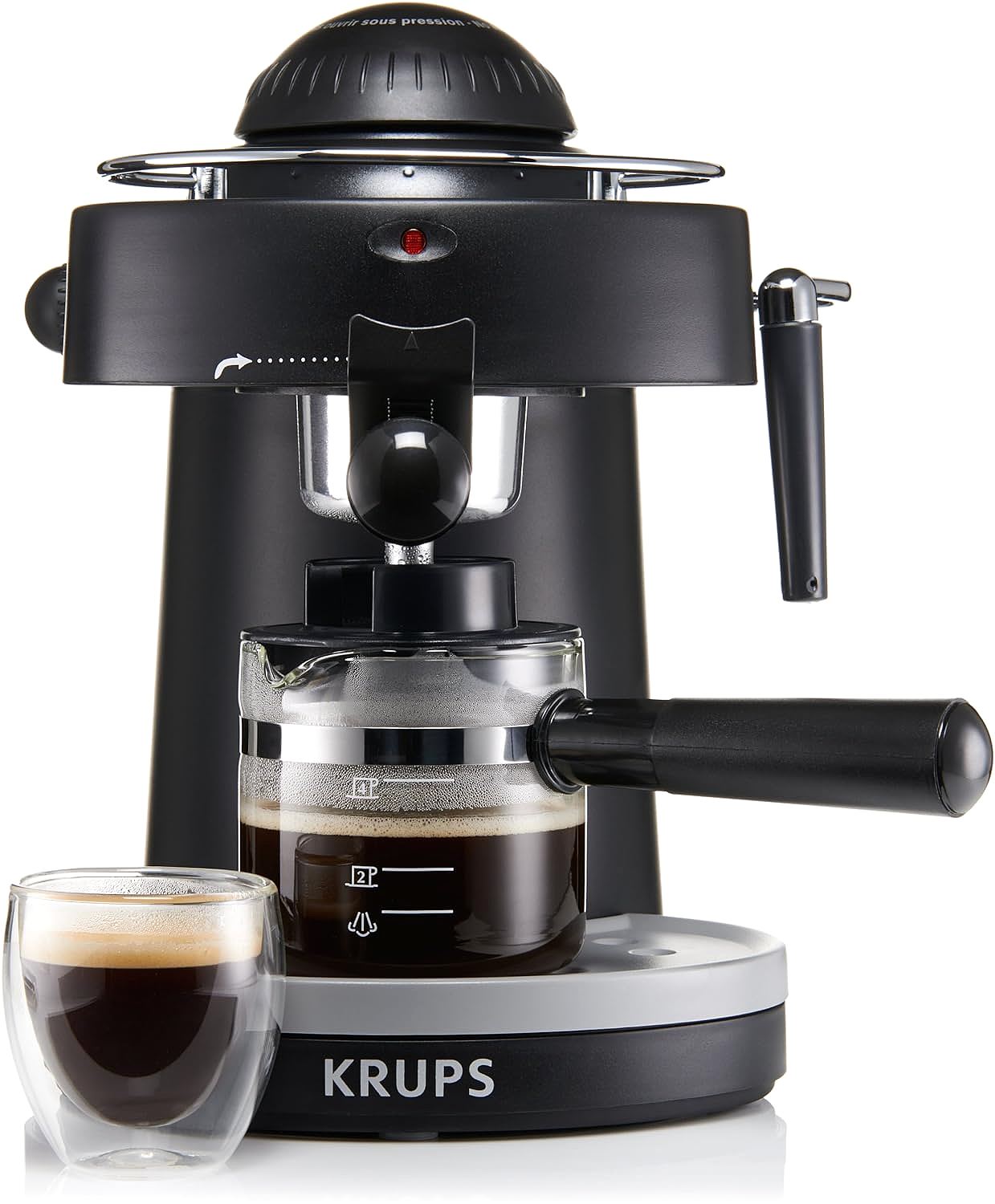
The KRUPS FND111 Allegro Espresso Maker is the current version of that idea. It is a black, four-bar steam machine that the listing sells for espresso, cappuccino, and lattes, and it sits at $197.99. Its architecture is shared with the brand's older steam models: a boiler, a steam tube, one oversized dial, and a safety valve, with no pump anywhere in the chain.
What follows is a walk through the parts that decide the drink. The boiler sets how hard the water can be pushed, the valve keeps that pressure safe, the nozzle turns steam into frothed milk, the carafe and the drip tray handle the messy half of the job, and the care routine decides whether the machine lasts five years or twenty.
Why a steam machine skips the pump
Inside a steam espresso machine there is no motor, no vibration, and no control board. A sealed boiler heats its charge of water until vapor builds and pushes the liquid up through the coffee bed in the filter basket. The pressure comes from that expansion rather than from a pump, and 4 bar is the ceiling the design reaches at full boil. The hiss of steam is slower and quieter than the buzz of a pump, and the difference is mechanical rather than cosmetic.
That gentler push changes the cup. A pump machine drives water through a packed puck at around 9 bar, which is what builds the dense ring of crema on top of a shot. Steam pressure at 4 bar moves the water more slowly, so the pour carries more body and less bite, closer to a strong moka-style coffee than to a cafe shot. Anyone chasing a tall layer of foam wants a different class of machine. The household that drinks cappuccino most mornings gets the better end of the trade.

Fewer parts also means fewer ways to fail. There is no pump to wear out and no circuit board to fry, so the parts that remain are a boiler, a tube, a valve, and a basket. A design that simple costs less to build and less to keep alive, and it is the reason KRUPS has kept this class of machine in production for decades.
What 4 bar can and cannot do in the cup
Four bar is a rating, not a promise about every second of the pour. The number describes how hard the boiler can push when the steam is at full strength, and the pressure inside the basket rises and falls as the coffee bed resists or gives way. A fine grind that packs tight slows the flow, while a loose, coarse bed lets water race through and pulls a thin cup. On a steam espresso machine, the grind and the tamp do much of the work, and the boiler simply keeps a steady push behind them.
A shot from the FND111 lands in the 1-2 oz range for a single basket, and the pull runs about 1-2 minutes once the water starts moving. That is a different rhythm from a pump machine that finishes a double before the cups are warm. The slow extraction is also why the drink reads the way it does: longer contact at lower pressure pulls more texture and less sharpness, so the cup stands up well under steamed milk.
Building cafe crema is not on the menu, and the four-bar ceiling sits well below the 9 bar that espresso pumps use, so no amount of technique closes that gap. Set the expectation at a warm, rounded cup with a light foam ring, and the machine keeps meeting it.
The safety valve and the parts that age
Steam is stored energy, so a sealed boiler needs a way to let pressure go. The FND111 carries a built-in safety valve for exactly that job: if the pressure climbs past the working range, a spring opens the relief path and lets vapor escape before the vessel is stressed. A machine with no electronics still earns a place on the counter because that one mechanical part stands between normal operation and a dangerous one.
Everything else ages in slow, predictable ways. Rubber seals harden with heat cycles and begin to weep, mineral scale builds wherever water boils, and the steam wand collects dried milk when it is ignored after frothing. None of those problems kills a machine in a week, and all of them answer to simple habits, which is what keeps this design on counters for years instead of months.
Frothing milk with the steam nozzle and its dial
The steam nozzle is the other half of the job, and the listing states it plainly: it froths milk quickly, and an oversized dial controls the steam. The dial matters more than it sounds. A large wheel is easy to find by feel and easy to nudge in small steps, so the steam opens gradually instead of blasting a full jet the moment the valve cracks.
The technique fits in a paragraph. Cold milk goes into a small pitcher, the tip of the nozzle sits just under the surface, and the dial opens until the milk starts to swirl and rise. Stop when the pitcher feels warm against the palm and the foam sits high; past that point the bubbles collapse and the milk turns flat and scalded. Wipe the wand while it is warm and purge a short burst of steam through the tube, and the next pitcher tastes clean.
A weekday morning with the KRUPS Allegro
The kitchen is dark at 6:40, the mug is already on the drip tray, and the rest of the house is ten minutes from waking. Water goes into the boiler, the basket takes about 7 g of coffee pressed level, and the dial turns to steam. While the first dark threads climb into view, cold milk and a pitcher come out of the fridge. The shot finishes, the mug slides aside, and the pitcher takes its place under the nozzle for a slow count of steam until the foam sits high and soft. Espresso, then milk, then a spoon and a small swirl, and a cappuccino comes out of a machine that fits a corner of the counter.
That ritual asks for a few minutes of attention, and it cannot be rushed by a timer. A household that wants a cup in seconds should look at a pod brewer. A household that enjoys the small ceremony of dosing and steaming gets a morning anchor in return, and the KRUPS Allegro earns its counter space one cup at a time.
The carafe, the drip tray, and a small counter footprint
The serving side is built around a large-capacity carafe with a lid and a handle, which sounds like a minor detail until the first pour. The lid keeps heat in and steadies the flow at the spout, and the handle stays cool enough to carry a full carafe from the base to the table. That is the difference between serving coffee and cleaning up after it.
Below the basket, a removable drip tray catches the drips that every manual machine makes. The tray lifts out for a rinse, so the base never turns into a coffee ring, and the space-saving frame keeps the whole unit in the corner of a counter instead of claiming the middle. In a small kitchen, that footprint is worth as much as any feature on the box.
What the older machines in this line say about care
This family of steam espresso machines has been on counters for decades, and the older models keep turning up in working order. Owner reports from that generation describe machines that kept pulling shots for 20-40 years, often outlasting two or three pump machines in the same kitchen. The reasons are structural rather than lucky: with no pump to seize and no electronics to fail, the list of things that go wrong shrinks to seals, scale, and the occasional valve.

Scale is the slow enemy, and a simple boiler with wide passages tolerates hard water longer than a pump and a solenoid do. The habits that kept the older machines alive are small. After the last cup of the day, the basket and the drip tray get a warm rinse and a dry. Once every 1-2 months of daily use, a descaler goes through the boiler with a soak of 15-20 minutes, followed by two full rinses of clean water. The wand gets its wipe while it is still warm, before milk can bake onto the metal.

None of that takes more than a few minutes, and none of it needs a service counter. The payoff is a machine that stays in the rotation long after a busier appliance would have been retired to a shelf.
Why simple machines tend to outlast complicated ones
A pump machine carries a motor, a controller, and a set of valves that all have to work together before water moves. Every one of those parts adds a failure point, and most of them are expensive to replace when they go. The steam design keeps the parts count low, so when something does wear, it is usually a seal or a gasket that costs little and takes minutes to change. The arithmetic favors the simple machine across a decade, which is why a 4 bar brewer can be a long-term keeper rather than a stepping stone.
Before the box lands on your counter
Three checks settle most of the doubt before a steam espresso machine arrives. Start with the drinks: if the house runs on cappuccinos, lattes, and small espressos with milk, this class covers the menu, and if it runs on straight doubles and tasting notes, the machine will feel like a compromise. Next, the cups: a cappuccino tastes right in a 6-8 oz cup, and a mug much larger than that turns the drink into coffee with a splash of milk. Last, the counter: measure the corner you have in mind, because the frame saves space on purpose but the carafe still needs room beside the base.
The KRUPS FND111 Allegro Espresso Maker is that design in its current form, listed at $197.99 and In Stock under ASIN B0001I9R82. That price buys the simple architecture at its most finished, and it lands well under the pump machines that chase cafe-style shots with a motor and a pressure gauge. The trade stays the same as it has always been: fewer parts, less pressure, a slower pour, and small habits in exchange for years of service.
A steam espresso machine will not win a barista argument, and it was never built to. It wins the morning instead: water, coffee, steam, milk, and a cup that lands warm and heavy while the rest of the house sleeps. Learn the dial, keep the wand clean, run a descaler on schedule, and the same simple parts that kept the older models alive are the ones still working twenty years from now.
KRUPS FND111 Allegro Espresso Maker
Related Essays

IMUSA Electric Espresso Maker: 6 or 3 Cup Guide

Mr. Coffee 4-Shot Steam Espresso

The Steam-Powered Heart of Espresso: A Deep Dive into the SOWTECH CM6811

Bogner BCM35 Espresso Coffee Machine: Your Home Barista for Authentic Espresso
KRUPS XP1000 Steam Espresso Machine: A Deep Dive into Affordable Espresso

Oster BVSTEM4188 Steam Espresso Maker: The Science of Steam Espresso (220V Model Explained)
