Espresso Crema Science: Grind, Water, and Ratio in One Shot

Lavazza Super Crema Whole Bean, Medium Espresso Roast, 2.2 lb Bag
Pull a shot on a well tuned machine and watch the cup. For the first thirty seconds, a pale foamy head of crema floats on top. Most home brewers treat that head as a trophy, and a thin or broken one as a failure, but the crema is only the visible tip of a longer chain. What decides whether a shot builds a head, how thick it gets, and how long it holds is a three way balance of grind, water, and ratio. Move any one of them and the cup changes with it. This article works through each lever in order and finishes with a single repeatable recipe you can run on a home espresso machine, using the whole bean behind it.
What crema is
Crema is not an ingredient you add. It is a stable foam made of millions of tiny carbon dioxide bubbles, and those bubbles stay alive because coffee oil, melanoidin, and a handful of surfactant proteins coat them and keep them from bursting all at once. During extraction, the pump forces hot water through a packed bed of ground coffee and drags dissolved gas out of the grounds with it. The moment the shot leaves the spout and the pressure collapses, that gas comes out of solution and forms bubbles, and the oils seal them into a dense caramel colored head that fades over several minutes.
Three things set the ceiling on how much you can pull. The first is how much gas is stored in the coffee itself, which the roast and the freshness control. The second is how cleanly the water and pressure pull that gas out, which the grind controls. The third is how much stabilizing oil is available to hold the foam, which again depends on the bean. The three levers are not interchangeable, and a good shot needs all of them in the same place.
Grind, the fastest lever
Grind size is the dial you reach for first because it is the fastest to change and the cheapest to test. Finer grounds pack the basket into a denser bed and raise the resistance the pump pushes against, so the shot slows down. Coarser grounds open the bed and let the water through fast. The target on a home machine is a grind just fine enough that a 9 bar pump holds pressure through the bed for the whole extraction window, about 25 to 30 seconds for a single shot.
Grind too fine and the water finds a weak channel or stalls against a packed bed, which gives a thin, bitter, over extracted cup with pale or no crema at all. Grind too coarse and the shot gushes, the water extracts very little, and the head comes out thin and breaks fast. A practical rule is to change one variable at a time. Hold the dose and the water fixed, nudge the grind a small step, and taste. Most home grinders have a scale, and the fine end of it is where you live. The particle size you want is close to fine table salt, not the powder you get from a coffee mill setting. Channeling, where the water splits into a few fast paths, is a leading reason a shot looks right but the head still comes out patchy. An even tamp and a consistent dose are what keep the bed tight enough for the grind size to mean anything.
Water, heat and minerals
People overlook water, yet it carries most of the flavor and drives the chemistry of the cup. Extraction temperature is the first knob. Most espresso wants water in the 90 to 96 degrees Celsius range, or 195 to 205 Fahrenheit. Hotter water pulls solubles faster and, past about 98 degrees, pushes the harsh dry compounds forward. Cooler water slows the shot and leaves the cup flat. Home machines with a thermoblock hold temperature well, but a long idle shot lets the group cool, so purge the group before you dose and keep your brewing order consistent.
Minerals matter as much as heat. Coffee water in the 50 to 100 parts per million range of dissolved solids, which is 0.005 to 0.01% of the water by mass, gives the most even extraction. The calcium and magnesium in that water bind to the coffee acids and change how the flavors reach the tongue. Water that is too soft, like distilled or reverse osmosis water, extracts poorly and tastes hollow, which shows up as a flat shot with a weak head. Very hard water, above about 150 parts per million, over extracts and turns chalky. The water you pour is the biggest silent variable in the cup, and in the crema it shows up as stability. Well mineralized water builds a denser, longer lasting head.
The espresso crema ratio
The espresso crema ratio is the relationship between the mass of coffee in the basket and the mass of liquid pulled out, and it is the number the other two levers end up tuning around. The modern home espresso standard is about 1 part coffee to 2 parts water, so a 9 g dose yields an 18 g shot. That is a clean, well extracted single shot and where most specialty style recipes live.
The anchor product here, Lavazza Super Crema, publishes a different target. Its brewing guide calls for 0.28 ounces of ground coffee to yield a 1 ounce shot, which works out to about an 8 g dose for a 28 g yield, or roughly a 1 to 3.5 ratio; the longer extraction pulls about 32 g of liquid from the same 9 g dose. That is a longer extraction than the modern standard and a deliberate choice. A higher yield pulls more solubles and a thicker, creamier head, which is exactly what a blend named for its crema is built to give you. The trade is a bigger, more dilute shot that needs a solid dose to hold up. Whichever espresso crema ratio you pick, keep the dose stable when you move the yield, or the comparison tells you nothing. A ratio only means something once the other two levers are fixed.
One single shot, put together
The recipe below runs on any home machine with a 9 bar pump. The Lavazza Super Crema Whole Bean, Medium Espresso Roast, 2.2 lb Bag in the recipe is a medium roast Arabica and Robusta blend from 15 growing countries, about 998 g of whole bean in one package. The Robusta in that blend is doing real work. Robusta stores more carbon dioxide and more of the compounds that feed a thick head than Arabica does at the same roast, and that is why an Arabica and Robusta blend reliably builds a bigger, longer lasting head than a single origin Arabica at identical settings.
Start with a 9 g dose of the Super Crema, milled just fine enough for a fast, even pour. Brew with water in the 90 to 96 C range and pull to a yield of about 18 g at the 1 to 2 ratio, over 25 to 30 seconds. For a double, use an 18 g dose and pull 36 g in the same window. If the head is thin and breaks fast, the shot probably ran too fast, so grind finer and watch the time creep up. If it is dark and the cup tastes bitter, you over extracted, so grind coarser or shorten the yield. If the head is pale but the time looks right, the water is likely too soft or too hot. Run one variable at a time and read the head color each round. A healthy head is light tan to caramel and holds for several minutes.
Freshness is a fourth lever hiding underneath all of these. Ground coffee loses crema fast because the gas escapes the minute a bean is milled. Buy whole bean, mill only what you are brewing, and if pre ground is your only option, pick the bag with the newest roast date you can find. Rested, freshly roasted whole bean milled on demand outproduces a pre ground jar every time, and the head will show it before the taste does.
When the head goes wrong
Most bad shots are one of three things wearing a crema costume. A shot that streams fast and gushes is under extracted. The water got through too quickly, the gas was not pulled evenly, and the head is thin, pale, and short lived. A shot that sputters and trickles is the opposite, over extracted, with a small bitter smelling head on a harsh cup. A patchy head with big bubbles that pop at once usually points to channeling or uneven dosing rather than the machine.
If you swap beans and the head drops, the first suspect is freshness, not the new roast. A bean roasted two days ago and milled now makes far more crema than one roasted six weeks ago, whatever the origin. Give a brand new bag about a week of rest, roughly 168 hours, because a just roasted bean is still outgassing and its grind is inconsistent. And remember that a thicker head is not automatically a better cup. A beautiful head can sit on an over extracted bitter shot, and a thin head can hide a clean, well balanced one. Use the crema as a signal, then taste.
Choosing a bean for a thick head
If the goal is specifically a big, stable head, blend and roast matter as much as your dial in. Robusta is the easiest way to buy more head because of its gas and oil content, and medium roasts sit in a sweet spot. The roast has developed the melanoidins and the oils that hold the foam, but the bean has not been driven past the point where the volatiles burn off. A dark French roast makes less head than you would expect, because the long roast burns off the very gas and oil that build it.
For a shelf comparison, the Lavazza Espresso Ground single is a 100 percent Arabica medium roast with an intensity of 5 on a 10 point scale, sourced from South America and Africa, and it will make a cleaner, lighter head than the Robusta blend at the same settings. The illy Classico ground espresso is a medium roast ground for the same 9 bar home machine, and it is a dependable benchmark while you learn to read a shot. Matching the bean to the machine and the ratio to the bean is what turns three levers into one repeatable result.


The head is the first thing to look at and the last thing to trust. It is a fast, cheap read on grind, water, ratio, and freshness all at once, and it will flag a problem before your tongue does. Dial the three levers in order, hold the dose steady, keep the bean fresh, and the crema on top of the cup will tell you the shot is right.
Lavazza Super Crema Whole Bean, Medium Espresso Roast, 2.2 lb Bag
Related Essays

The Surprising Science in Your Coffee Maker
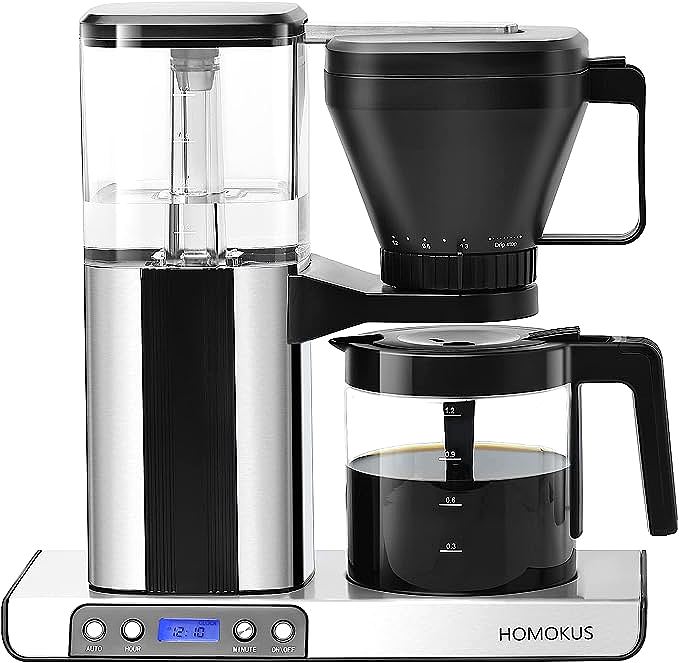
HOMOKUS NK-0655 Drip Guide: The Numbers That Decide the Cup

How Centrifugal Force Extracts Coffee Differently From Pressure

Espresso Extraction Pressure Flow: Dialing In by Grind and Gauge

The Science of the Perfect Cup, a True Temperature Kettle

Brewing Under Pressure: The Thermodynamics of Stovetop Coffee

The Alchemist in Your Kitchen: A Scientific Guide to Mastering Your Single-Serve Coffee Maker

Teglu CM-506R Coffee Maker: Grind, Brew, and Enjoy Fresh Coffee

A Bean's Journey: The Hidden Science Inside Your Single-Serve Coffee Maker