Folgers Classic Roast taste: how a medium roast shapes the cup

Folgers Classic Roast Ground Coffee
Plenty of coffees are built to be interesting once. Folgers Classic Roast is built to be the same cup on a rushed Tuesday and a slow Sunday, and holding one flavor steady at that scale takes more than a good batch of beans. The taste comes from a chain of choices: the roast level the beans are taken to, the grind they are cut to, and the way a brewer turns both into something you can pour before the day gets loud.
The red canister is the version most people know, and the six-canister case is the version that shows what the profile is for. Six 25.9 oz canisters add up to about 9.7 lb of ground coffee, roasted to one target and sold as an everyday staple rather than a treat. That choice of format frames everything downstream: this is a taste built for repetition, and the rest of the article walks the chain that produces it.
The roast level sets the taste before brewing starts
Roasting applies heat and time to green coffee, and it rewrites flavor. Early in the roast, the bean keeps much of what it brought from the farm: bright acids and delicate aromatics that show up as fruit or citrus in the cup. Take the roast darker and those compounds burn off or change, while browning reactions build new ones in their place.
Each level has a signature. A light roast lands bright and tea-like, with the origin's quirks still near the surface. A dark roast drinks heavy and bittersweet, with smoke and char over the top. A medium roast is the deliberate middle, and the middle is where this coffee's profile sits: developed enough for sweetness and body, not so far that char takes over. The product listing describes the coffee as rich medium roast, and that description begins on the roasting drum, before any water touches the grounds.
Why medium sits in the middle of the flavor map
Coffee people describe a cup along a few axes: acidity, body, and sweetness. Picture them as sliders. As a roast gets darker, acidity slides down, body slides up, and sugars caramelize toward a bittersweet edge that can tip into ash at the extreme end.
Medium roast parks those sliders near the center. That position is why the cup reads smooth and easy to drink: the sharp, tangy brightness of a light roast has faded, and the smoke of a dark roast has not arrived yet. The word classic on the label points at exactly that middle seat, not at a single farm or a rare lot.
The centered position also explains why this style of coffee turns up everywhere from diners to office break rooms. A cup with no sharp edge and no smoke gives a mixed crowd nothing to argue with, and it holds up whether it is poured black, softened with cream, or chilled over ice.

From green bean to roasted grounds
Before roasting, coffee is a dense green seed with a grassy smell. The roaster drives off moisture and browns the bean through the Maillard reaction, the same browning chemistry that toasts bread. Along the way the bean sheds roughly 15-20% of its original weight, mostly water and volatile compounds that exit through the roaster's exhaust.
The color change is the visible edge of that chemistry, with grassy green settling into the tan and toast browns that drinkers know on sight. What remains after the cooling tray is a shelf-stable bean with the toasted, nutty register that medium roasts are known for. From there, the plant grinds what the roaster finished, and particle size becomes the next big decision.
Grind size and extraction decide the cup's strength
Brewing is water pulling dissolved material out of ground coffee. A good cup sits in a narrow band: brewers aim for an extraction yield around 18-22%, high enough to taste developed and low enough to leave the harsh, woody compounds behind. Water does almost all of that work, since a brewed cup is about 98% water, which is why the water itself earns attention.
Grind sets the pace of extraction. Fine particles give water more surface to work on and slow the flow, pushing extraction up; coarse particles do the opposite. Ground coffee from a grocery shelf is cut for filter brewers, the machine in most kitchens, and that is what a ready to brew line on the label promises.
Dose is the dial at home. For a mug that holds 6-8 oz, start with 10-13 g of grounds, about two level tablespoons, and adjust from there: more coffee per cup for a heavier pour, less for a lighter one. The roaster already set the roast, so dose and water are the two levers a drinker holds.

Drip, press, and cold brew pull different cups
The same grounds behave differently in different brewers, because each method manages time, flow, and filtration its own way. A paper-filter drip machine traps most of the oils and delivers a clean, medium-bodied cup. A French press is full immersion: let the grounds steep about 4 minutes, then press, and the metal mesh lets oils through for a heavier texture.
Cold brew trades heat for time. Grounds steep in cool water for 12-24 hours, and the long soak pulls a rounder cup with softer acidity. None of the three methods is the right answer; the useful one is the brewer you will run on autopilot before work. The canister copy says the coffee is ready to brew with your preferred method, and that is the design goal behind the grind: one setting that works across the common rigs.
A weekday pot of Folgers Classic Roast
It is 6:40 on a Tuesday, and the drip machine is the only thing awake. Fill the reservoir, load a paper filter, drop two level scoops into the basket, and press start. Minutes later the carafe is full and the first mug is in hand: even, smooth, and unremarkable in the way a good routine should be.
The taste drifts only if the pot does. Coffee that sits on a warming plate for 20-30 minutes keeps extracting and oxidizing, and each cup after the first turns a little flatter and harsher. Drink the pot while it is fresh, or pour what is left into a thermal carafe and cap it.
Why one canister tastes like the next
Consistency at this scale is a supply chain exercise. Harvests shift from year to year, so a brand that promises one signature cup has to blend lots and roast them against a fixed target instead of chasing any single farm's character. The goal is a cup that tastes like the label, season after season.
Two details on the packaging point in the same direction. The coffee is proudly roasted in New Orleans, and the line ships in formats built for volume. A flavor target that survives millions of canisters is the real product; everything around it is logistics.
Roast targets are set at the plant, which leaves two variables in a home kitchen: how much coffee goes in the basket and what comes out of the tap. Both change the cup more than most drinkers expect, and both can be adjusted without new equipment.
The six-canister case, in plain numbers
The label on the case reads Folgers Classic Roast Ground Coffee, medium roast, and the box carries six 25.9 oz canisters. Add it up and the supply comes to 155.4 oz, just over 9.7 lb of grounds, with each canister holding a little more than 1.6 lb, or about 734 g. At the listed price of $75.38, the case works out to roughly $12.56 a canister, and it shows In Stock under ASIN B09HCTXT48.
Run the volume math and the format makes sense: divide the 734 g in one canister by 10-13 g of grounds per cup, and it covers roughly 55-75 mugs, so a case of six covers several hundred, a size that suits a household brewing every day or a shared office kitchen. The check is easy at home: multiply the cups your household actually drinks in a week by 10-13 g, and the result is the weekly grounds burn the case is built to feed. The case trades a higher upfront total for a lower cost per canister, and that trade only pays off at a steady brewing pace.
Keeping the case fresh between pots
A sealed canister holds its flavor far longer than an open one, so the practical move with a case is rotation: one canister in the kitchen, the rest sealed in a cool, dark cabinet, away from the stove. Ground coffee needs no special equipment, just a lid that closes fully and a spot that stays out of the heat.
What happens to the taste after the seal breaks
Ground coffee starts to stale the moment air reaches it. Oxygen works on the aromatic oils first, so the smell fades before the taste clearly does, and a canister that has stood open for a month pours a flatter cup than one opened last week. The practical window for an opened canister is roughly 1-2 weeks for the cup at its best.
Heat speeds the same decline, which makes the shelf beside the stove the worst spot in the kitchen for a big canister. A canister that lives in a cool cupboard keeps its edge longer, and a canister that gets opened and closed quickly loses less of its aroma to the air.
That window is why the case format wants a real habit behind it. A household that finishes a canister inside two weeks gets the profile at full strength, and the sealed canisters wait their turn with their flavor intact. Slower drinkers are better matched to a single canister, even though the case price per unit is lower. Match the package to the pace of your own kitchen, and the profile takes care of the rest.
A profile built for the ordinary morning
Put the chain together and the taste stops being a mystery. A medium roast is chosen for the middle of the flavor map, ground for the brewers most people own, and packed in a case that assumes you drink it daily. Each step trades peak excitement for predictability, and that trade is the point.
The six-canister case of Folgers Classic Roast Ground Coffee carries ASIN B09HCTXT48 and shows the idea at work in a real kitchen: same roast, same grind, same cup, tomorrow and next month. It will not win a tasting contest against a single-origin pour-over. It is aiming to be the most dependable cup of the morning, and dependable is the whole trick.
Folgers Classic Roast Ground Coffee
Related Essays

BELLA Dual Brew Single Serve Maker

The Engineering Logic Inside Every Dual Brew Coffee Maker Single Serve Appliance

Compact Single Serve Coffee Maker Buying and Usage Guide

Single Serve Coffee Maker Buying and Usage Guide

Single Serve Coffee Maker for K-Cup Pod and Ground Coffee: A Buying and Usage Guide
Single Serve Coffee Maker Buying and Usage Guide

The Original Donut Shop K-Cup, Simply Great
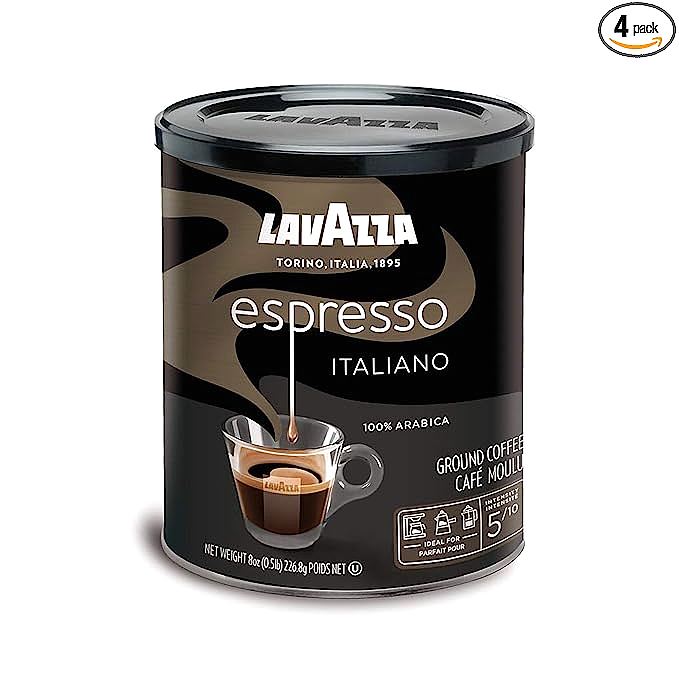
Lavazza Espresso Italiano: Authentic Italian Coffee for Your Daily Ritual
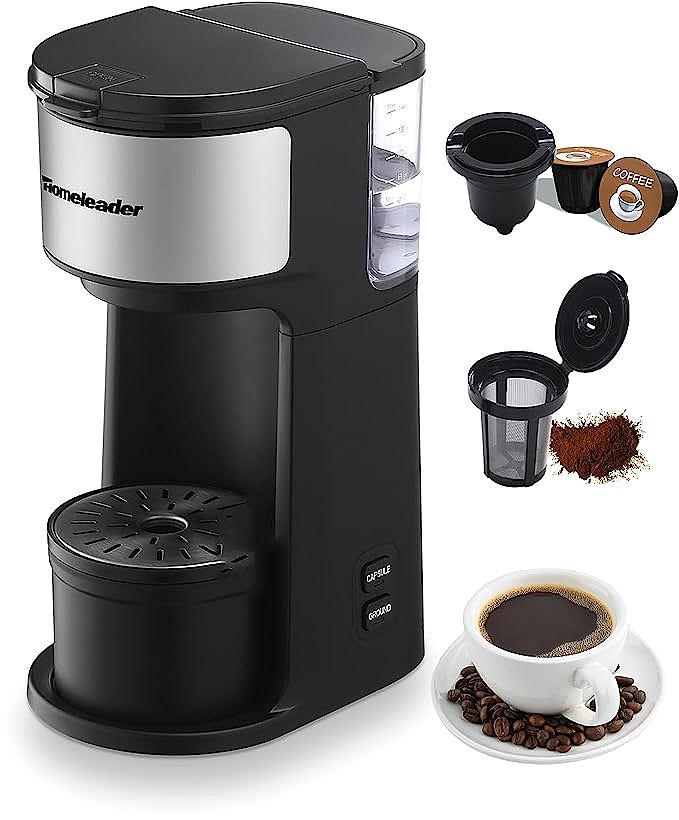
Homeleader K04-045 Single Serve Coffee Maker: Your Perfect Cup, Anytime