Rae Dunn 2-in-1 Coffee Maker, Two Brew Paths
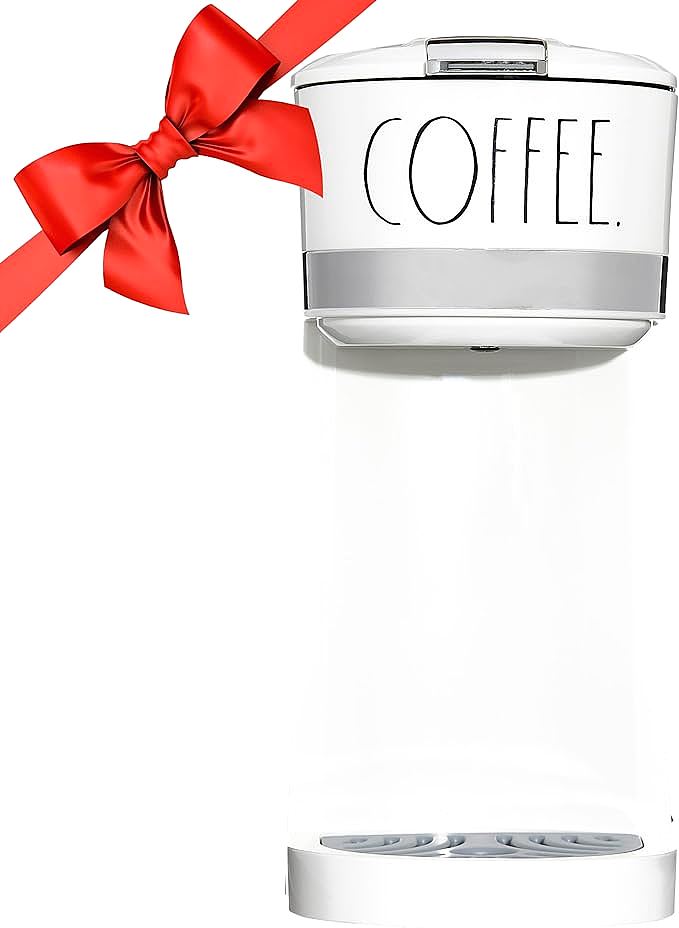
Rae Dunn 2-in-1
Rae Dunn 2-in-1 Coffee Maker: Two Brew Paths, One Counter
Some mornings call for speed, others call for slowing down a bit. The Rae Dunn 2-in-1 Coffee Maker tries to cover both by putting a pod side and a fresh-grounds side on the same base. Rather than swapping parts, a button chooses the path, and a shared 40 oz reservoir feeds either one. The question is less about flexibility in theory than whether both cups land as intended.
Two modes sharing one tank
The split is straightforward. The pod side takes a standard K Cup and brews between 6 and 10 oz in about a minute. The grounds side uses a reusable filter with a 12 g scoop of fresh ground coffee to brew a 10 oz cup. Both draw from the same 40 oz reservoir, so one refill can cover a few rounds. The base covers 6 to 12 oz overall, with 6 to 10 oz on the pod path and 10 to 12 oz on the grounds path, all brewed at around 192 deg F.
When speed takes the lead
On a rushed weekday morning, a pre-dosed 10 g pod brews an 8 oz cup in 60 to 90 seconds. At roughly 40 cents per pod, that comes out to about $0.35 a cup - cheaper than a cafe and fairly consistent cup to cup. With a sealed dose and that 10 g to 8 oz ratio, the result is more about repeatability than chasing complexity. For that kind of morning, the pod path does exactly what it's asked to.
When there's time for more
The grounds side is the one that makes the extra effort feel worth it. A 12 g scoop of fresh grounds brewed at 192 deg F runs through the reusable filter into a 10 oz cup, landing closer to a 1 to 1.5 ratio than a typical pod cup tends to. A $12 bag of grounds goes for about 40 cups at around $0.30 each, so the per-cup cost comes in slightly under the pod path. It's not a huge gap on paper, but paired with fresher grounds, it's often the difference between a functional cup and one you'd choose to slow down for.
The numbers that keep it grounded
Between the two paths, the honest range sits around $0.30 to $0.35 per cup. A full 40 oz reservoir holds enough for about three cups at 192 deg F before needing a refill. The 1.2 lb base keeps things reasonably light on the counter, and the shared tank is what makes switching between paths practical rather than fussy. Those figures aren't the whole story, but they do a good job of framing what this machine is built to do.
Upkeep has a concrete rhythm on the grounds side. After each 12 g brew, pull the reusable filter out of the basket, rinse it under running water, and give the basket a quick brush-out before the next cup, because a filter left with old grounds edges the next cup toward bitterness. Once a month, run a descale: mix a citric acid solution into the 40 oz reservoir, let it sit on the heated base, and flush it through the grounds path so scale does not slow the draw. The 40 cent pod remains a perfectly reasonable fallback when time is tight, but it's the grounds side that tends to earn the slot for the Rae Dunn 2 in 1 Coffee Maker in kitchens where both paths see use.

All told, the two paths cover 6 to 10 oz by pod (10 g, ~ $0.35/cup) and 10 to 12 oz by grounds (12 g, ~ $0.30/cup), both from a 40 oz reservoir at 192 deg F, good for about three cups per fill. It's one base doing two jobs - not a jack of all trades by ambition alone, but by the numbers above.

Keeping both paths clean
Since the machine brews two ways, it also has twice the contact points to think about. The reusable filter takes the most work - rinse it under hot water after each grounds brew, and brush the mesh about once a week to keep water flowing freely at 192 deg F. The pod side needs less attention, but the needle that pierces a K Cup can collect scale over time. Running a monthly cycle of diluted citric acid through the 40 oz reservoir helps keep pressure up on both paths. For a maker that splits duties like this, a few minutes of upkeep tend to matter more than they would on a single-path machine.
Fit on the counter
The 1.2 lb base and 40 oz tank are worth measuring against your space before committing. The reservoir runs tall, so it's worth checking clearance above the counter for the lid to open fully on refill. On the upside, one fill covers both paths, and the relatively light base is easy to pull forward for cleaning. For smaller kitchens, the cup size ranges (6 to 10 oz pod, 10 to 12 oz grounds) also matter - they're small enough for most counters, but tall travel mugs may push up against that height limit.
Choosing which path fits the moment
A weekday morning tends to favor the pod path: a 10 g pod at 40 cents brews an 8 oz cup in 60 to 90 seconds, often ready before a kettle would be. When there's a little more time, the grounds path comes into its own - a 12 g scoop at 192 deg F pulls a 10 oz mug that a pod just won't match in the same way. The machine earns its counter slot most when both get used over the course of a week, since the shared 40 oz reservoir makes that switch easy without adding another machine. If only one path ever gets used, it's really a single-serve machine with a second side you might not need.
For context, home drip brewers tend to target extraction around 93 to 96 deg C, the range often cited as a specialty-coffee standard. On a typical 12-cup pot, that works out to roughly 60 g of medium grind over 8 to 10 minutes, with stronger settings landing near a 1:15 to 1:17 water-to-coffee ratio. Those broader benchmarks help explain why keeping brew temperature near 192 deg F matters for a grounds cup, even if this machine takes a more compact single-serve approach.
As for costs more broadly, a 250 g bag of whole beans at $14 gives roughly 130 shots of 18 g (around $0.11 a home cup), compared with $4 to $6 at a cafe - enough that a home setup can pay back in 12 to 18 months of two-a-day use. By that measure, the $0.30 cup from the grounds path fits squarely in the home-brew range, while the $0.35 pod cup remains a convenience tradeoff rather than a value play.
Rae Dunn 2-in-1
Related Essays

Compact Single Serve Coffee Maker Buying and Usage Guide

Single Serve Coffee Maker for K-Cup Pod and Ground Coffee: A Buying and Usage Guide

Single Serve Coffee Maker Buying and Usage Guide


KIDISLE CM9429D-UL 3-in-1 Coffee Maker Guide
The Engineering Logic Inside Every Dual Brew Coffee Maker Single Serve Appliance

How to Choose a Single Serve Coffee Maker: A Buying Guide

Multicapsule Espresso Machine Buying and Usage Guide

How to Choose and Use a Multi Capsule Coffee Machine
