KEENSTAR BCM2201 Espresso Machine: Honest Budget Espresso at Home

KEENSTAR BCM2201 Espresso Machine
Espresso at home usually starts with a decision about money. A pump-driven machine with real pressure control costs several hundred dollars before you add a grinder, and the learning curve runs for weeks. The KEENSTAR BCM2201 espresso machine takes the opposite path. It is a 3.5-bar steam brewer that sells for around fifty-five dollars, heats fast with its 800-watt element, and pushes a concentrated cup out in under 2 minutes. That price and that pressure level shape everything about how it works, so this guide covers both the shots it can pull and the ones it cannot.
This machine sits in a category that confuses a lot of first-time buyers: the steam espresso maker. It looks like a pump machine, with a portafilter, a filter basket, and a steam wand, but it makes pressure a different way. Getting that difference clear is the difference between a drinkable shot and a bitter one, so start there.
What the KEENSTAR BCM2201 is built to do
Under the housing, the unit is a sealed boiler and a single control knob. You fill the tank, load the basket, and turn the knob. Water heats, steam builds, and that steam pressure forces hot water through the coffee. The listing rates the system at 3.5 bar, about 51 pounds per square inch, and the heating element at 800 watts.
The numbers that matter for daily use are modest, but they are short to get through. The tank holds 240 ml at most, which the listing spreads across one to four cups, so a single cup works out to roughly 60 ml, and a full tank brews in under 2 minutes. The steam wand takes about 40 seconds to build microfoam for a cappuccino. The body stands 13.1 inches tall, 7.7 inches wide, and 10 inches deep, and it weighs 4.7 lbs, with an 800-watt element, a BPA-free plastic body, an indicator light on the knob, and a pause function that stops the brew early. At the time of writing the price sits at $54.99.
Those dimensions matter more than they look. Standing 13.1 inches tall and 7.7 inches wide, the machine fits under a standard upper cabinet and on a counter that a full-size machine would swallow, which is the whole reason a compact maker exists at all.
How 3.5 bar changes the shot
A true espresso machine pushes water through the coffee bed at roughly 9 bar. That pressure is what creates the thick, syrupy body and the crema that floats on top of a shot. A 3.5-bar steam machine cannot reach that number, and pretending otherwise sets you up for disappointment.
Coffee also wants a narrow temperature window. A pump machine holds that range while it pushes water through at pressure. A steam brewer runs hotter because it has to boil to build any pressure at all, and that extra heat pulls bitter compounds out of the grounds.
What 3.5 bar gives you is a short, strong coffee that tastes closer to a moka pot than to a cafe espresso. The flow is less even, and the result is a cup with real intensity but thinner texture and little crema. The trade is honest: you give up cafe-style crema and get a machine that costs far less, fits in a cabinet, and makes a decent small coffee in 2 minutes.

Dialing in the first shot
For a first attempt, cold water goes into the tank up to the 240 ml mark, going past the maximum can make the nozzle leak. With medium-ground coffee in the filter basket (fine grounds tend to choke this low-pressure machine), the bed just needs to be leveled with light, even pressure rather than a hard tamp. The portafilter needs to seat fully; if it's not locked all the way, water tends to escape around the edges.
Once locked in, turning the knob to brew gives a thin, dark ribbon within a few seconds on a good pull. Before opening the tank cap or pulling the portafilter, releasing pressure by turning the knob to OFF helps avoid hot water and grounds coming out the wrong way. A full 240 ml batch takes under 2 minutes; for a single cup, the brew can be stopped early or the tank filled partway.

Working with the steam wand
The wand runs off the same 800-watt element, with microfoam taking about 40 seconds, enough time for a morning cappuccino, but not much room to rush. Starting with the tip just under the surface lets air enter and build foam; once volume rises, sinking the tip deeper heats the milk without adding more air. A silicon pad on the wand guards against burns, but the metal still gets hot.
After steaming, a quick wipe with a wet cloth and a short purge of steam keeps milk scale and water scale from building up.

Grind, dose, and the mistakes that follow
Most complaints about budget espresso machines trace back to grind and dose rather than the machine itself.
Too fine a grind makes the water stall or spray, and the shot tastes bitter and hollow. Too coarse, and the water runs straight through into a weak, sour cup. Overfill the basket and the portafilter will not lock at all, and old beans taste flat no matter what the machine does.
Start with a medium grind, a level basket, and a light tamp, then change one variable at a time. If the shot runs too fast, grind a little finer. If it stalls, go coarser. Because the unit has a single knob and no pressure gauge, your taste is the only feedback loop, and that is fine as long as you adjust one thing per shot.
How this machine compares to a moka pot and a drip brewer
There are three cheap ways to make strong coffee at home, and each lands in a different place.
A moka pot makes a dense, almost syrupy coffee with a stovetop ritual and no electricity. A drip brewer makes a large, mild batch with almost no attention at all. This espresso maker sits between them. It is electric and faster than a moka pot, it produces a smaller and stronger cup than a drip brewer, and it adds a steam wand that neither of the other two has. If your goal is a cappuccino rather than a plain cup, the wand is the reason to pick it over a moka pot. If your goal is a pot of coffee for four people, a drip brewer wins on volume and this is the wrong tool.
Making iced coffee and cold drinks
The listing names iced coffee as a use case, and the machine handles it with one change in method. Brew a concentrated batch, then pour it straight over ice. Because the shot is small and strong, the ice dilutes it down to a drinkable strength without washing the flavor out. Compare that with a jar of cold brew, which needs hours of steeping in the fridge before it is ready, and the appeal is obvious. The pause function helps here too: stop the brew a little early for a more concentrated base, or let it finish for a milder one. Add milk, syrup, or cold foam from the steam wand and you have a cold drink in the time it takes to fill a glass.
Living with the boiler
A little care goes a long way with a steam machine. Rinsing the filter basket after each session (without putting the parts in a dishwasher) keeps grounds from building up. Keeping the steam wand wiped and purged before and after use, emptying the tank if it will sit for more than a few days, and descaling every few months in hard water areas all help prevent scale from insulating the element or shortening the boiler's life.
When the shot goes wrong
In practice, a few quirks tend to repeat, and reading the shot points back to an input. A leaking nozzle usually means the tank was filled past the 240 ml maximum. A shot that runs clear and fast points to a grind that is too coarse or a basket that is underfilled, and one that stalls and drips is the same mistake in reverse: the grind is too fine, or the bed is packed too tight. When the wand stops throwing steam, milk scale has built up inside and needs clearing, and a portafilter that will not lock is almost always a basket that is overfilled or a scatter of grounds sitting on the rim.
Where this machine fits
The sweet spot for a 3.5-bar steam maker is a small setup: little counter space, a small daily habit, and a preference for milk drinks or iced coffee. That is exactly where this machine lands. The compact body fits under a standard upper cabinet, the steam wand builds the foam for a cappuccino, and the pause function stops the brew early for a more concentrated base.
The limits are just as concrete. A 3.5-bar brewer cannot make real crema or the repeatable, cafe-quality shots of a 9-bar pump machine, and the 240 ml tank is a one-to-four-cup job rather than a crowd-serving one. Those are properties of the steam-brew principle, and no technique will change the pressure.
A 3.5-bar steam espresso maker is a tool with a narrow job, and the KEENSTAR BCM2201 espresso machine does that job well for the price: it heats fast, takes up almost no room, and turns out a small, punchy coffee in under 2 minutes. Keep the grind medium, lock the basket every time, and clean the wand, and it will make a reliable morning cup. The honest expectation is a cheap, compact machine doing one job properly.
KEENSTAR BCM2201 Espresso Machine
Related Essays
Espresso Extraction, Thermodynamics at 15 Bars

Joy Pebble CM5400BA-UL: Your Gateway to Barista-Quality Espresso at Home

Swan Nordic Espresso Machine 15 Bar Pressure & Milk Frother Guide

SHARDOR CM1661 Home Espresso Machine
Wallon EM3105 Espresso Machine: Unlock Barista-Quality Coffee at Home
Geek Chef GCF20E 20 Bar Espresso Machine: Mastering the Art of Home Espresso

Capresso Café TS Touchscreen Espresso Machine: Brew Barista-Quality Coffee at Home
Laekerrt CMEP01 20 Bar Espresso Machine: Barista-Quality Coffee at Home
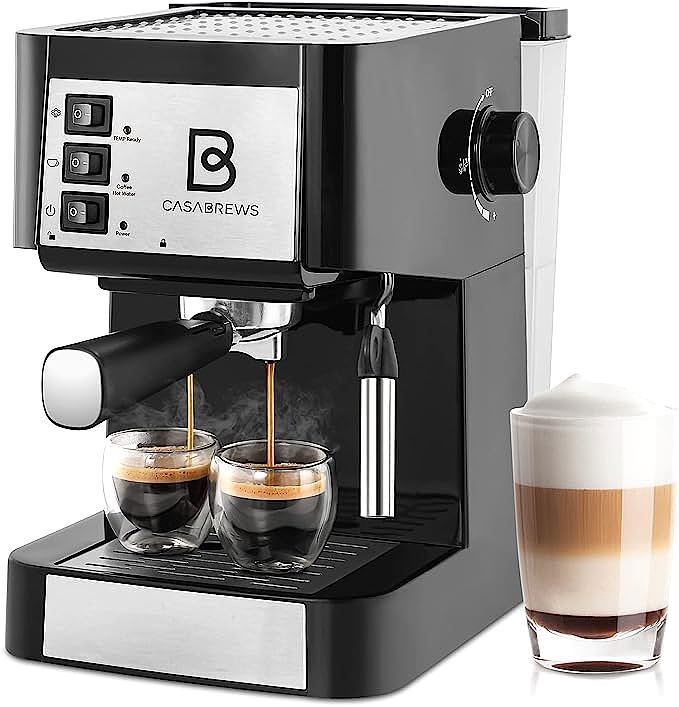
CASABREWS CM1699 20 Bar Espresso Machine: Barista-Quality Coffee at Home
