KIDISLE CM9429D-UL 3-in-1 Coffee Maker Guide

KIDISLE CM9429D-UL 3 in 1 Single Serve Coffee Maker
Before the First Cup
The KIDISLE CM9429D-UL 3 in 1 Single Serve Coffee Maker (ASIN B0CB5PMPQX) is a compact machine built for daily brewing. The body measures 4.93 inches wide and 12.6 inches tall, narrow enough for crowded kitchen counters, office desks, or dorm shelves, and a 40 oz removable reservoir carries the water. The three-in-one layout comes down to two small parts: a dedicated K-Cup adapter with its own puncture needle, and an open cup-shaped adapter that takes a permanent mesh filter, which serves ground coffee and loose-leaf tea. That combination is what the KIDISLE 3 in 1 coffee maker offers, and it shapes every part of daily use. The shell is ABS plastic, while the parts that meet water are polypropylene.
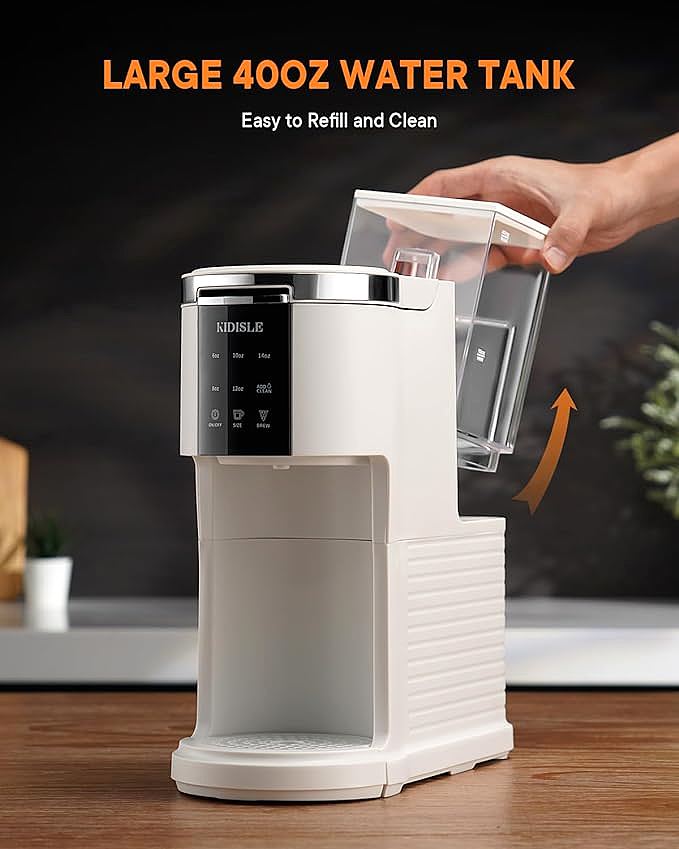
The control panel sits on top: touch-sensitive SIZE and BREW buttons plus a CLEAN indicator. SIZE cycles through the available volumes and lights up the selection; BREW starts the heating and pumping cycle. The CLEAN light starts flashing after 300 brew cycles, which is when descaling comes due. The reservoir lifts out for refilling at the sink, and its 40 oz capacity means fewer trips during the day. A wide lid and a small handle make filling and carrying easy.
Before the first real cup, run two full cycles of clean water with no pod or grounds to flush manufacturing residue from the thermoblock and tubing. Discard that water, and the machine is ready for regular service.
The Numbers That Shape Daily Use
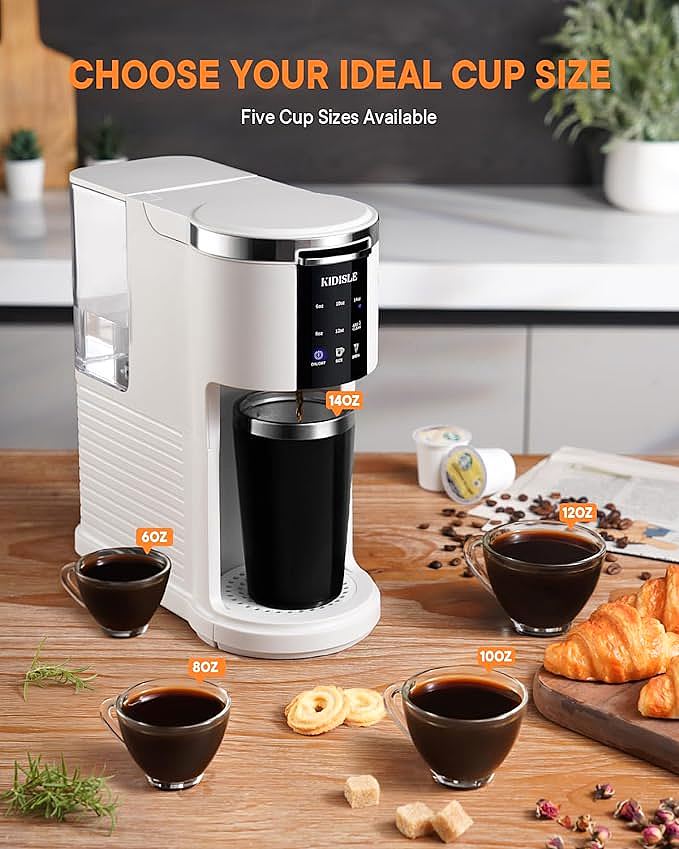
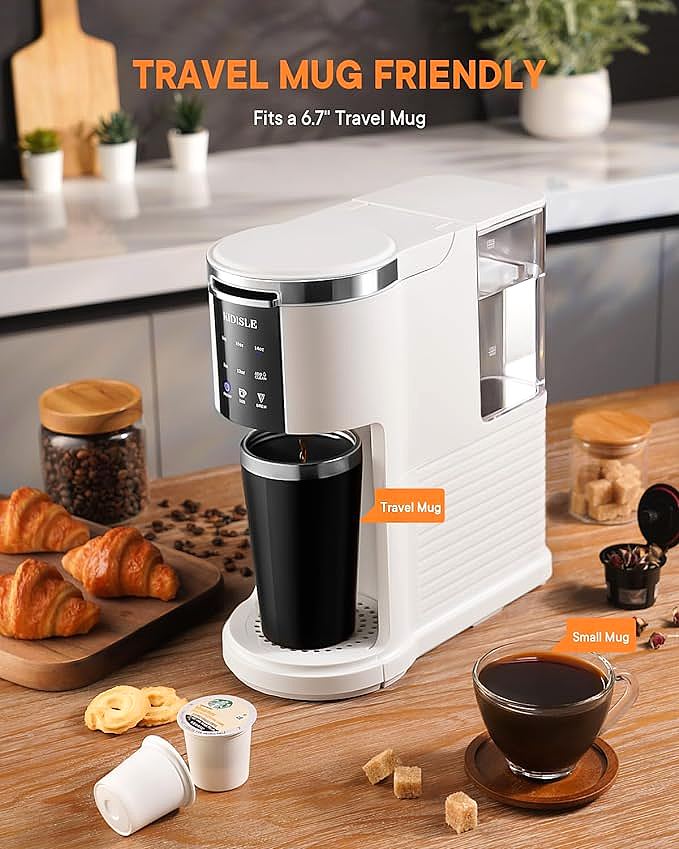
The water tank holds 40 oz and lifts out for refilling at the sink. The heating element draws 1000 W, the body is 4.93 inches wide, and the brew sizes run 6, 8, 10, 12, and 14 oz. With the drip tray out of the way, travel mugs up to 7.2 inches tall fit under the spout, and the machine shuts itself off 5 minutes after a brew finishes. The shell is ABS plastic with polypropylene internals, all water-contact parts are BPA-free, and the listing puts the unit weight at 0.875 lb, just under 1 lb, with dimensions of 12.6 inches by 10.79 inches by 4.93 inches. The 6-14 oz range is the working span the machine was designed around.
Set the KIDISLE CM9429D-UL next to a Keurig K-Mini Mate, listed at $59.99, and the differences line up quickly. The Keurig measures about 4 inches wide, brews a single cup up to 12 oz, and fits a travel mug up to 7.25 inches tall, but it takes only K-Cup pods, with no ground coffee or tea option. The KIDISLE stays close in size at 4.93 inches, brews up to 14 oz, clears a 7.2 inch mug, and covers all three brewing modes with the included adapters. One more split: the K-Mini Mate carries a single cup of water in its reservoir, while this one holds 40 oz, enough for several cups before a refill.
How the Thermoblock Heats
Unlike drip machines that keep a pot of hot water waiting, this machine heats water on demand. The thermoblock is a dense metal block with a coiled channel, and it reaches operating temperature within seconds of pressing BREW. The pump draws cold water from the 40 oz reservoir, pushes it through the heated channel, and sends it to the brew head. Nothing stays hot between cycles, so no energy goes to waste there. A low hum during operation is just the pump and thermoblock working together.
From a cold start, the first brew takes about 90 seconds, and later brews run faster because the thermoblock stays warm. The heating element draws 1000 W, typical for compact single-serve machines, and it runs on a standard household outlet.
One Machine, Three Ways to Brew
The two adapters are the heart of the 3 in 1 claim. The K-Cup adapter carries a puncture needle at the top; the open cup-shaped adapter takes the permanent mesh filter, with one pass for ground coffee and another for loose-leaf tea. So the same machine can take a sealed pod, your own grounds, or a handful of leaves, and the choice of which to use tends to follow the day rather than a fixed routine.
Coffee Pods
The pod path is the fastest to start: seat the adapter in the brew chamber, drop in a pod, and press the lid closed firmly so the pod gets punctured at the top and bottom and water can flow through. Then SIZE picks the volume and BREW starts the cycle. For best results, use the 6 or 8-ounce setting: a standard K-Cup is sized for the 6-8 oz range, and pushing 14 oz through one pod means the same grounds saturate more water, so the cup tastes thin. The machine takes standard K-Cup pods of any roast or flavor, and a reusable K-Cup filter lets you run your own grounds through the same adapter. One habit keeps the pod path fast: rinsing the pod adapter after each use, because oils collect on the puncture needle and can slow the flow.
Ground Coffee
With the open adapter and the mesh filter inside, the machine becomes a small pour-over: add grounds up to the MAX line on the basket, close the lid until it snaps, pick a size, and press BREW. The result puts roast, grind freshness, and strength in your own hands, since your own grounds decide what ends up in the cup. Grind size is the dial: a fine grind exposes more surface area, slows the water, and pushes toward a stronger, sometimes bitter cup, while a coarse grind lets water pass faster for a lighter result. A couple of tests at different settings finds the match. The mesh filter is reusable, so paper filters stay in the cupboard; after brewing, discard the grounds, rinse the filter under the tap, and let it dry, because a regular rinse keeps old oils out of the next cup. Freshness matters too: grounds start losing aromatic compounds within minutes of grinding, so grinding right before brewing, when you can, is the difference a pre-ground bag cannot follow home from the store.
Loose-Leaf Tea
Tea follows the same path as ground coffee: the open adapter with the mesh filter, loose leaves in the basket, a size picked from the panel. Larger pours in the 12-14 oz span suit tea best, and the thermoblock delivers water hot enough for black and herbal blends. Green tea prefers cooler water and the machine has no temperature control, so brew a smaller cup and let it cool briefly before drinking. Leaves expand freely in the mesh, which releases more flavor than a teabag, and the spent leaves go straight to the compost. Leaf type drives strength: black tea stands up to the hottest water, green tea can turn bitter if pushed, and herbal blends often need more leaf to taste full. The mesh filter works for tea and coffee alike, though tea oils can carry into the next cup; a dedicated filter for each drink avoids that crossover.
Staying Easy to Clean
The machine keeps its own reminder: an internal counter tracks brew cycles, and after 300 of them the CLEAN light starts flashing. Descaling is the fix, and the self-cleaning function does the hard part. It wants a descaling solution, either a store-bought product or a 50 percent vinegar to 50 percent water mix, poured into the 40 oz reservoir with a large mug under the spout to catch the flow. Press and hold SIZE and BREW together for three seconds, and the machine pumps the solution through the thermoblock and tubing to dissolve mineral deposits. When the cycle ends, discard the liquid, rinse the reservoir, then run two to three full cycles of clean water at 14 oz so no vinegar or descaling taste reaches the next cup. The listing suggests running the self-cleaning function once every two months as a standing habit rather than waiting for the light.
The removable parts carry the rest. The drip tray, reservoir, and adapters go through warm soapy water, and the mesh filter takes a gentle scrub with a soft brush; everything dries fully before reassembly. The included dredge needle exists for one job: clearing the outlet pin when flow weakens or stops. Unplug the machine, let it cool, remove the adapter, and work the needle gently up into the pin to dislodge trapped grounds or mineral buildup. Wipe the exterior with a damp cloth and skip abrasive cleaners that scratch the ABS shell; the control panel gets a soft dry cloth so moisture stays out of the buttons.

When a Brew Doesn't Come Out Right
Most of the time, a bad cup or a silent machine is not a fault but a setting or a buildup. The distinction between a setting and a buildup explains almost everything the KIDISLE CM9429D-UL does or stops doing.
The most common nothing-happens case is the safety interlock: the lid must be latched or the panel will not respond. If the SIZE button flashes repeatedly, that is the machine saying the lid is not fully latched, so opening and closing it firmly until it clicks is the fix, with hands kept dry on the touch controls. And since the panel is touch-sensitive, a wiped-down, dry surface matters more than it looks.
Sound is the next tell. The pump hums as it draws water, and the thermoblock can gurgle as the water heats; both are normal. What is not normal is a change in character: an unusually loud hum or gurgling that gets stranger over time points to the reservoir not being seated or running low, and letting the pump run dry is how a thermoblock gets damaged. Check that the reservoir holds enough water and sits in place before anything else.
Weak or watery coffee is a ratio story. A standard K-Cup is sized for 6 to 8 oz, so a 14 oz brew through one pod tastes thin; try a smaller size first. If the smaller sizes still taste weak, the cause is usually mineral buildup keeping the thermoblock from reaching brewing temperature, which is what the descaling cycle exists for: run it, rinse well, and the strength comes back. Slow brewing points at the same buildup; confirm the reservoir is full and seated, because a low water level makes the pump work harder.
If the machine will not power on at all, the first check is the plain one: test the outlet with another device and look at both ends of the power cord. If the machine still stays dark, that is past what you should open up yourself; this is where you contact KIDISLE customer support, which is what their service line exists for. Leaks run a similar course: reseat the reservoir and check the drip tray for cracks, and if water still escapes, contact support for repair options rather than forcing a homemade fix.
Materials and Build Quality
The shell uses ABS plastic, a tough thermoplastic that takes daily bumps and wipes clean with a damp cloth; coffee splashes come off the white or red finish without effort. The parts that carry hot water, including the tubing and filter basket, are polypropylene, a polymer with a high melting point that will not leach flavors or chemicals into the water, and every water-contact part is BPA-free.
The compact 4.93 inch width comes from a dense internal layout: the thermoblock, pump, and reservoir are packed to minimize wasted space, which is what lets the machine fit where bulkier brewers cannot. The drip tray is removable and dishwasher safe, so overflow and drips are easy to empty and clean, and the cord stores partially in the base to cut clutter. There is no cord wrap, but the length suits most counters.
Making It Part of the Day
Fresh cold water gives the most consistent results, and if the machine sits unused between brews, replace the water daily. The 40 oz reservoir covers roughly six to eight cups before a refill, depending on brew size. With the tray out, travel mugs up to 7.2 inches tall fit under the spout; with it in place, standard mugs still work. Rinse the tray regularly to keep residue from building up.
For a long break, empty the reservoir and run a cycle without a pod or grounds to clear the lines, then store the machine dry to discourage mold. If you have filtered water, it tastes cleaner and slows the mineral buildup in the thermoblock, which stretches the time between descaling cycles. The machine also wants a level surface; an uneven spot can keep the reservoir from seating, which lets air into the line and causes sputtering during brewing. Leave room for airflow around it, since the thermoblock gives off heat, and keep it away from direct sunlight and other heat sources that can affect the ABS shell over time.
What It Adds to the Countertop
The KIDISLE CM9429D-UL 3 in 1 Single Serve Coffee Maker covers three drink routines that a single serve coffee maker usually cannot: K-Cup pods, ground coffee, and loose-leaf tea. Its 4.93 inch body fits narrow counters, and the 40 oz reservoir means fewer trips to the sink.
Daily operation stays simple: pick a size with SIZE, press BREW, and the thermoblock heats from cold in about 90 seconds. With the drip tray out, travel mugs up to 7.2 inches tall fit under the spout, and the mesh filter and adapters rinse clean under the tap.
Maintenance comes down to a few habits: rinse the adapters and mesh filter after use, let parts dry fully, and run the self-cleaning cycle when the CLEAN light flashes after 300 brew cycles. Descaling with a vinegar mix or a store-bought solution keeps the water flowing at full speed, and the included dredge needle handles the occasional clog.
KIDISLE CM9429D-UL 3 in 1 Single Serve Coffee Maker
Related Essays
Rae Dunn 2-in-1 Coffee Maker, Two Brew Paths

The Engineering Logic Inside Every Dual Brew Coffee Maker Single Serve Appliance

How to Choose a Single Serve Coffee Maker: A Buying Guide

Compact Single Serve Coffee Maker Buying and Usage Guide

How to Choose and Use a Multi Capsule Coffee Machine

Single Serve Coffee Maker for K-Cup Pod and Ground Coffee: A Buying and Usage Guide
Single Serve Coffee Maker Buying and Usage Guide

Tastyle Single Serve Coffee Maker: A Practical Guide to Brewing, Capacity, and Care

Keurig K-Elite Single Serve Coffee Maker: Brew Sizes and Iced Cups Explained
