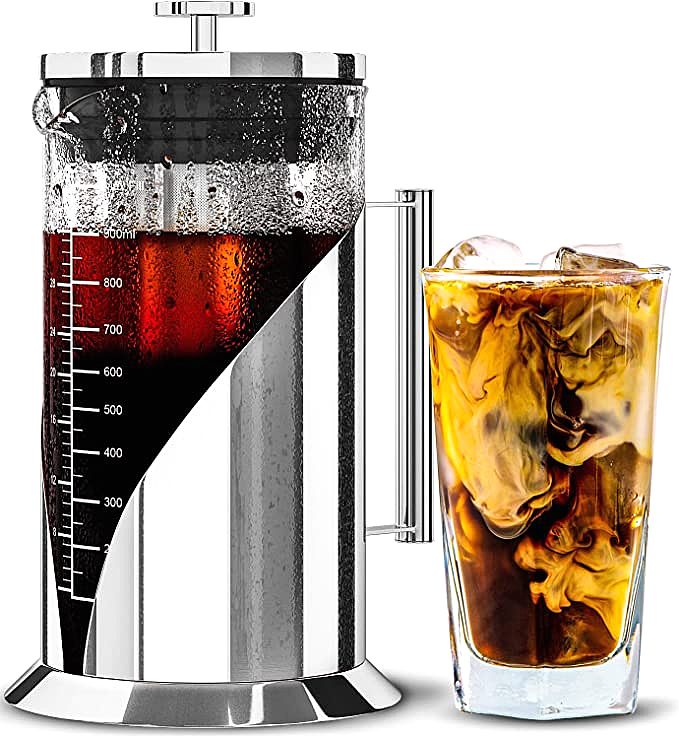
LITIFO Iced Tea and Iced Coffee Maker: The Science of a Perfect Brew at Home

LITIFO Iced Tea Maker and Iced Coffee Maker Brewing System
Brewing iced coffee and iced tea at home comes down to two variables that most kitchen gadgets ignore: temperature and time. Hot water pulls flavor out of coffee grounds and tea leaves within minutes, but it also drags out the bitter compounds that taste harsh once the drink cools. The LITIFO Iced Tea Maker and Iced Coffee Maker Brewing System takes a middle path: it brews a concentrated batch through a shower head and a removable filter basket, and you pour that concentrate over ice in a 2.5-quart glass pitcher. This iced tea and coffee maker delivers a cold glass in minutes rather than the 12-24 hours a jar of cold brew needs on the counter.
What follows is a walk through how the machine works, what happens during extraction, and where the strength selector sits between a light morning cup and a bold pitcher that keeps its edge all day.
How the LITIFO brewing system works
The unit is built around a vertical brew column and a detachable pitcher. The water reservoir sits at the top, the filter basket holds fresh ground coffee, tea bags, or loose leaf tea, and one button starts the cycle. A shower head sprays water across the bed of grounds so the whole surface gets wet at once. Even saturation matters because dry pockets of coffee or tea never give up their flavor, and that is why the first ounces of an uneven pour taste thin.
The brew basket lifts out for rinsing, and the pitcher's wide mouth keeps cleanup simple. An auto shut-off cuts power once the cycle finishes, so the machine runs while you are off the counter. A full cycle takes a few minutes, and a sliding selector on the front of the unit decides how strong the result turns out.
The science behind iced coffee extraction
Coffee flavor comes from hundreds of compounds that dissolve at different rates. The pleasant ones, acids and sugars, come out first. The harsh ones, bitter alkaloids and drying tannins, come out later and faster when the water is hot. That is why an over-extracted hot coffee tastes bitter and hollow. When you brew hot and then chill, you lock in whatever you pulled out, good or bad.
Water temperature drives the whole process. Coffee extracts best between 195-205 degrees Fahrenheit, hot enough to dissolve the sugars and oils but not so hot that it scalds the grounds. A well-made cup lands near 1.15-1.45% dissolved solids, which is a useful number to keep in mind when you judge whether your own brew tastes weak or heavy.
Cold brew takes the opposite route. Grounds steep in room-temperature or cold water for 12-24 hours. Cold water draws out the sugars and caffeine slowly and leaves much of the bitterness behind. The tradeoff is time and fridge space. A jar of cold brew occupies a shelf overnight and needs a filter setup to separate the grounds.
This machine sits between those two methods. It brews hot and fast, then the concentrate is diluted over ice. Because the concentrate is strong, the melting ice brings it back to drinking strength instead of watering it down. A cafe uses the same logic when it pulls a double shot over a cup of ice.
Caffeine follows the same curve as flavor. Most of the caffeine in coffee leaves the grounds within the first few minutes of contact with hot water, so a short brew still delivers the lift you expect. A longer steep adds bitterness without adding much more caffeine.
Why iced tea needs a different approach
Tea behaves differently from coffee. The leaves hold tannins that turn astringent when hot water sits on them too long. Black tea tastes best after 3-5 minutes of contact; green tea needs only 2-3 minutes before it turns sharp. The same tea brewed and chilled often tastes smoother because cold mutes the astringency and the aromatics read as sweeter.
The filter basket handles tea bags and loose leaf tea as easily as coffee grounds. For loose leaf, the working ratio is about one teaspoon per cup of water, the same ratio hot tea would use. Green tea benefits from a gentler brew because its leaves scorch easily, which is why the water stays near 160-175 degrees and the selector leans toward the weak end. Black tea and herbal blends can take a fuller extraction, and that is where the strong end of the selector earns its place.

Fruit and herbs change the math. Adding lemon, mint, or frozen berries to the pitcher after brewing flavors the drink and drops the temperature at the same time, which slows any further extraction. That is a good reason to brew slightly stronger when the plan is to add fresh fruit.
Where the strength selector is actually pointing
The sliding selector runs from weak on the left to strong on the right. What it changes is not the water temperature but how the water moves through the bed of grounds, which sets the contact time and decides how much of the coffee or tea dissolves into the water. The left end of the travel is where a lighter, tea-like cup lives; the right end is where a bold concentrate forms, the kind that still tastes like itself after the ice has gone.
The useful mental model is flavor per ounce, not caffeine. A strong setting packs more dissolved solids into every ounce, so less concentrate and more ice still make a full-strength drink. A weak setting hands you something closer to ready-to-drink, which is exactly what herbal tea or a mild green tea wants.
What the 2.5-quart pitcher actually carries
The pitcher holds 2.5 quarts, which works out to 80 fluid ounces. The product listing counts that as up to 12 cups, so each cup is roughly 6.7 ounces, smaller than the 8-ounce cup most people picture. That gap changes the math for serving.
A 64-ounce pitcher, common among cold brew makers, holds 16 ounces less than this one. A 3-quart competitor holds 96 ounces, which is 16 ounces more. If the morning habit is one 12-ounce glass of iced coffee, 80 ounces covers six glasses with 8 ounces left over. If the occasion is brunch for four at 10 ounces each, one batch fills everyone with a little still in the glass.

The glass is borosilicate, the same heat-resistant type used in lab glassware and baking dishes. Borosilicate shrugs off the swing from a hot brew to ice without cracking, and it does not hold onto flavors the way plastic can. The pitcher is dishwasher safe, and its large handle is what makes the full weight of it manageable when it is heavy with ice.
How the LITIFO compares to other iced tea and coffee makers
Iced tea makers span a wide price range, and what each unit offers at its price is what separates them: pitcher material, controls, and capacity.
The LITIFO Iced Tea Maker and Iced Coffee Maker Brewing System (ASIN B0CJBXR83R) lists at $56.99. The wirsh 3QT at $56.99 also offers strength control and a reusable filter, with a slightly larger pitcher. The Homecraft 3-quart at $47.99 includes a slot for adding fruit and an adjustable brew setting. The Brentwood KT-2150BK at $44.63 pairs a 64-ounce pitcher with a simpler control scheme.
The LITIFO's edge is the glass pitcher and the strength selector working together. Many units in this category ship with plastic pitchers, which can pick up odors over time and tolerate heat less well. Borosilicate glass costs more to make, which explains part of the price gap. The color range gives you another lever: the green version lists at $54.99, the white at $56.99, and a 2-quart pink model with a plastic pitcher at $45.99.
Replacement pitchers sell on their own. A 2.5-quart LITIFO glass pitcher with a lid lists at $34.99, so a cracked pitcher does not mean replacing the whole machine.
For cold brew fans, an electric 10-minute brewer like the VINCI Express at $99.99 speeds up a method that normally takes half a day, while manual mason jar brewers start near $16.19. Those tools brew cold from the start, so they trade speed for a smoother, lower-acid cup.
A week of brewing with the pitcher
The weekday morning
Picture a Tuesday at 6:40 a.m. The reservoir fills, two scoops of medium roast drop into the basket, and the selector rests two notches past center. While the machine runs, a glass comes out of the freezer and takes its ice. By 6:45 the pitcher of concentrate is in the fridge and one glass is ready to drink. The rest sits for at least 2 hours before the next round is poured. On Thursday the coffee gives way to two black tea bags in the same basket, the same pitcher, the same button.
Weekend brunch, four glasses
Guests arrive at 11. One batch goes into the strong end of the selector, and a bowl of ice, lemon slices, and a pitcher of simple syrup take their places on the table so each person builds their own glass. One 80-ounce batch covers four 10-ounce servings with room to spare, and the concentrate holds its flavor as the ice melts.
Keeping the Pitcher Tasting Fresh
Flavor residue is the quiet enemy of a brewer: coffee oils and tea tannins settle on the basket and the shower head, and month after month they tint every batch the machine makes. A quick rinse of the basket after each use keeps the buildup from getting a foothold, and now and then a plain-water cycle flushes the internal lines the way rain washes a window. When the film gets deeper, the old remedy is equal parts white vinegar and water run through a full cycle of 10-15 minutes, followed by two more cycles of clean water to carry any vinegar taste out.
The glass pitcher takes its turn in the dishwasher. The basket and lid are safer by hand when they carry printed markings, because hot dishwasher cycles wear those prints off in time. And the pitcher gets to dry open, since moisture trapped under a lid is how musty notes sneak in.
Why a Brew Comes Out Off
The most common way this style of brewer turns bitter is a grind that is too fine. A fine grind slows the water moving through the basket and pushes extraction past the pleasant compounds into the bitter ones, so a medium grind, similar to what a drip machine would use, is what keeps the flow steady and the flavor balanced.
The second way a batch falls short is under-dosing. Too little coffee or tea gives the water nothing to work with, and the result tastes weak no matter where the selector sits. A reliable starting point is 1-2 tablespoons of ground coffee per 6 ounces of water, with the selector doing the fine adjustment from there.
The third is skipping the ice. A concentrate poured straight from the pitcher can taste too strong, because the ice is part of the recipe: it is what brings a hot brew down to a cold, drinkable strength.
Bringing it together
The LITIFO iced tea and coffee maker turns a process that usually takes overnight into one that fits inside a morning. The 2.5-quart borosilicate pitcher, the shower head, and the strength selector work together to deliver a cold drink in minutes without the bitterness that comes from brewing hot and chilling. At $56.99 it costs more than the $44.63 to $47.99 brewers above, and the glass pitcher and the color options are the reasons why. For anyone who wants iced coffee and iced tea on demand rather than on a schedule, that trade makes sense.
LITIFO Iced Tea Maker and Iced Coffee Maker Brewing System
Related Essays

Sunvivi ZEC003BK: Brew Perfect Iced Tea and Coffee at Home

Brentwood KT-2150BK: Brew Perfect Iced Tea and Coffee in Minutes
West Bend IT500 Iced Tea Maker: Brew Perfect Iced Tea and Coffee at Home

Sunvivi ZEC002BK-SV: Your Quick & Easy Iced Coffee Solution

Thermal Shock and Saturated Matrices: Engineering Cold Infusions

Mr. Coffee Iced Coffee Maker: Brewing Perfect Iced Coffee at Home

MR COFFEE TM-75 Iced Tea Maker: A Complete Brewing Guide

Home Iced Tea Maker Buying and Usage Guide
Mr. Coffee Iced Coffee Maker BVMC-ICMBL-AM: Brew Perfect, Never Watery Iced Coffee Fast at Home