The Mechanics of the Grind: Conical Burrs, Thermal Dynamics, and the Aromaster CG204

Aromaster CG204 Conical Coffee Bean Grinder
How a conical burr set breaks a bean
Inside a conical grinder, an inner cone with machined cutting edges rotates against a fixed outer ring. Beans fall into the space between the two surfaces and are sheared as the gap narrows toward the bottom of the cone. Nothing chops at random. The burr faces cut each bean into fragments, and the distance between cone and ring decides how small those fragments end up. A blade grinder works the opposite way. Its spinning blade strikes the beans without order, so one pass leaves powder, chips, and whole beans in the same chamber. A conical set produces a narrower spread because every particle must pass through the same gap on its way out.
The Aromaster CG204 turns stainless steel burrs slowly rather than fast. That single design choice shapes everything that follows, from the temperature inside the chamber to the evenness of the bed in your brewer.
Why particle size decides what reaches the cup
Water pulls soluble material out of a coffee particle at a rate set by its surface area. A fine particle gives up its flavor quickly. A coarse particle releases the same compounds over a longer contact time. When both sit in one brew bed, the fine dust finishes extracting long before the coarse chunks do, and the cup carries the bitterness of the over extracted dust and the thinness of the under extracted chunks at the same moment.
This is the whole argument for a conical burr coffee grinder. Consistency is not a cosmetic preference. It is the variable that decides whether a recipe repeats, and a grind you can reproduce turns dose and brew time into dials you can trust.
Reading the grind dial
Most conical grinders label the dial from fine to coarse, and those numbers are relative rather than absolute. A setting of 12 on one machine will not match a setting of 12 on another, because the burr diameter and the thread pitch of the adjustment collar differ. Treat the dial as a ruler you calibrate by taste, not as a unit of measurement.

Start near the middle of the range and move one step at a time. A cup that tastes sour and thin means the water moved through too fast, so the grind goes finer. A cup that tastes bitter and hollow means the water stayed too long, so the grind goes coarser. Change one step per brew so the difference you taste belongs to the grind and not to a second variable. For pour over, hold dose between 15 and 20 grams per 250 milliliters of water as your reference point, then dial the burrs from there.
Thermal dynamics inside the grind chamber
Grinding creates friction, and friction creates heat. A faster burr speed and a longer run both raise the temperature of the chamber and of the grounds. That matters because the aromatic compounds behind the top notes of a good cup are volatile. They start to leave the grounds once they warm up, so a grinder that heats the coffee while it cuts is working against the flavor it freed a moment before.
Two things hold chamber temperature down. A slower burr speed generates less heat per revolution, and a motor that does not strain under load sheds less heat into the housing. The grinder leans on both: stainless burrs that turn slowly and a geared drive that trades speed for torque. The practical test on any home machine is simple. Grind a full dose, then touch the grounds. Warm is normal. Hot means the grinder is running longer than its design expects, usually because the grind is set too fine for the beans.
Duty cycle belongs in the same conversation. Running several pots back to back raises the temperature of the whole assembly, so the last batch grinds warmer than the first. On a busy morning, grinding everything you need in one pass beats grinding it in three short bursts. A rule of thumb: if you plan more than two doses in a row, let the burrs rest for a minute between runs so the next dose starts cool.
Static, retention, and the grind that stays behind
Ground coffee carries a static charge, and a charged particle clings to plastic and steel alike. The result is a chamber that looks empty and a counter that is not, plus a gram or two of yesterday's grind sitting in the chute when you start today's. Static is worse in dry air and worse at fine settings, which is why espresso doses make the biggest mess.
The collection bin on the CG204 is built to cut the charge that builds as the grounds fall, and the bin material is tinted amber to reduce the ultraviolet light that reaches the coffee. That second detail matters for anyone who leaves beans in the hopper. Light and heat age roasted coffee, and a tinted bin slows both.
Retention is the other half of the problem. Whatever stays in the chute when you finish grinding ends up in tomorrow's dose, stale and slightly coarser. Weighing your dose in and your grounds out tells you how much the machine keeps. If the machine holds back 2 grams or more between grinds, run a small amount through and discard it before you start the real dose. For a two shot espresso dose, that 2 gram retention is more than a tenth of what you need, which is why weighing grounds beats guessing.
Setting up the Aromaster CG204
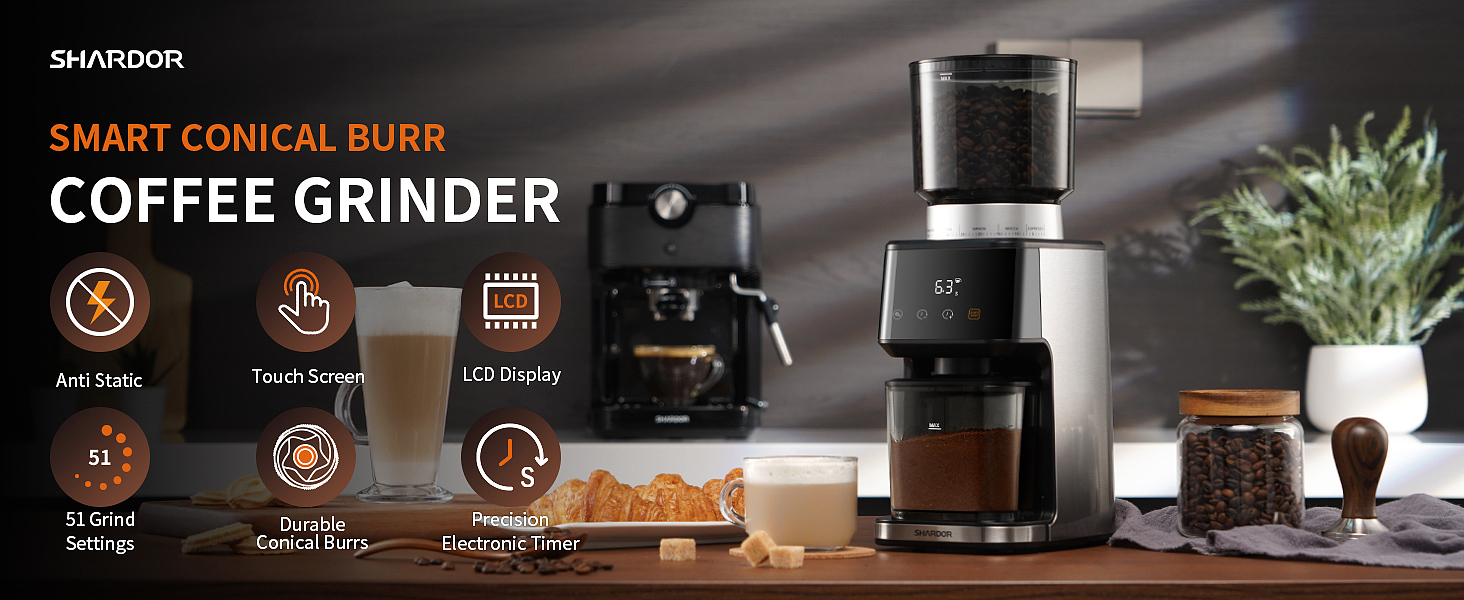
The Aromaster CG204 Conical Coffee Bean Grinder is the worked example in this guide, and its specification sheet is short enough to hold in your head. It offers 48 grind settings that run from a fine espresso grind to a coarse French press grind. A timer of up to 40 seconds sets the dose by time instead of by eye, and the grinding chamber holds up to 3.9 ounces of ground coffee, about 111 g, enough for a full pot or for several single servings.

Before the first use, wipe the burrs and the chamber with a dry cloth. Do not rinse the burr assembly. The Aromaster team is explicit on this point, because moisture in the assembly can short the motor. Set the machine on a level counter, fill the hopper no higher than the marked line, then run a small batch through and throw it away. That first pass clears manufacturing residue and lets you hear how the motor sounds under a light load.
Two electrical details deserve a check before you plug anything in. The machine is rated for 120 V at 60 Hz, so it is built for North American outlets. A 220 V supply needs a step-down transformer, and the warranty does not cover a machine that was fed the wrong voltage. The warranty itself runs for 12 months, long enough to cover a manufacturing fault and short enough that the receipt should go somewhere you can find it. The ASIN for this listing is B0H1RNQV2V, and the listing price at the time of writing was 79.98 dollars.
Matching the grind to the brew method
Espresso wants the finest setting on the dial. A packed puck of fine grounds slows the water and lets pressure build, which is what produces a concentrated shot in roughly 25 to 30 seconds. Move one step coarser if the shot runs long and tastes bitter.
Pour over sits a few steps coarser than espresso. Water passes through the bed under gravity, so the grind has to be fine enough to slow the flow and coarse enough that the bed does not choke. Drip brewers sit near the same place, and most automatic machines forgive a 2 to 3 step window.
French press wants the coarsest setting. The grounds steep in the water for around four minutes, and a fine grind turns that steep into a muddy, bitter cup that clogs the mesh. Cold brew sits at the coarse end as well, for the same reason and with a longer clock.
Cleaning a conical burr grinder
A conical grinder stays honest only if the burrs stay clean. Oils from roasted coffee coat the burr faces, and a coated burr cuts less cleanly and runs warmer. This grinder makes the job easy by letting you lift the ring burr out of the chamber. A brush is built into the machine, tucked behind the hopper lid, so the tool you need is the tool you already own.

Work in this order. Unplug the machine and empty the hopper. Then lift out the ring burr and brush the cutting faces, the chamber, and the chute. Reassemble with everything dry, and check that the collar seats fully before the next grind. A weekly brush covers normal use. A monthly deep clean with a grinder cleaning tablet lifts the oils that brushing leaves behind.
One warning belongs here. Never run water or a wet cloth through the burr assembly. The note from the Aromaster team about keeping the conical burr dry is not boilerplate. Moisture reaching the motor is the failure that voids the warranty and, worse, can short the machine.
How the CG204 compares with other conical grinders
The conical grinder market splits by burr size, setting count, and price, and the spread is wide. The CG204 matches the best in the group on setting count with 48 steps, a range that lets you make smaller corrections between a pour over and a French press without jumping past the setting you wanted. A 3.9 ounce grinding chamber covers a full pot, and the 40 second timer means you set a dose once and repeat it.
Other conical grinders in the same price band trade some of that range for a larger bean hopper or a quieter motor. If you brew single cups and weigh every dose, a smaller chamber and a narrower adjustment range will serve you as well. What the CG204 adds is fine steps and a timer in one body, a pairing that rewards the brew method changes described above.
The Aromaster listing sits between cheaper and pricier siblings in the same catalog. The B0GHY264BS, currently unavailable, has 25 grind settings and a timer that covers 2-12 cups, and it grounds straight into a portafilter. The B0GRVB1TK6 at $116.99 is pitched at pour over and French press. The B0B96ZGGHB at $174.49 adds a UV-tinted bin and multi-brew coverage. The B0F944NCVP mirrors the 48 settings and is in stock at $79.97.
What to check before you buy a conical burr grinder
Four specifications decide most of the experience. Burr material comes first. Stainless steel holds an edge longer than a coated burr and does not chip as easily if a small stone slips into the hopper. Setting count comes second, and a range of 30-50 steps covers everything from espresso to cold brew with room to spare. Capacity comes third, matched to how many cups you brew before a refill. The timer comes last, and it matters more than most buyers expect, because a timer turns a variable dose into a repeatable one.
Voltage is the specification people skip. A machine rated for 120 V at 60 Hz will not run correctly on a 220 V outlet without a step-down transformer, and plugging one into the wrong supply is the quickest way to end a warranty. Check the label before you order, and check the return window at the same time.
A conical burr coffee grinder is a tool you keep for years, and the specification sheet is what you live with after the novelty fades. Buy the burr material and the setting range you need, set the dose with the timer, and clean the chamber on a schedule. The rest is practice.
Aromaster CG204 Conical Coffee Bean Grinder
Related Essays

KINGrinder K6 Grind Settings: 240 Options Guide

What a 64mm Flat Burr Grinder Changes About the Cup

How to Choose and Use a Burr Coffee Grinder