How to Choose and Use a Conical Burr Coffee Grinder for Better Flavor

KIDISLE Conical Burr Coffee Grinder Electric, 51 Settings, Stainless Steel
Why Your Coffee Grinder Matters More Than You Think
The difference between a flat, bitter cup and a rich, aromatic one often comes down to what happens before the water touches the beans. A conical burr coffee grinder is one of the highest-impact upgrades you can make to your morning routine. Unlike blade grinders that chop beans randomly, burr grinders crush beans between two abrasive surfaces to produce uniform particles. Uniform particles extract evenly, which means balanced flavor instead of the sour-bitter combination that comes from inconsistent grounds.
When you grind coffee, you are increasing the surface area of the bean so water can dissolve the soluble compounds inside. If the particles are different sizes, the small ones over-extract and turn bitter while the large ones under-extract and stay sour. A burr grinder solves this by producing particles that are close to the same size, so every particle extracts at roughly the same rate. The result is a cup that tastes sweet, clear, and complex instead of muddled and harsh.
What to Look for When Buying a Conical Burr Grinder
This conical burr coffee grinder guide covers the specifications that change what ends up in your cup, from burr size and grind settings to motor speed, dosing, and upkeep. Each section pairs those points with the everyday trade-offs that show up once the machine sits on your counter, whether you drink espresso, filter coffee, or French press.
Burr Size and Material
A 40mm stainless steel conical burr grinds beans quickly without putting much heat into them, and the set is compact enough to disappear under a kitchen cabinet. Stainless steel also shrugs off corrosion from coffee oils and holds its edge through long use. Ceramic burrs keep their sharpness well too, but they are more brittle, so a stray stone can chip them where steel would simply roll with the contact. Material and diameter are worth checking before anything else, because the burr set decides how uniform the grounds come out.
Grind Settings
Look for a grinder with a broad settings range rather than a minimum count. The KIDISLE Conical Burr Coffee Grinder Electric offers 51 precise settings, which covers everything from a fine espresso grind to a coarse French press grind. More settings give you finer control over extraction, which matters when you switch between brewing methods. If you brew one way most of the time, a smaller range can be enough. If you move between espresso, pour over, and French press, a wider dial saves you from jumping between zones.
Motor Speed and Heat
High-speed motors generate heat through friction, and warm grounds lose aromatic compounds before they ever reach the brewer. Low-speed grinding is the fix, and 350-450 RPM is the range to look for. The KIDISLE grinder runs in that band and backs it with an overheat-protected DC motor, which keeps heat buildup and internal wear down during long sessions. A slower burr also runs quieter, which matters if you grind before anyone else in the house is awake.
Dosing and Timer
A precision timer lets you grind the same amount of coffee every time. The KIDISLE Conical Burr Coffee Grinder Electric includes a timer that adjusts in 0.1-second increments, and the smart memory holds your last setting after the machine powers off, so the dose you dial in is waiting the next morning. Time mode and Cup mode cover different jobs: Time mode suits espresso, where you want a specific weight in the basket, and Cup mode handles drip, where you select the number of cups and let the grinder work out the time for you.
Hopper Capacity and Portafilter Compatibility
The bean hopper holds your whole beans before grinding, and its size decides how often you refill. A larger hopper suits big batches, while a smaller one keeps beans fresher because you restock more often. For espresso drinkers, portafilter compatibility matters more than hopper size: the KIDISLE grinder includes a 50-54mm cradle and a 58mm cradle, which together fit most home espresso machines.
How the KIDISLE Compares
Buying in this category means choosing a position on the price ladder, and three popular grinders show what each step buys. The Cuisinart DBM-8P1 is a flat burr unit rather than a conical one, and it is the budget entry at $72.99, with 18 settings and a 4-18 cup range that handles drip machines well but leaves little room to fine-tune for espresso. The OXO Brew conical burr grinder sits in the middle at $109.99 and adds a 12 ounce hopper with a dose timer. The Breville BCG820BSS Smart Grinder Pro is the premium end at $159.95, and its LCD panel and portafilter cradle are aimed at espresso drinkers. The KIDISLE Conical Burr Coffee Grinder Electric, 51 Settings, Stainless Steel lands at $79.99 with 40mm stainless steel burrs, a timer that adjusts in 0.1-second steps, and a 50-54mm cradle plus a 58mm one in the box.


Fewer settings on the Cuisinart mean coarser steps between brews, and the Breville's higher price buys features that drip drinkers rarely touch. Matching the grinder to the way you brew matters more than climbing the ladder.
Getting the Grinder Ready on Day One
The first batch matters more for setup than for flavor. New machines ship with a light film of factory residue in the hopper and the grounds container, so a wipe-down with a soft damp cloth, followed by a complete dry, is all the first session calls for. Water near the burr mechanism is the one thing to keep away, because the motor base is electronics and water mixed with coffee oils is the fastest route to rusted burrs and corroded contacts. Placement follows the same logic. A flat, stable surface near an outlet keeps the machine out of the kettle's way, and staying clear of the stove and direct sunlight keeps heat from working against both the motor and the timer board, since thermal drift is one of the quieter ways a grinder ages fast.
Where Each Brew Lands on the Dial
The grind size you need follows the brewing method rather than any fixed setting number. Espresso sits at the fine end of the dial, moka pot just above it, drip coffee in the middle, pour over toward the coarse side, and French press or cold brew at the coarsest end. A 51 setting range mostly matters because it gives room to move in small steps instead of jumping between zones: sour, thin grounds point to a finer setting, while bitter, harsh results point the other way, and fine spacing lets you make that adjustment without overshooting.
Tuning the Timer to Your Basket
The timer only means something once it is matched to your basket, which is why the first calibration belongs in setup rather than treated as an extra chore. Weigh the empty portafilter or grounds container on a digital scale, grind for a set duration, and weigh what comes out. If the dose lands above or below target, step the timer up or down in 0.1 second increments and repeat until it lands where you want it. The machine remembers the last setting after it powers off, so a calibration done once stays done: the dose dialed in on the first evening is still waiting the next morning.
Living with the Grinder Day to Day
Time Versus Cups
Most conical burr grinders offer two ways to dose: by time and by cups. Time based dosing hands you a specific grinding duration, and on the KIDISLE that runs from 1 to 60 seconds, which is why it suits espresso, where the dose is a target weight in the basket and the timer is the tool for hitting it. Cup based dosing inverts the logic: you choose how many cups you plan to brew, up to 12, and the machine works the time out on its own. That is the convenient side for drip coffee, where the dose can be set once and left alone.
Grinding Straight Into the Portafilter
For espresso drinkers, the cradle is what turns a separate container into a non-issue, because the grounds land in the basket instead of being transferred by hand. The KIDISLE ships with two cradles, one sized for 50 to 54mm portafilters and one for 58mm portafilters, which together cover the baskets most home espresso machines use. When a portafilter matches, the workflow is simply to seat the cradle, lock the basket into it, grind, and tamp as usual; when it does not, grinding into the container and spooning the dose over is the fallback, and the cost of that extra step is small enough that most people do not think about it.
Why Grounds Cling
Grounds cling because grinding is itself a static event. As the burrs break beans apart, the particles pick up a charge, which is why fresh grounds coat the chamber and scatter when the container comes out. Anti-static technology cuts most of that charge so the majority of the dose drops straight into the container, and the same design is why residue does not build up the way it would in a plain chamber. What it does not do is zero the effect entirely: a light dusting remains, and a quick tap of the container on the counter before pouring settles the last of the dose where you want it.
Where the Beans Should Live
Beans age fastest from air, light, and heat, all of which strip the aromatics that make a fresh roast taste like itself, so long-term storage belongs in an airtight container in a cool, dark place. The hopper is the exception: it exists for the beans you are about to grind, not the ones you are banking, which means only what you will use over the next day or two should sit in it. Buying in quantities you can finish while the beans are still fresh keeps the quality curve on your side, and if you stock up, the freezer is where the surplus belongs, not the cupboard shelf next to the machine.
The Rhythm of Cleaning and Wear
A conical burr grinder is mostly a self-cleaning machine, and that is the real reason daily upkeep takes only seconds. Grounds carry their own oils, and most of what keeps a grinder honest is simply not letting those oils sit where they can turn and taint the next brew. Wiping the grounds container dry after each use and giving the burr chamber and chute a brush keeps residue from settling, and if you grind into a portafilter, the cradle gets the same quick pass so strays do not fall into the following dose. The weekly pass is a longer version of the same idea: a soft brush through the grinding chamber and the chute clears the dust the machine cannot shed on its own, and the hopper gets a wipe with a damp cloth. Water itself is the one hard line, never on the burr mechanism and never on the motor base, because rust in the burrs and corrosion on the contacts are the two failure modes no cleaning schedule will save. When a visible film of coffee oil starts forming on the burrs, a small amount of grinder cleaning pellets dissolves the residue and the brush carries the dust away, which is the only time the machine needs more than a brush.
Wear, by contrast, announces itself in the grind. Steel burrs on a home grinder last through a long run of coffee before they start to dull, and the dulling shows up in two ways: the grind takes longer than it used to, and the grounds stop coming out uniform, which no dial position can fix. A replacement burr set costs a fraction of a new grinder, so when those signs appear, the move is to fit the new set, remove the old burr, clean the chamber, and install the replacement according to KIDISLE's instructions, keeping the machine that has been running well for everything else.
When the Grind Isn't Right
The Mid-Batch Shutdown
The KIDISLE motor is overheat protected, and the protection announces itself the unglamorous way: the motor shuts itself down when internal temperatures climb too high. That tends to happen when several batches run back to back, because heat is a by-product of grinding and the pause between sessions is what lets it leave the machine. An automatic cutoff is a signal to slow down rather than a defect to work around, and the response is to let the housing cool, then work in smaller batches with a short pause between them.
Grounds That Refuse to Drop
When a thin layer of grounds keeps coating the chamber even though the anti-static work is already being done, the usual cause is a chamber that has not been wiped in a while. Residue builds up faster on a surface that has collected its own previous dust, and the cling gets measurably worse from one batch to the next. A dry cloth on the chamber walls resets the surface so it sheds grounds again, and once the buildup is gone the anti-static design does most of the rest.
A Dose That Misses the Mark
Most dose surprises come down to which mode the machine is in. Time mode runs anywhere from 1 to 60 seconds, so a timer set for a cup of drip will overfill an espresso basket, while Cup mode grinds 1 to 12 cups and works out the time on its own, which throws off a single shot. The mode is the first thing to check when a dose is wrong, and after that the loop is to weigh the result and move the timer in 0.1 second increments until the load matches the basket.
The Motor Turns, Nothing Falls
When the motor runs but no beans feed into the burrs, the most common cause is a blockage at the bottom of the hopper, where beans compact and stop falling through. The classic remedy is to run a small amount of dry rice through the grinder, which works the stuck beans loose. A blockage that survives that means the upper burr comes off and the chamber gets a proper cleaning before anything is reassembled.
Grinds That Drift Off Target
A consistently coarse or fine grind, when the setting has not moved, points to the burr alignment drifting over time. The cure is mechanical: remove the upper burr, clean both burrs, and reseat the upper one firmly, because an alignment that has slipped makes every position on the dial report a slightly wrong grind. If the problem survives that, KIDISLE offers replacement burrs and calibration service, and in the meantime the consistency of a sample grind is easy to check by sieving it or rubbing the grounds between your fingers.
KIDISLE Conical Burr Coffee Grinder Electric, 51 Settings, Stainless Steel
Related Essays
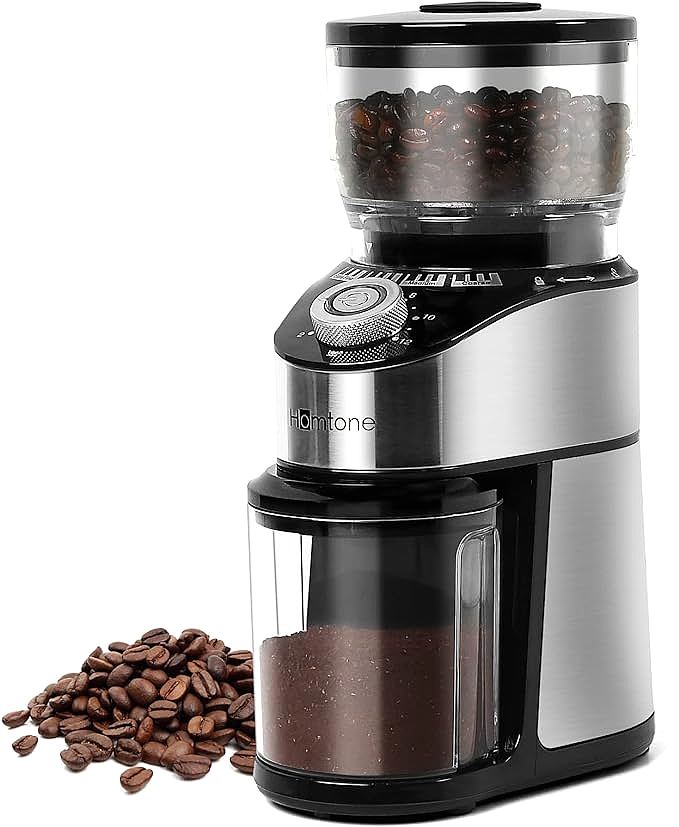
Homtone NK-0644 Electric Coffee Grinder: Unlock the Perfect Grind with Conical Burr Technology

Sincreative CG203A Conical Burr Coffee Grinder: Achieve Perfect Grind for Every Brew

Fellow Opus Conical Burr Coffee Grinder - Perfect for Espresso, Drip, and More

Toycol 9106 Electric Conical Burr Coffee Grinder: Your Portable Coffee Companion

Shattering the Seed: The Hidden Fluid Dynamics of Particle Distribution

OXO Brew Conical Burr Coffee Grinder: Unlock the Flavor of Your Coffee Beans

Capresso 560 Infinity Conical Burr Grinder: Precision Grinding for the Perfect Brew

KIDISLE CG648S-2 Electric Coffee Grinder: Quiet, Efficient, and Versatile Grinding for Your Kitchen

OXO Brew Conical Burr Coffee Grinder with Scale: Precision Grinding for the Perfect Cup
