SIXAQUAE Moka Induction Stovetop Espresso Maker: Brewing Perfect Espresso with Science

SIXAQUAE Moka Induction Stovetop Espresso Maker
The short version
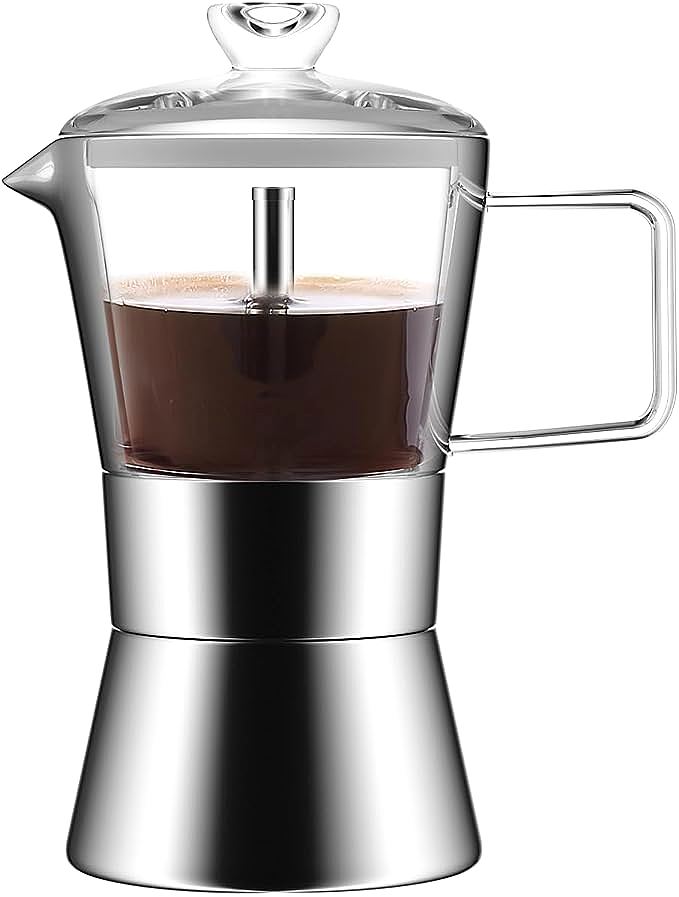
A moka pot is the closest most home kitchens get to real espresso without a machine that costs more than a rent check. The SIXAQUAE Moka Induction Stovetop Espresso Maker follows the classic Italian stovetop design, adds a borosilicate glass top so you can watch the brew, and claims compatibility with induction, ceramic, gas, and electric cooktops. It sells for $32.99, is listed as ASIN B08ZKF27NQ, holds 240ml, measures 7.09 inches (180 mm) deep by 8.58 inches (218 mm) wide by 5.12 inches (130 mm) tall, and the listing calls that six cups.
How a moka pot works
The physics inside a moka pot is simple, and it explains every brewing decision you will make with this pot.
Water goes in the bottom chamber. Heat turns it to steam. Steam takes up far more space than liquid water, so pressure builds in the sealed lower chamber. That pressure pushes hot water up through a tube, through a basket of ground coffee, and into the upper chamber. What comes out is a strong, concentrated coffee. It is not espresso in the strict sense, because a real espresso machine pushes water through finely ground coffee at about 9 bar. A moka pot reaches roughly 1.5 to 2 bar, about 20% of the machine's working pressure. The result sits between drip coffee and espresso in strength, which is why moka coffee works so well as a base for milk drinks.
Two details matter for taste. First, the water that reaches the coffee is close to boiling, around 100 to 110 degrees Celsius once pressure is factored in. That is hotter than the 90 to 96 degrees Celsius most brewing guides recommend for espresso, which is part of why moka coffee tastes bold and sometimes slightly bitter. Second, the brew happens fast, usually 4 to 6 minutes on a medium flame. Grind size controls the extraction: too fine and the water stalls or the pot sputters; too coarse and the coffee runs thin.
Extraction pulls flavor compounds out of the grounds and into the water. A moka pot extracts quickly because the water is hot and the contact time is short. The first liquid out is dark and heavy, the last is pale and thin. The glass top on this model lets you watch that color shift in real time, which is the single best indicator of when to stop heating. Pull the pot too early and the cup tastes sour and thin; leave it on the flame and the last watery, over extracted liquid ruins the batch.
Alfonso Bialetti built the first moka pot in 1933, and his octagonal Moka Express is still the reference design almost a century later. This pot keeps the same three chamber layout: water chamber below, filter basket in the middle, collection chamber above.
What the SIXAQUAE is made of
The listing describes two materials. The upper chamber is high borosilicate glass, the same family of glass used in laboratory beakers and premium cookware. It resists thermal shock, so hot coffee hitting cool glass does not crack it, and it stays clear so you can watch the coffee rise and judge the color as it brews. The lower chamber and body are 304 food grade stainless steel, the standard 18/8 alloy used in kitchen equipment for its corrosion resistance.
The handle is BPA free heat resistant plastic, shaped to stay cool enough to grip while the base sits on a flame. An Italian safety valve sits on the lower chamber. That valve is a simple pressure relief disc: if the steam pressure ever climbs past its rating, the valve vents instead of letting the chamber fail. It is a small part, but it is the reason a sealed pot on a gas flame is not a gamble.
The brand says it worked with an Italian design team on the look, and the pot comes in 6 cup and 8 cup sizes. The 6 cup model holds 240ml.
Induction compatibility, explained properly
Induction cooktops do not get hot themselves. They create a magnetic field that induces electrical currents in ferromagnetic metal, and the metal heats up from the inside. Cast iron and magnetic stainless steel work. Aluminum, copper, and glass do not, at least not directly.
This is where the SIXAQUAE makes a specific claim worth pausing on. Plain 304 stainless steel is only weakly magnetic, yet the listing says the pot works on induction cooktops. The usual way manufacturers make a stainless moka pot induction ready is to bond a layer of magnetic grade steel to the base, or to use a magnetic steel disc. The product page does not spell out the construction, so treat the induction claim as the manufacturer's rating rather than something you can verify from the materials list alone. On gas, ceramic, and electric coil stovetops, the stainless base has no such question to answer.
Capacity: what 240ml really means
The listing calls this the 6 cup size at 240ml. Do the math and a cup is 40ml, which is a generous demitasse, not a mug. If you drink Americanos or milk drinks, plan on brewing twice. The same design also comes in a 360ml version (ASIN B09DKCMQQX) for $37.99, which covers about nine of the same small cups and suits a household of two espresso drinkers better.

How this pot compares
The Primula Classic (ASIN B001J1L59E), a cast aluminum pot at $19.99, is the obvious budget alternative. It is cast aluminum, which heats fast and evenly but is softer than steel and can pit over time, and it works on electric, ceramic, and gas stovetops including propane, but not induction. This pot costs $13 more and buys you the glass top, the stainless body, and the induction rating.
Against the classic Bialetti Moka Express, the trade is visibility and material. Bialetti's aluminum body is a proven design, but you cannot see the coffee while it brews, and aluminum is reactive with acidic coffee over years of use. The glass top removes the guessing: when the stream turns from dark to pale gold, the brew is done and it is time to kill the heat.

Using it well
Fill the lower chamber with water up to the safety valve, never above it. The listing is explicit: the water line should not exceed the safety valve. Too much water leaves no room for steam pressure and the brew stalls or spits.
Load the filter basket with finely ground coffee, table level, no tamping. Moka coffee needs a finer grind than drip but coarser than espresso. Level it with a finger and leave it loose; tamping creates a pressure plug the pot cannot push through.
Use medium heat. High heat boils the water too fast, scalds the coffee, and can push steam up through the grounds in bursts, which tastes as bad as it sounds. When the upper chamber fills and the stream hisses and sputters, take the pot off the heat within 1 minute. The listing says to stop heating within one minute after the coffee is done to protect the bottom of the pot, and running cool water over the base stops extraction cleanly.
Water quality matters more than most people think. Hard water leaves scale inside the tube that carries water up through the grounds, and a scaled tube slows the brew and changes the flavor. If your tap water leaves kettles crusty, brew with filtered water. Freshly ground beans also make a measurable difference, since pre ground coffee loses its aromatic compounds within days of opening.
Care and cleaning
Disassemble after each brew and rinse all three parts with warm water. The listing does not recommend dishwasher use, and the glass top and safety valve both last longer with hand washing. Dry everything before reassembly so no water sits trapped against the steel. The safety valve should be checked now and then to make sure coffee oils have not sealed it shut; a valve that cannot vent is a valve that cannot protect you.
Descaling matters if your water is hard. A monthly 30 minute rinse with diluted white vinegar, followed by two plain water cycles, keeps the internal tube clear. Never run the pot dry, and never use it with the filter basket empty.
Who this pot is for
The SIXAQUAE suits a specific buyer: someone who wants stovetop espresso strength without a countertop machine, who cooks on induction, and who likes watching the brew happen through the glass. It is a poor fit for anyone who wants a large batch, since 240ml is two small drinks at most, and for anyone who needs true espresso pressure, which no stovetop pot delivers.
At $32.99 it sits in the middle of the market. The budget alternative undercuts it by $13 but loses the induction rating and the glass top. Premium Italian brands charge two or three times as much for similar capacity. For a first moka pot, or a second one for a vacation kitchen, the price is easy to justify.
SIXAQUAE Moka Induction Stovetop Espresso Maker
Related Essays

Why the Metal in Your Moka Pot Matters: A Guide to Stainless Steel Espresso

ADBZEN Moka Pot: Brewing Authentic Espresso at Home

The $16 Barista: Mastering the Physics of the Aluminum Moka Cafetera

Arsor Espresso Maker: Authentic Italian Coffee at Home
SIXAQUAE Greca Moka Pot: Your Gateway to Authentic Italian Espresso at Home
The Physics of Flavor: Deconstructing the Moka Pot's Steam-Powered Magic

Ilsa 3 Cup Stainless Moka Pot


Alessi Moka Pot Guide: Design Meets Pressure Brewing