Bialetti Moka Express Alpina: a green three-cup moka pot
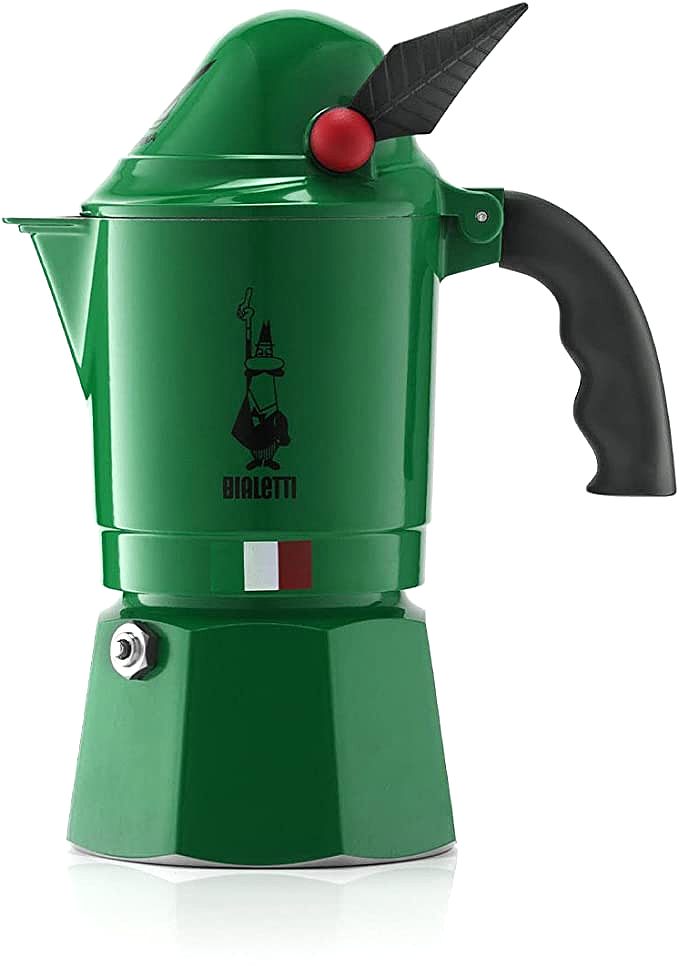
Bialetti Moka Express Alpina
A green twist on a very old pot
Some pots earn their place by refusing to change. The Bialetti Moka Express Alpina is one of them - just dipped in green. Underneath the paint it's the same eight-sided aluminum pot that has sat on Italian burners for decades. This version brews three espresso cups, or 130 mL (4.3 oz), with each small pour landing around 43 mL. For two people sharing quick cups or one person looking for a second round without starting over, that size fits well. It won't stretch to fill a 12 oz mug, though - for that you'd need the six-cup model.
Color without changing the coffee
The green finish goes by Moka Alpina, and the model number 0002762/MR appears on the box. Only the outside gets the paint - the interior stays bare aluminum, so nothing about care shifts with the color. You're paying a little more than the plain silver version for that coating alone. The painting is cosmetic; the casting underneath is the same as the standard pot.

What happens on the stove
In practice, it's a simple transfer of pressure. Water goes in the lower chamber, coffee grounds sit in the funnel basket, and screwing the two halves together creates a sealed vessel. As heat builds, pressure pushes water up through the grounds and into the upper chamber. On a stovetop moka, that pressure sits between 0.9 and 1.1 bar - well below a pump machine's 9 bar. Water meets the grounds around 88 to 94 C, and with a moderate flame the whole process takes 3 to 5 minutes.
A few small habits tend to matter more with the compact three-cup basket. Keeping water at or just below the safety valve, adding grounds loosely without pressing, and taking the pot off the heat the moment it starts to gurgle all go a long way. That gurgle signals steam has reached the spout and much of the best brew is already up top. Pressing the grounds or overfilling the boiler are the things most likely to push it toward bitterness.
Grind choice is worth paying attention to here. For this small basket, a grind just a touch finer than drip works better, but stopping well short of true espresso fineness helps avoid clogging. Too coarse lets water race through; too fine can restrict flow, raising pressure and temperature. Leaving the surface loose in the basket tends to suit this design better than tamping it down.
Starting with hot (but not boiling) water in the boiler can shave time on the flame, cutting down the window where grounds might scorch before water arrives. Since the basket and upper chamber still need to be screwed on by hand, the water just needs to stay below a boil going in. It also makes the 3 to 5 minute rise a little easier to keep an eye on.
Fit for different hobs
Gas, electric, and ceramic hobs work as-is. For induction, an adapter plate is needed - bare aluminum won't couple to an induction coil on its own. It's a small detail to confirm before ordering.
Safety is built into the lower chamber: a patented safety valve will open if pressure climbs past its rating, which is why filling above the marked line or packing coffee in is best avoided. The handle is shaped to keep fingers clear of the hot body when lifting a full pot off the burner.
Keeping it going
After use, a quick rinse with clean water is all it really wants. Detergent wears away the oxide layer that protects aluminum, and a dishwasher cycle can damage both the finish and the taste of the next brew. Drying the two halves separately and storing them apart rather than screwed shut helps keep damp air out of the seal.

Size, weight, and heat
The pot weighs about 0.88 lb (399 g / 14 oz). Dimensions come in at roughly 5.5 in (140 mm) long, 7.5 in (190 mm) wide at the handle, and 3.5 in (90 mm) tall. Aluminum responds quickly to changes in flame - within seconds - so matching the flame to the base diameter (rather than the widest hob ring) helps avoid scorching. Leave it on high for too long and the grounds can take the heat before the water rises.
A shape that stuck around
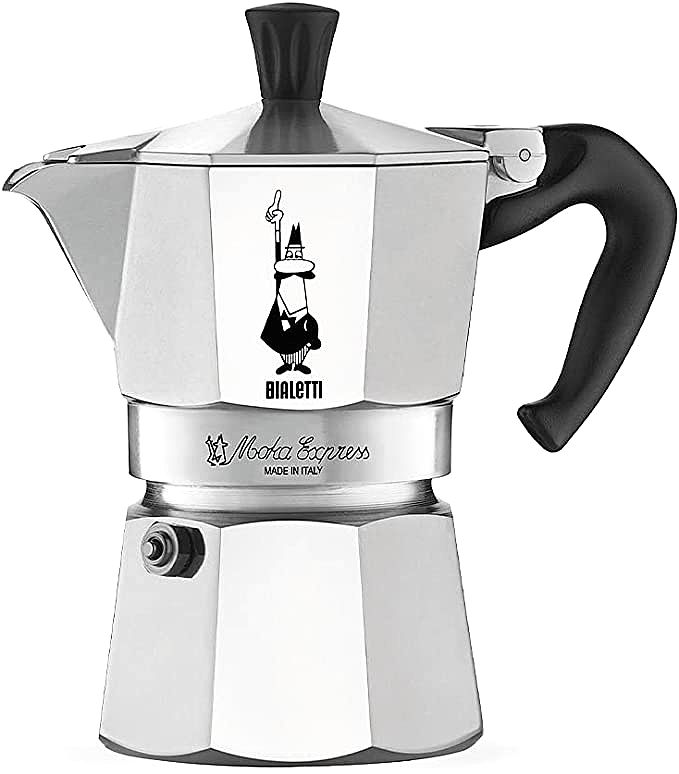
Alfonso Bialetti patented the Moka Express shape and its little moustached figure in 1933, and it's still made in Italy today. The Alpina doesn't rewrite that history - it's a color variant of the same design. Across the Moka Express line, sizes are all measured in Espresso Cups, with this three-cup version sitting near the small end of a range that can scale up for a crowd just as easily as a quiet couple of cups.
Where the limits are
A moka has no pump, so it won't reach 9 bar like an espresso machine. The crema tends to be thin and short-lived. There's no steam wand either, so milk stays cold unless heated separately. For latte art, a pump machine makes more sense. For a strong, small cup straight off the stove, the tradeoff is part of the appeal.
It fits best if you brew one or two small cups at a time and don't mind rinsing by hand. If you need more than 130 mL in one sitting, want dishwasher convenience, or expect true 9 bar espresso with lasting crema, it's not the right tool for the job. The brew tends to be heavier and more sediment-rich at low pressure - that's just how it works.
A quick reality check on price
At the time of writing, the green three-cup version lists at $36.09, with only ten units left according to the listing. Prices move with seller and season, so that's a snapshot rather than a promise. Worth checking the current number before ordering. As for the green paint, it's the only real reason to pick this over the silver pot - everything else comes down to size, stove compatibility, and a willingness to hand-rinse aluminum.
Bialetti Moka Express Alpina
Related Essays

The Ultimate Moka Pot Guide: Unlocking the Science and Soul of Italy's Iconic Coffee Brewer


Ilsa 3 Cup Stainless Moka Pot

Alessi Moka Pot Guide: Design Meets Pressure Brewing
The Physics of Flavor: Deconstructing the Moka Pot
Bialetti Moka Express 6-Cup: Your Gateway to Authentic Italian Espresso
The Little Engine of Flavor: Deconstructing the Science and Soul of the Bialetti Moka Pot

Imusa B120-43V: Your Gateway to Authentic Stovetop Espresso
The Alchemy of Steam: Unlocking the Science Behind Your Moka Pot