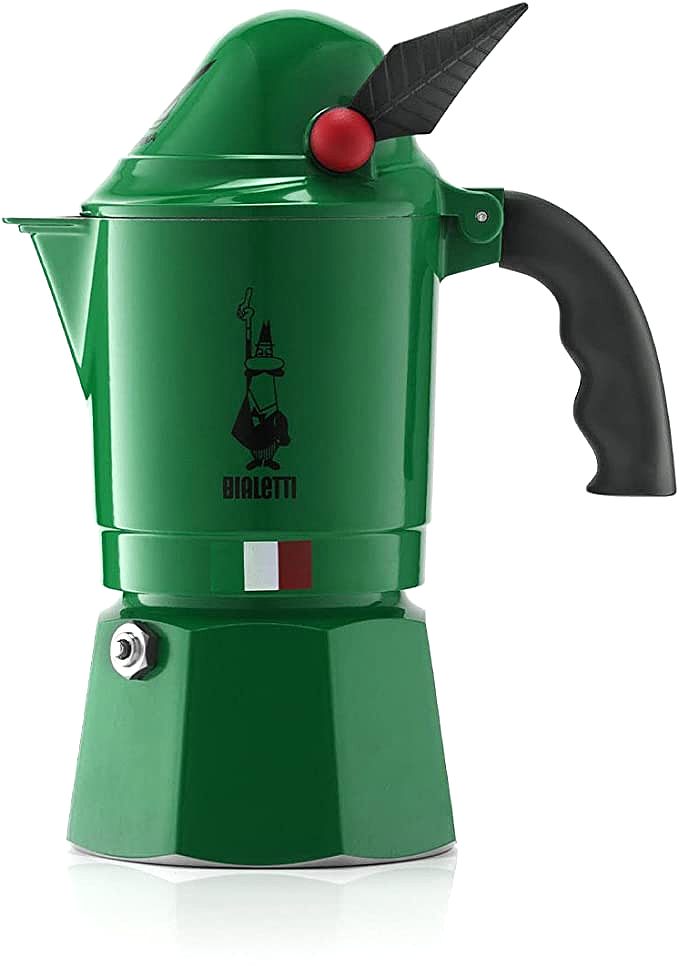
Aluminum stovetop espresso maker: why the 6-cup Primula Classic still works

Primula Classic Stovetop Espresso and Coffee Maker
The case for aluminum in a moka pot starts with a number from the materials handbook. The Primula Classic Stovetop Espresso and Coffee Maker illustrates the trade well. The metal conducts heat at around 237 W/mK, and stainless steel sits near 16 W/mK, so a cast body pulls energy from a flame into the water with very little lag. That property shaped the classic moka pot, and it is what a well-known six-cup aluminum moka pot, the silver model at $19.99, puts on the counter.
Most shopping pages treat a moka pot as a spec sheet with a handle. The useful questions run the other way: how a steam-driven brewer moves water, why the cast body shortens the wait, what six demitasse cups look like at the sink, and which parts wear first. Those answers apply to any aluminum stovetop espresso maker that has held its shape for ninety years, and this pot offers a clear example to walk through.
What cast aluminum changes about a stovetop brew
Heat travels through cast aluminum fast enough to reach brewing temperature in 3-4 minutes on a low flame, while a steel pot of the same size takes closer to 6-7 minutes. Speed is only half the story. The metal also spreads heat sideways before hot spots can form, and that evenness matters most in the first minute, when grounds sit above water that has just started to simmer. A base that stays uniform through that window gives every part of the coffee bed the same head start.
Casting handles the other half of the job. It lets a maker shape the walls, the threaded neck, and the handle mount as one piece of metal, with no seams for steam to work loose. The flip-top lid and its heat-resistant knob and handle share that same single-piece build, and fewer joints means fewer paths for a leak. That construction also helps explain how the pot lists at $19.99 while an entry espresso machine often runs four figures.
Aluminum is not better at everything. The metal is light, so the whole pot warms and cools quickly, which cuts both ways. The upside is a short wait on a morning schedule and a base you can move off the flame on a moment's notice. The trade-off is that the window between a steady flow and a sputtering finish is narrower than it would be on a heavier, slower body, so attention pays off.
A stainless pot answers a different set of priorities. The steel body holds heat longer and forgives a late hand at the stove, and it shrugs off detergent and the dishwasher. The aluminum pot gives up those comforts for speed and a lighter wrist. Neither column wins outright. The pick comes down to which compromise sounds like your kitchen, and for anyone who brews on a gas flame and drinks the pot within the hour, the aluminum side of the ledger looks short.
The brew cycle, from a cold base to the gurgle
Inside a moka pot the only pump is steam. Water in the lower chamber heats, vapor builds pressure, and that pressure pushes liquid water up through the funnel and the coffee bed and into the upper chamber. The working range stays near 1-2 bar, well below the nine bar a pump machine uses, which is why a moka cup lands softer and rounder than a true espresso shot.
The method behind this aluminum stovetop espresso maker fits in one breath. Fill the lower chamber with water, add ground coffee to the filter without pressing it down, and set the pot on the burner over a low flame. A six-cup pot of this size moves from cold water to a full upper chamber in 4-6 minutes. Near the end the sound changes: a quiet flow turns into a gurgle as the water runs out and steam takes over. Cut the heat at that first gurgle and pour. The pale, sputtering tail that follows is where bitterness collects.

One Saturday morning with this pot
Saturday, 7:40, with the radio on low. The pot comes off the shelf in two halves, the filter gets a level scoop of medium grind, and the base gets water up to the line under the safety valve. Within 4-6 minutes the first dark threads climb the stem, and the kitchen starts to smell like breakfast. The gurgle arrives next, the flame goes off, and six small cups line up before eight.
Two drinkers will finish six cups across a slow morning; a solo pot of this size is a weekend tool rather than a weekday default. Either way the arithmetic stays the same. Brew what will be drunk, because a moka cup peaks in the first half hour and goes flat in the second.
Why six cups usually wins for a small household
This six-cup moka pot is the reference point here, and the cups in question are small pours, not mugs. Six demitasse servings cover two people with a second round or one unhurried breakfast. The same body ships in five sizes, from single-serve pots to full-table models. The trap sits in the word cup: a moka measure is closer to a single shot than to a coffee mug, so anyone picturing a mug of drip should size up.
Size math is easier in pours than in people. Count the cups the household finishes in a morning, then subtract one, because the last cup out of any moka pot is the one that sits. A four-cup pot that gets emptied beats a nine-cup pot that pours half its batch down the sink, and the right size shows up in the grocery bill as much as on the counter.
Where the pot travels: gas, ceramic, and a campfire
Cooktop compatibility on this model reads electric, ceramic, and gas, propane included, and that list keeps a moka pot in its own lane. A cast aluminum body has nothing for an induction coil to grab, so induction owners need a different pot or an adapter plate. What the limitation buys back is range. The same six-cup pot works on a coil burner in a rental kitchen, a propane camp stove, and a grate over coals, which is why it turns up in camping kits next to the headlamp.
Portability is where the aluminum build pays off a second time. The six-cup pot weighs around 400 g empty, while a stainless model of the same capacity runs close to 800 g, and that difference shows up in a pack or in a one-hand pour. The handle and the lid knob are both built to stay cool, so the pot moves between a kitchen shelf and a camp box without special handling.

Camp mornings show the same logic from another angle. A canister stove, a bed of coals, or the grill at a roadside picnic all push a flame past the base, and the pot does not care which one it is. Pack light coffee, a scoop, and the two halves of the pot, and breakfast comes out of a duffel bag tasting like it came from a kitchen.
Rinsing, drying, and the parts that wear
Cleaning on this model asks for warm water and nothing else. The listing's rule is short: rinse every component, let all of it dry, then reassemble. Soap adds nothing but a film on bare aluminum, and a dishwasher will erode the exterior finish and attack the gasket long before either problem shows up in the cup. Dry the pot open rather than sealing it damp; trapped moisture turns musty within a day.
Two parts deserve a look every few months. The gasket ring that seals the two halves hardens with age, lets steam slip out at the threads, and shows up as a weak, sputtering brew; a fresh ring costs little and ends the trouble. The safety valve on the lower chamber should stay clear of grounds, so a soft brush during the rinse keeps the relief path open. Under daily use, plan on a new gasket every 6-12 months.
Aluminum carries a maintenance-free trick that steel cannot match. The metal forms a thin oxide skin on contact with air, a layer only nanometers thick that blocks deeper corrosion. Coffee sits in the 4.5-5.5 pH band, mildly acidic, and the inside of the boiler meets that acid every morning. The oxide layer takes it. What the acid does work on over years is the browned seasoning film, and that wear is cosmetic rather than structural, so a well-kept pot with a dull interior still brews a clean cup.
Hard water leaves its mark on any pot that heats water, and a moka pot is no exception. If the flow slows or a chalky film builds at the base of the boiler, a soak with a coffee descaler or a mix of water and white vinegar clears it out, followed by a full rinse and a dry. Keep the descale session short and never let acid sit in the pot overnight; the oxide layer is tough, but there is no reason to test it.

Price, the box, and the aluminum question
The six-cup silver model lists at $19.99 and shows In Stock under ASIN B001J1L59E, and the line spreads across five sizes. The box holds the pot itself, so the first order needs its own bag of coffee. A moka basket wants a grind between espresso and drip, about the texture of fine table salt, and it rewards a medium setting more than a chase after the finest powder a burr grinder can produce.
None of this makes aluminum the automatic pick. Induction owners need steel or a workaround, and anyone who wants a pot that still looks new after five years should choose a material built for polish. What this model does offer is the original trade behind every aluminum stovetop espresso maker: a light, quick, low-cost pot that turns a flame into six cups in 4-6 minutes, asks for a rinse and a dry, and gives the rest of the morning back.
Primula Classic Stovetop Espresso and Coffee Maker
Related Essays

How to Choose and Use a Stovetop Espresso Maker


Alessi DC06/3 Moka Pot: Authentic Italian Espresso

Ilsa 3 Cup Stainless Moka Pot

Alessi Moka Pot Guide: Design Meets Pressure Brewing
bonVIVO Intenca Stovetop Espresso Maker: A Practical Guide to Heat, Pressure, and Flavor
Minos Moka Pot Guide: Italian Espresso, Modern Steel

Why the Metal in Your Moka Pot Matters: A Guide to Stainless Steel Espresso
The Physics of Flavor: Deconstructing the Moka Pot